

Leslie A. Rose Department of Mechanical Engineering
Video
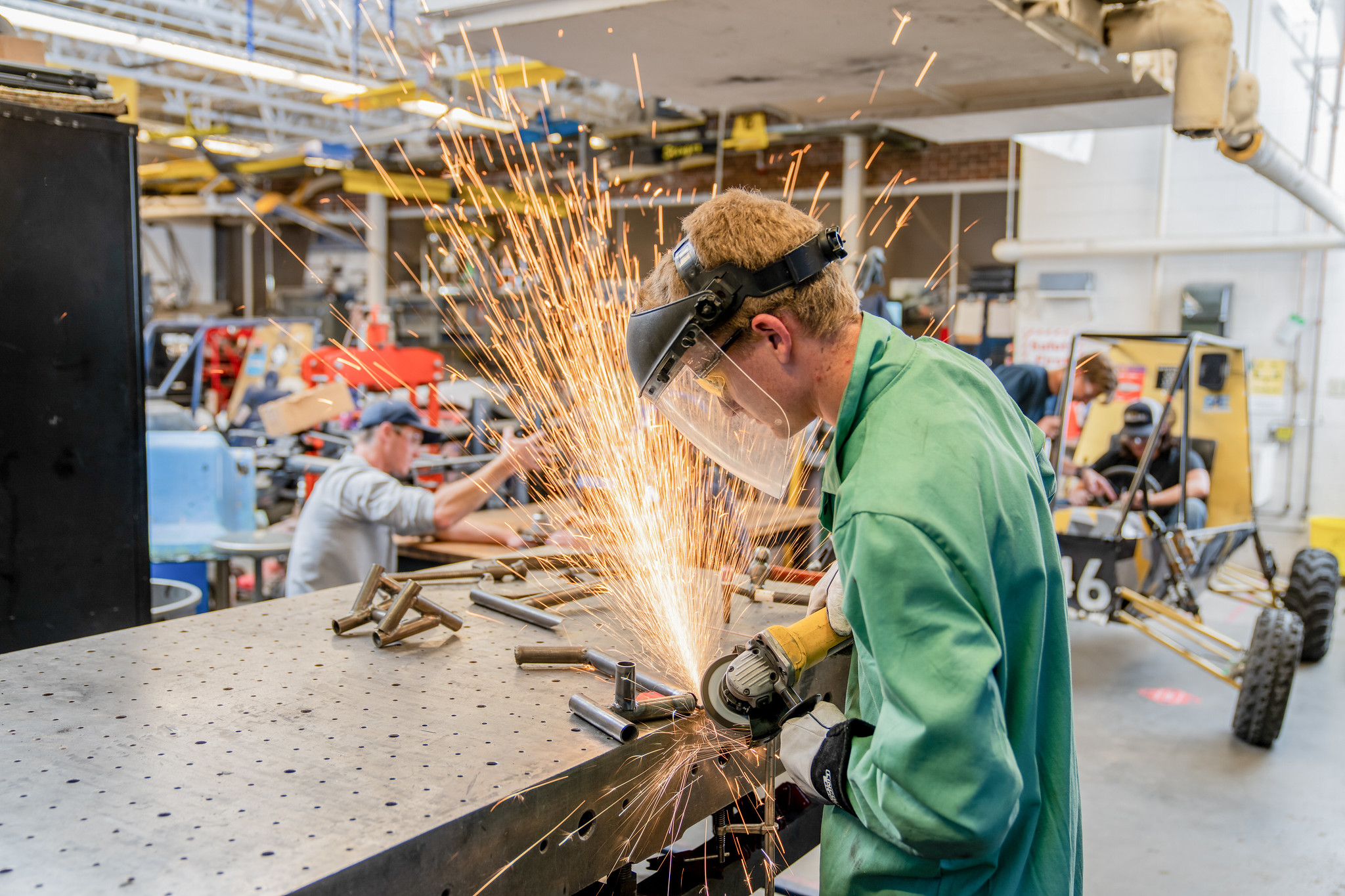
Mechanical engineers are experts in systems and products that involve any form of motion. We design products and systems that move people and goods – from energy and water, to robots, rockets, and prosthetic limbs. At South Dakota Mines, we leverage that expertise to solve problems and make the world a better place.
Class sizes, proximity to the Black Hills, and Mines being an engineering-focused college made my decision to come to Rapid City. Originally, [my major] was undecided, but a look through the Civil/Mechanical Building to see all the hands-on labs and learning environments made my selection of mechanical engineering as my major easy.
The Leslie A. Rose Department of Mechanical Engineering's mission is to prepare graduates for leadership roles in engineering by offering a quality education that fosters a distinctive curriculum accentuating design and project-based learning; committing to individual development while emphasizing the values of teamwork in a culturally diverse and multidisciplinary environment; and encouraging undergraduate and graduate research to nurture creative solutions to complex engineering problems.
Read About Our Award-Winning Curriculum
Department Overview

Leslie "Les" Rose, class of 1970, was born and raised in Meadow, South Dakota, where his parents instilled in him the importance of family, faith, integrity and ethics, honoring one's word, and a strong work ethic. These have been his guiding principles throughout his life and his exceptional career. This solid foundation was reinforced through his experience at the School of Mines, where his professional journey began.
As the former president of L-3 National Security Solutions (NSS), Les Rose brings decades of experience leading multi-million and billion-dollar global organizations. While at NSS, Les oversaw a business segment with more than 4,000 employees and $1.2 billion in annual revenue. NSS delivered best-in-class integrated solutions for complex defense and intelligence customers that span cyber, intelligence, enterprise/mission IT, command and control, big data, and integrated security. While in this role, he drove efforts to continuously improve and optimize the delivery of new capabilities and proprietary technologies to top customers, including government agencies.
Prior to becoming president of L-3 NSS, Les was president of L-3 STRATIS, one of the largest divisions of the global defense leader. Before 2005, he held various leadership roles, all with direct P&L oversight, at Titan Technologies and BTG, including president of operational organizations. Through Les's leadership, facilitating strong customer relationships and contract growth, he grew his organization from a 20-person single program to over 5,000 employees with multiple programs. This business segment supported the rapidly evolving information technology industry in product development, technical services and solutions, earned patents, and operated internationally. Upon divestiture in 2016, Les started his own business, Titan Technologies, which grew from $20 million to $140 million over six years, providing meaningful work and professional opportunities to more than 800 employees, including engineers and other technology professionals.
In addition to his extensive leadership, engineering, and technology background, Les is also a retired lieutenant colonel with the United States Army Corps of Engineers, where he held high-profile engineering leadership positions with engagements in Europe, the Far East, and Central America until his retirement after 20 years of dedicated service.
Les holds a Master of Science in Civil Engineering from the University of Michigan and a Bachelor of Science in Mechanical Engineering from South Dakota Mines. Les and his family reside in Destin, Florida.
The purpose of the External Advisory Board (EAB) is to advise the Leslie A. Rose Department of Mechanical Engineering on future direction and development of the department. The foremost role of the EAB is as the "end-user," providing feedback on the quality of our engineers from an industrial perspective. View the list of current EAB members here.
The South Dakota Mines Difference
The Leslie A. Rose Department of Mechanical Engineering at South Dakota Mines offers a cohesive, project-based learning curriculum. But unlike many universities, we also offer a comprehensive, flexible, and hands-on training program. All students can learn regardless of their level of experience.
Students will choose their focus, pursuing initial training in either manual manufacturing processes or CNC programming processes. Each option has similar limitations and, therefore, students learn the same theory using the method of their choice. After their required initial training, students continue their education in their areas of interest. The project-based learning curriculum is initiated with standard training in ME 126L Design for Manufacturing Lab and refined to student interest with subsequent coursework and projects. Students develop their own projects to maximize interest, ownership, and motivation. This extends to project-based coursework, participation in extracurricular activities, and student-generated, non-academic projects.
The goal of this approach is to help students develop key design for manufacturing skills, which include process planning, resource planning, material selection, cost analysis, CAD, GD&T, and project management through concurrent engineering and fabrication. We maximize student effort by allowing students the freedom to choose the project.
The curriculum prioritizes industrial culture and safety. Industrial culture is embedded in the training, initiated with the required safety training and lab culture. Lab access is granted after completing safety training and is maintained through annual refresher training.
Learn more here.
The Mechanical Engineering program at South Dakota Mines has a project-based curriculum that is focused on product development. A formal product development process has been developed and infused throughout the four-year curriculum.
Throughout their studies, students are assigned team projects to conceptualize, design, prototype, and demonstrate a new product that solves a real-world problem and satiates a social need. What is a product development process? It's a sequence of steps or activities that are followed to conceive, design, and commercialize a product. Our focus is on market-pull product opportunities. After market opportunities are identified, engineering and science are employed to satisfy that market need. The link below provides a visualization of where product development project-based learning occurs in the curriculum, along with a summary of related activities in each course.
Read more here.
-
American Society of Heating, Refrigerating, and Air Conditioning Engineers, Inc. (ASHRAE)
The American Society of Heating, Refrigerating, and Air-Conditioning Engineers (ASHRAE) advances the arts and sciences of heating, ventilation, air conditioning, and refrigeration to serve humanity and promote a sustainable world. Membership is open to any person associated with the field, including those involved in indoor air quality, building design and operation, and environmental control for food processing and industry. - American Society of Mechanical Engineers (ASME)
The American Society of Mechanical Engineers (ASME) helps the global engineering community develop solutions to real-world challenges. Founded in 1880, ASME is a professional organization that facilitates collaboration, knowledge sharing, and skill development across all engineering disciplines, while promoting the vital role of the engineer in society. ASME codes and standards, publications, conferences, continuing education, and professional development programs provide a foundation for advancing technical knowledge and a safer world. ASME helps university students develop their professional identity by offering access to a wide range of activities, including conferences, competitions, scholarships, fellowships, and other programs that support them throughout their academic years.
- Society of Automotive Engineers (SAE)
The Society of Automotive Engineers (SAE) has more than 300 collegiate chapters at universities throughout the United States, Canada, and Mexico, and offshore chapters in Bulgaria, Colombia, India, Poland, Spain, and the United Kingdom. Through the guidance of SAE faculty advisors, more than 11,000 student members participate in hands-on engineering projects. Many build vehicles to compete in SAE's annual Collegiate Design Competitions, which include Mini Baja, Formula SAE, Aero Design, Supermileage, Walking Machine Decathlon, and Mico-Truck Baja, plus special events featuring alternative fuel vehicles.
South Dakota Mines offers students a unique opportunity to participate in a student-centered, hands-on engineering program called CAMP.
CAMP is a competitive, nationally recognized program that brings together students, faculty, and industry leaders to partner on real-world projects. Students participating in CAMP can be part of a team preparing for a wide range of national collegiate competitions ranging from robotics to rockets to race cars. CAMP is open to any South Dakota Mines student, any year, any discipline. No prior experience is necessary; just a desire to learn something new.
Click here for more information.
Through cooperative education (co-ops) and internships, South Dakota Mines students have many opportunities to apply their education to real-world work experiences. Students are employed by industry and government agencies in positions related to mechanical engineering. Students may earn 1-3 hours of academic credit for their co-op or internship experience upon department approval. Students registered for co-op courses keep their full-time student status during the semester they are on co-op.
All Mines students are encouraged to have relevant work or research experience prior to graduation. Co-ops are often 6-8 months (semester + summer), and students keep their full-time student status during their co-op semester. Internships are usually for the summer or part-time during the school year. (The terms are often used interchangeably by employers.)
On average, 75% of South Dakota Mines graduates have relevant work experience upon graduation.
The average co-op/intern salary for the 2023-24 academic year was $22.45/hr.
Some employers also provide housing allowances, bonuses, and relocation expenses that are not reflected above.
Your co-op experience must be full-time employment and a full semester in length (spring or fall). Summer internships can qualify, but they are limited to a maximum of two (2) credits. An entire explanation of the co-op and internship process can be found here. Students must read through this guide prior to enrolling in any co-op course. Three (3) credits of co-op can be used to satisfy a student's 3-credit ME senior elective.
For questions regarding co-op opportunities within the department, please contact the co-op advisor, Dr. Joseph John Thalakkottor.
Students for the Exploration and Development of Space (SEDS) empowers young people to participate and make an impact in space exploration. SEDS helps students develop their technical and leadership skills by providing opportunities to manage and participate in national projects, attend conferences, publish their work, and expand their professional network so they are more effective in their present and future careers in industry, academia, government, and education.
- CubeSat
This organization welcomes students interested in space exploration and nanosatellite technologies. Participants work as a team to design a CubeSat and a specific research experiment for the CubeSat, entering their project into the NASA CubeSat Launch Initiative in hopes of having the CubeSat launched into space. Team members also promote space exploration to the next generation through their K-12 outreach efforts.
-
High-Altitude Balloon Projects
These projects were initiated in the 2016-17 academic year with the formation of the South Dakota Solar Eclipse Team that prepared a scientific payload for launch into the path of the 2017 solar eclipse. That team had a successful flight, and the project has continued with the development of a cosmic ray detector for future high-altitude balloon flights and potential CubeSat flights.
-
Mines Association of Rocketeers (MARS)
Members of the Mines Association of Rocketeers (MARS) design, build, and launch rockets. The goal is to engage students in the aerospace industry and foster an interest in rocketry at South Dakota Mines.
-
The purpose of the Moonrockers team is to coordinate a multidisciplinary effort to design and build a robot that meets the objectives set forth by NASA’s Robotics Mining Competition or related competition. The concepts developed by Moonrockers conceivably could benefit NASA technology, and the competition encourages innovative ideas and solutions for the robotics competition. Additionally, the team conducts numerous K-12 outreach activities throughout the year.
-
NASA Undergraduate Student Instrumentation Projects (USIP)
Two NASA USIP grants were received to support undergraduate projects. The first is associated with multispectral imaging for monitoring crop health; the second is for measuring the helium lift gas in high-altitude balloons. Both projects are being done in collaboration with Raven-Aerostar.
Research Labs & Centers
Work with our renowned faculty and collaborate on groundbreaking projects that address real-world challenges. The hands-on experience and expertise you will acquire at South Dakota Mines will not only contribute to your academic growth but also prepare you for successful careers in academia, industry, or government agencies.

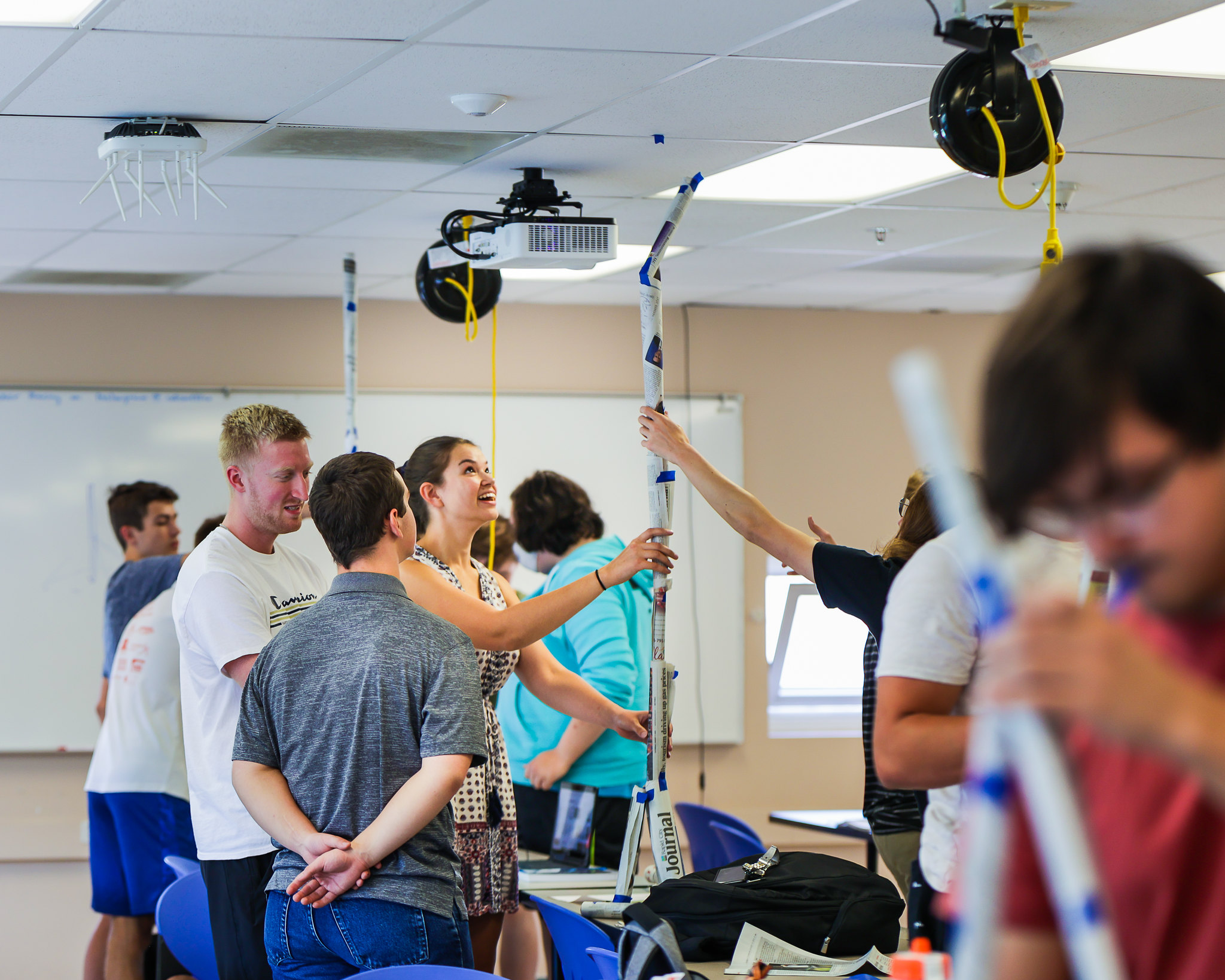
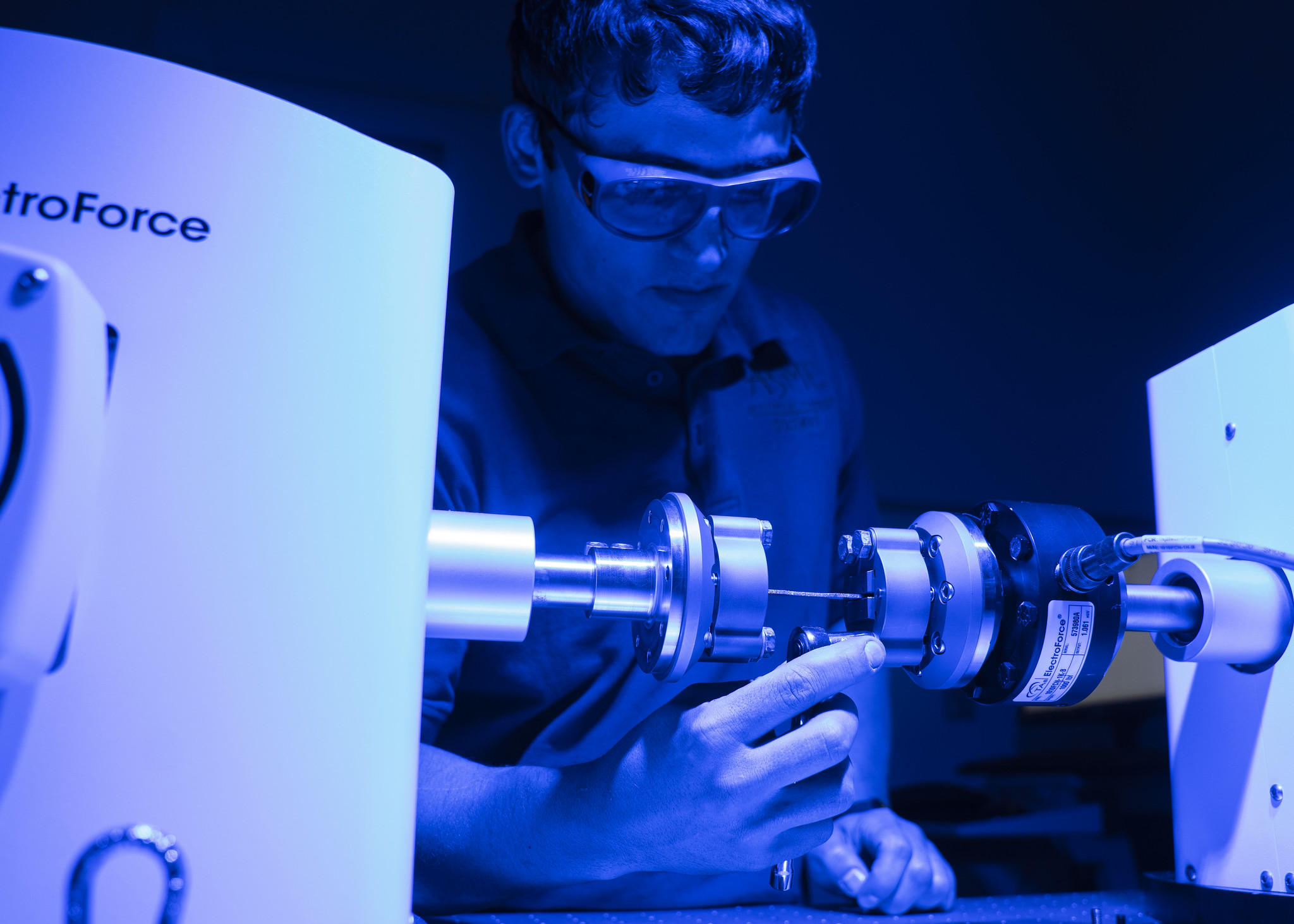
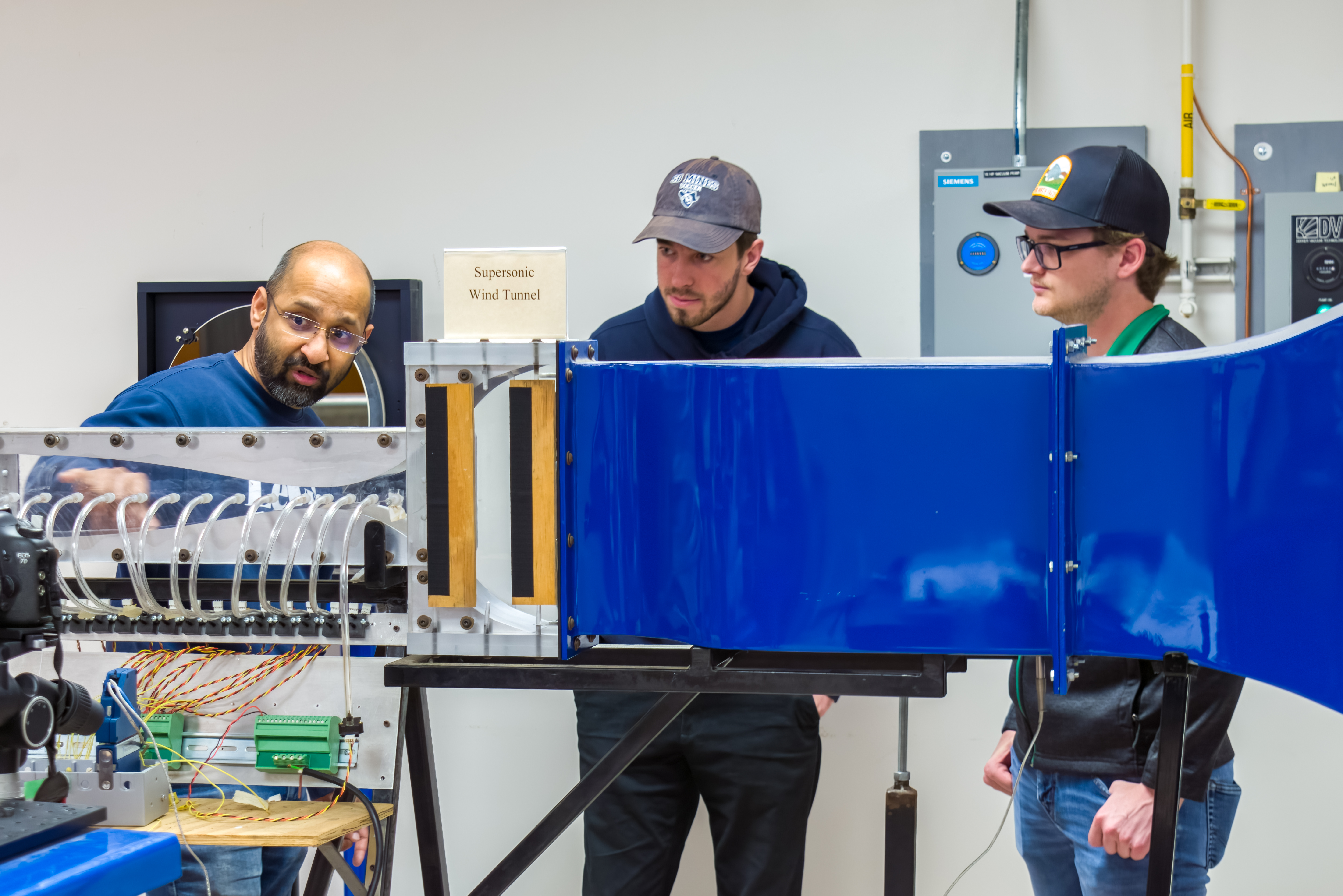
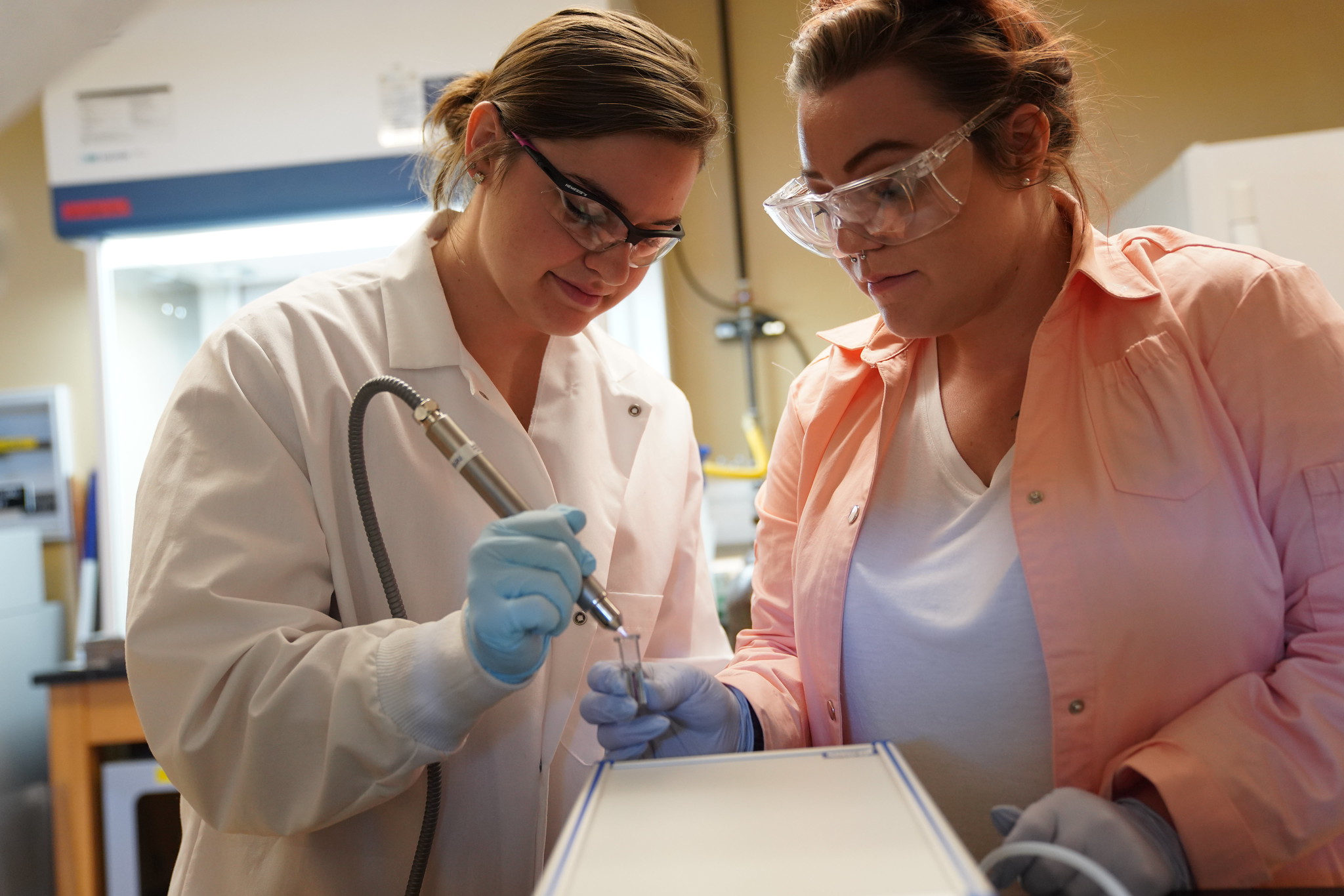
Research interests in the Laboratory of Interfacial Transport (LIT) focus on gaining a deeper understanding of the nature, behavior, and effects of features existing at the limits of continuum field theory.

Related Topics
Contact Us
Mechanical.Engineering@sdsmt.edu
Professor
Phone: (605) 394-2496
Cassandra.Birrenkott@sdsmt.edu
Instructor
Phone: (605) 394-5114
Ardell.Knudson@sdsmt.edu
Associate Professor
Phone: (605) 394-6704
Prasoon.Diwakar@sdsmt.edu


Have more questions?
Dr. Pierre Larochelle