

Nanoscience & Biomedical Engineering
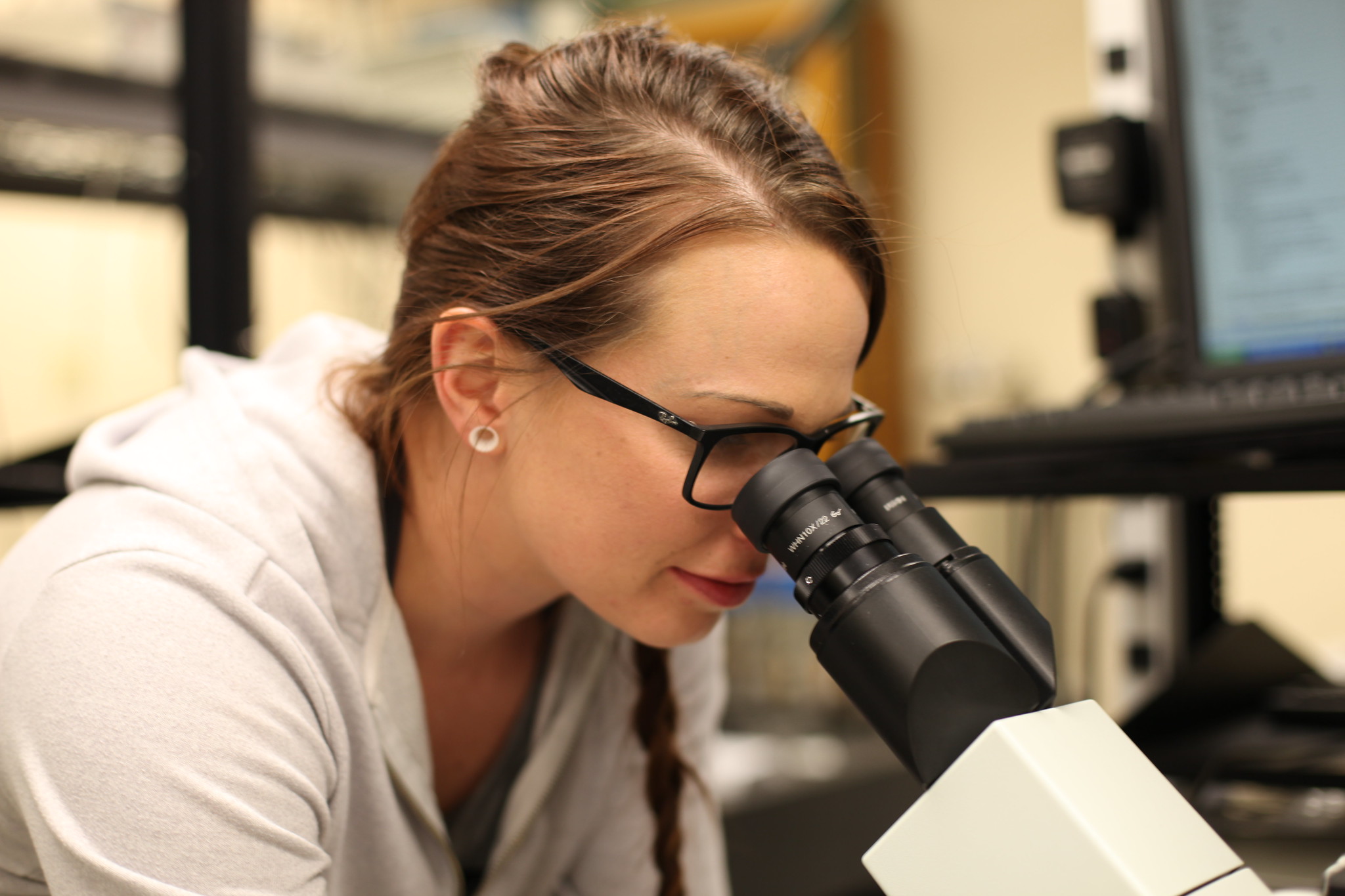
At South Dakota Mines, the Department of Nanoscience & Biomedical Engineering prepares students to work at the forefront of innovation – where engineering, science, and technology come together to solve real-world challenges. From improving human health to designing materials at the atomic scale, students gain knowledge and research experience to drive the next generation of discovery.
Over the summer, I worked for GE HealthCare at the Sanford Hospital in Sioux Falls, primarily working with IV pump modules, dialysis machines, OR anesthesia devices, and NICU cribs … My coursework at Mines definitely helped me feel prepared to step into a real-life setting and perform tasks when needed.
Mines Minute: Nanoscience & Biomedical Engineering
The Biomedical Engineering program at South Dakota Mines integrates an understanding of the body's chemical and biological systems with a strong engineering foundation, preparing you for success in this dynamic field. From designing devices like pacemakers and prosthetics to developing advanced imaging systems and materials for tissue engineering, biomedical engineers improve lives and help shape the future of healthcare.
For those interested in advancing scientific progress on an ultra-small scale, Mines offers a Master of Science in Nanoscience and Nanoengineering, as well as a doctoral degree. These rapidly evolving fields of study are contributing to innovations in healthcare, energy, and other industries.
Department Overview
South Dakota Mines offers both undergraduate and graduate degrees in biomedical engineering, equipping students to succeed in the rapidly growing field where healthcare meets engineering. Through a combination of hands-on learning, interdisciplinary coursework, and research opportunities, graduates are prepared to design medical devices, develop biomaterials, and advance healthcare technologies that improve lives.
The nanoscience and nanoengineering graduate programs at South Dakota Mines focus on the study and manipulation of matter at the atomic and molecular levels — dimensions where unique materials and groundbreaking phenomena emerge. Students gain a broad foundation in science and engineering principles while exploring applications in areas such as materials science, energy, medicine, and electronics. These programs prepare future researchers and innovators to engineer systems at the nanoscale and shape technologies that define the future.
The Nano-BME Expo is a student-led event held each spring that highlights the research achievements of the program’s graduate students. Participants present their work through posters, providing an opportunity to share ideas, receive feedback, and engage with peers and faculty. The event fosters a collaborative research culture, and prizes are awarded to recognize outstanding presentations and research excellence.
Each spring, the department hosts a weekly seminar series featuring presentations on Thursdays at 4 p.m. The series brings together speakers who share current research, emerging topics, and interdisciplinary perspectives relevant to the department. Seminars are open to all members of the campus community and beyond. Speaker information, including titles and abstracts, is distributed weekly via email.
The Industry Advisory Board (IAB) regularly reviews, advises, and provides direction for programming in the Department of Nanoscience & Biomedical Engineering. Its purpose is to ensure alignment with student needs, industry trends, and academic expectations. The board:
- Advises on student education and training.
- Supports the dissemination of departmental achievements and competencies.
- Strengthens communication with stakeholders, including local industry.
- Enhances student and trainee opportunities in research and industrial collaboration.
Biomedical Engineering Society (BMES): BMES serves as the lead society and professional home for biomedical engineers and bioengineers. South Dakota Mines has an active BMES student chapter that hosts local activities and sends members to the annual conference each fall, where students present research and engage in networking events.
Faculty Research Areas
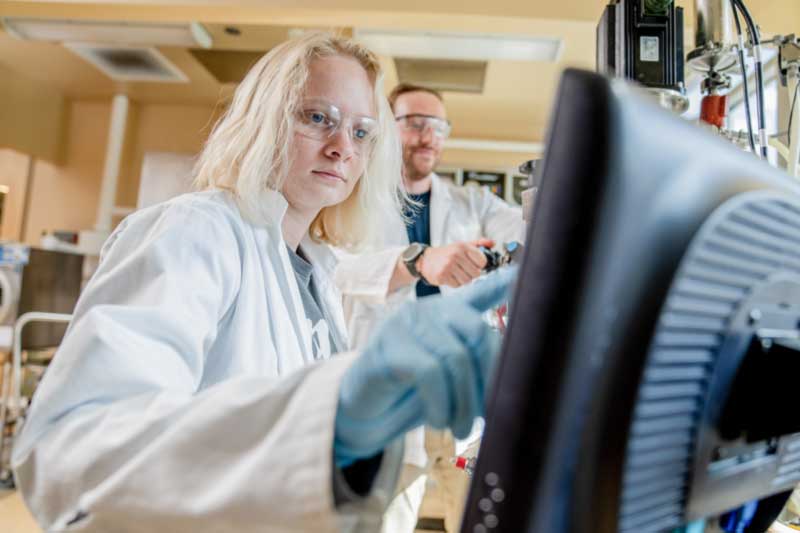
Imaging and Instrumentation
By combining custom instrumentation, computational analysis, and innovative nanomaterial design, we explore phenomena across scales – from molecular interactions and membrane dynamics to plasmonic metasurfaces and emerging optoelectronic devices – and push the limits of spatial and temporal resolution to drive discoveries in biomedical imaging, materials science, and quantum-enabled technologies.
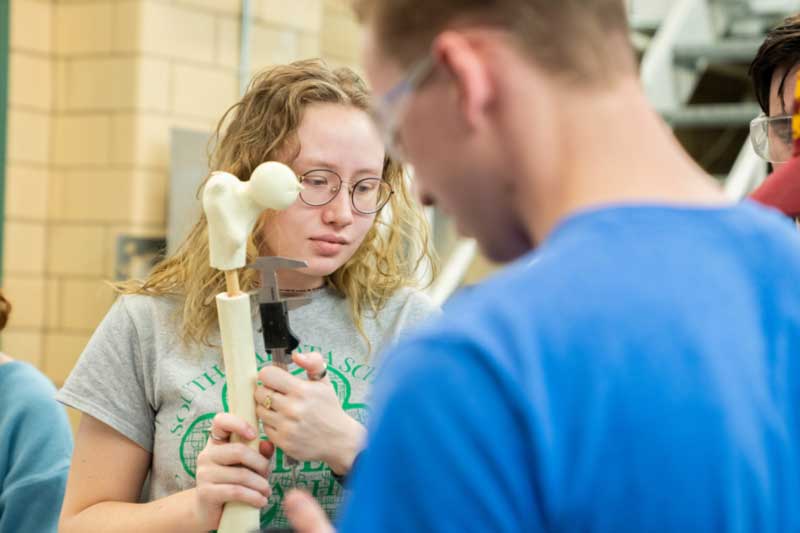
Tissue Engineering and Regenerative Medicine
By integrating material design, protein engineering, and high-throughput biological approaches, we tackle challenges ranging from bone and soft-tissue regeneration to complex craniofacial repair. Our efforts create innovative platforms for wound healing, therapeutic delivery, and regenerative technologies, driving the future of healthcare.
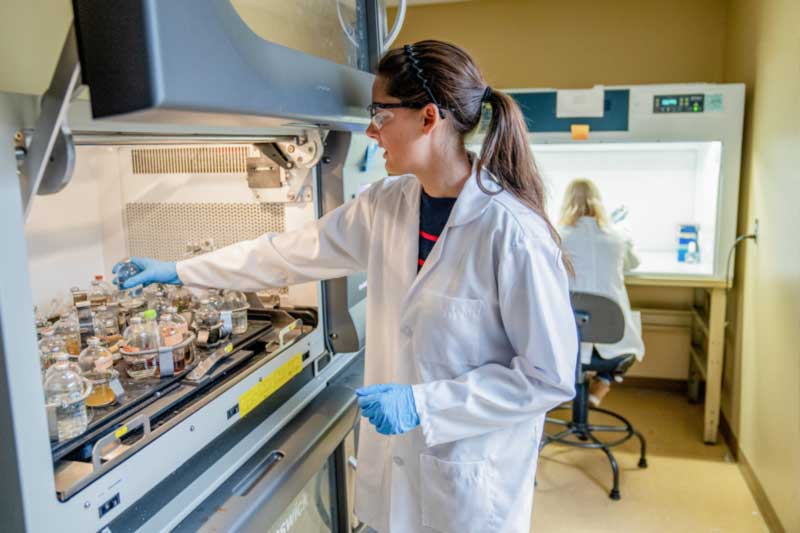
Nano- and Biomaterials
Work in this field combines biophysical studies, advanced imaging, and scalable materials engineering to address challenges across biomedical, energy, and industrial applications. Together, our programs integrate fundamental science with translational research and technology-driven approaches to foster innovation right here at South Dakota Mines.
Contact Us
Program Coordinator and Lecturer
Jennifer.Leberknight@sdsmt.edu
Phone: (605) 394-1911
Dr. Steve Smith
Professor and Department Head
Steve.Smith@sdsmt.edu
Phone: (605) 394-5268


Have more questions?
Dr. Steve Smith