

The Mining Hub

The multidisciplinary research collaborations have a history of creating advancements and innovation that benefit society. For these reasons, in addition to our location, South Dakota Mines is well-positioned to be the hub that fosters innovation in mining. The mining industry is evolving rapidly. With an influx of new processes and techniques, plus advanced new technologies, mining is experiencing a step change that is creating new opportunities for miners — and for the regions in which they mine.
These days mining is high tech. Autonomous equipment, robotics, and artificial intelligence are some of the latest innovations that require a highly skilled workforce.
Opportunities
For Students
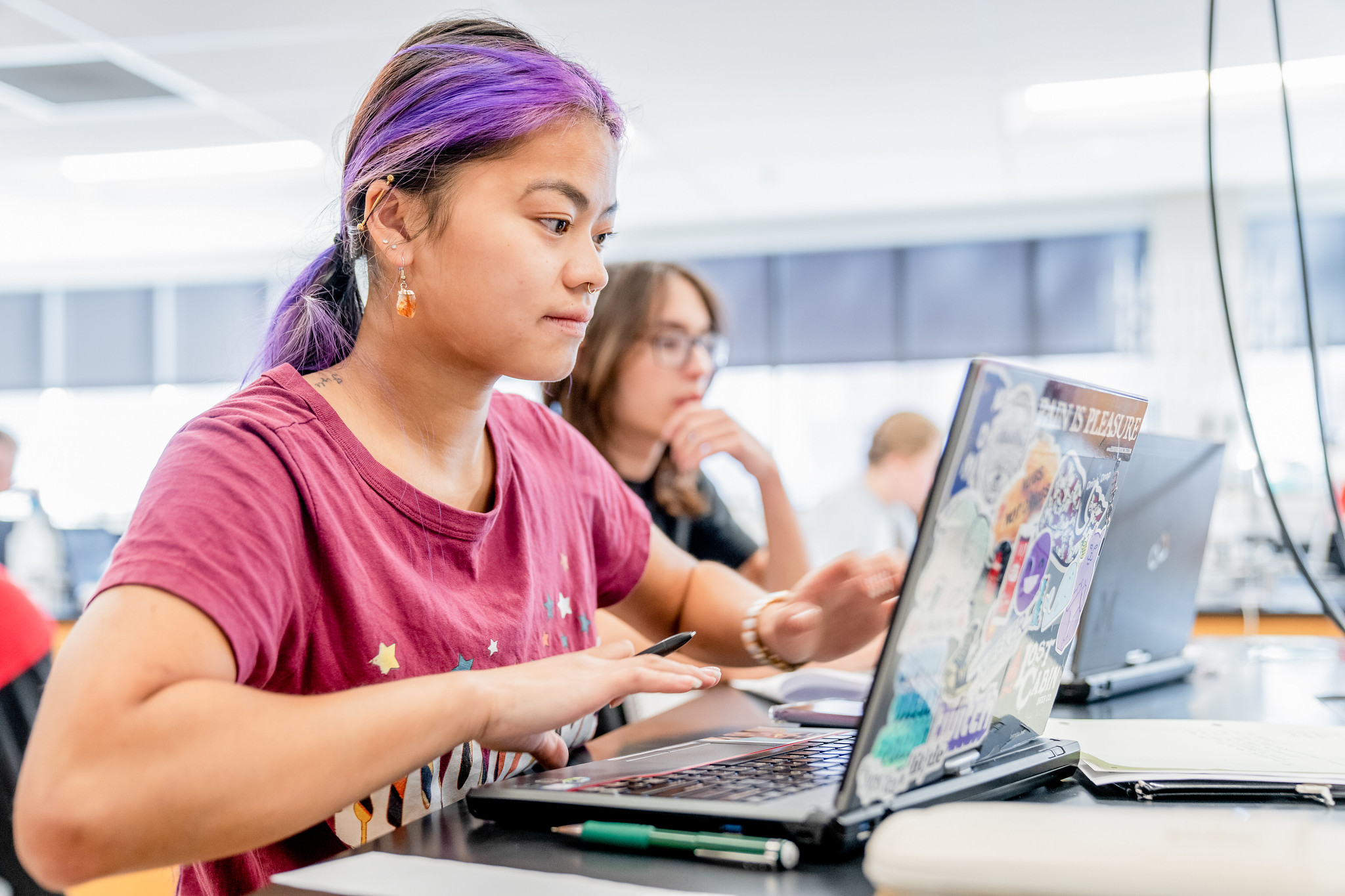
- Students from any engineering or science discipline can take part in activities happening within the hub.
- Students will have in-demand skill sets employers need.
- More employers will be attracted to what the university and its partners are doing, providing more internship, co-op, and employment opportunities for students.
For South Dakota
- Potential for spin-off companies to be developed, providing high-tech and high-paying jobs that will have an economic impact on the Black Hills, South Dakota, and the region
- Graduates will be able to stay and work in the state, have families, develop their careers - providing a high return on investment for public higher education and an increase in the overall tax base.
- Provide an even larger, highly-skilled workforce for existing South Dakota businesses.
Research
Collaborative research at South Dakota Mines brought together mining and meteorology, as professors Purushotham Tukkaraja (MEM) and Adam French (CEE/AES) sought to better understand the impact of temperature inversions on blasting operations at open-pit mines. While the pair’s research could not definitively rule out temperature inversions influencing post-blast fume dispersion or air-overpressure events, it provided evidence that certain results – like poor fume dispersion – can occur in the absence of inversions as well.
Gold mining, phosphate mining, and wastewater sludge are primary sources of selenium (Se) release, which can severely damage flora and fauna, including humans, if untreated. Many approaches to selenium removal involve harsh chemical reactions and face challenges to practical application, but a state-of-the-art Moving Bed Biofilm Reactor (MBBR) developed at South Dakota Mines removes selenium from contaminated water in a single step by leveraging the inherent characteristics of facultative anaerobic microbes.
Extraction processes are critical to most mining processes and, thus, critical to energy security at home and abroad. This is especially true in the case of rare-earth elements (REEs) used widely in electronics, energy, and defense applications. Current REE extraction methods are costly and harmful to the environment, but supercritical fluid extraction (SFE) research at Mines looks to improve such processes by combining carbon dioxide (an abundant, low-cost, non-toxic fluid long used in SFE) with certain co-solvents for effective REE extraction.
The ability to detect copper concentrations in ore in real time could optimize mining operations and enhance other copper industries. Roman Shchepin, PhD, leads Mines’ research in zero-field nuclear quadrupole resonance (NQR), a form of magnetic resonance that generates a signal. Shchepin used NQR to analyze samples of chalcopyrite, an abundant source of copper with a documented quadrupole response, and found a linear relationship between sample concentration and the resulting signal.
Mining Hub Partners





Have More Questions?
Interim Department Head / Professor:
Rudra Mitra