

Education
Brief Bio
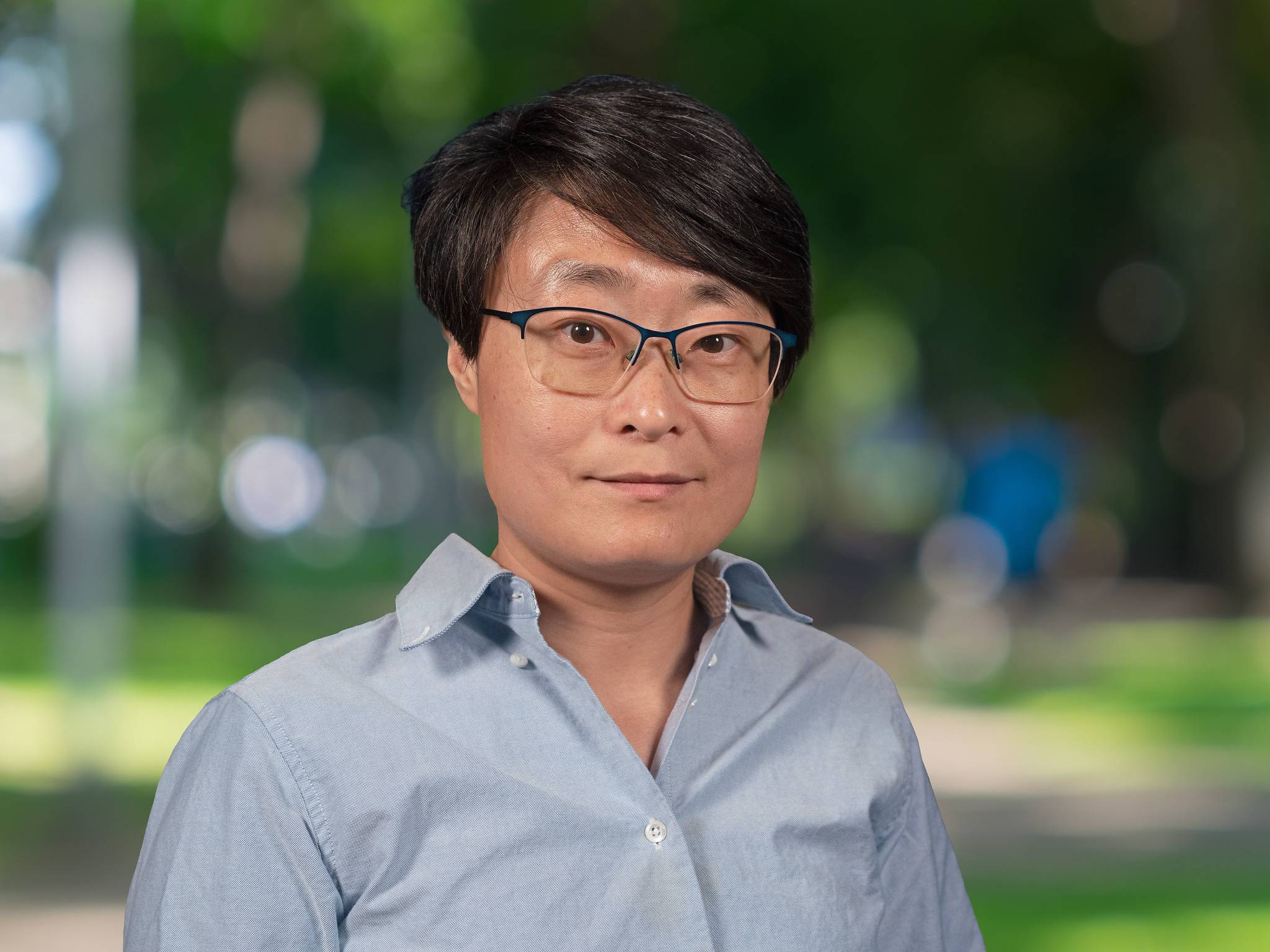
Lin Guo is an Assistant Professor and Pietz Chair Professor of Industrial Engineering
at the South Dakota School of Mines and Technology. Before academia, she held industry
roles as a purchasing engineer, demand planner, and production planner across the
electric, consumer goods, and banking sectors.
At SDSMT, she mentors students across disciplines; her mentees have won awards at
major conferences such as ASME IDETC and IEOM. She serves on the ASME Computer-Aided
Product and Process Development technical committee and the South Dakota Manufacturing
& Technology Solutions Advisory Board, and reviews for leading engineering design,
systems, and data analytics journals as well as the National Science Foundation. A
member of ASME, Lin bridges industry practice and academic mentorship to equip students
for data-driven problem-solving in complex engineering systems.
Research Expertise
Lin Guo's research advances data-driven decision-making, optimization, and system design for complex engineering and manufacturing systems. By integrating machine learning, simulation, and satisficing strategies, she tackles challenges in quality control, supply chain resilience, sustainable manufacturing, and healthcare analytics. Her work translates computational methods into practice across manufacturing digitalization, smart water and facility management, and healthcare delivery. Funding from NSF, state programs, NGO foundations, and industry partners supports her research.
Teaching
Lin Guo teaches courses in engineering economics, data analytics, engineering management,
decision analysis, simulation, optimization, supply chain management, manufacturing
and robotics (co-teach), statistical quality control, nonparametric statistics, and
business strategies. Her instruction spans undergraduate, graduate, and online formats,
emphasizing hands-on, application-driven learning that bridges theory with real-world
industrial practice.
Her teaching philosophy centers on active, student-engaged learning—equipping students
with analytical tools and problem-solving mindsets to tackle complex, data-rich challenges.
She fosters interactive classrooms where students learn by doing, questioning, and
collaborating across disciplines.