

Atmospheric & Environmental SciencesBS

South Dakota Mines has incredible opportunities for new and transferring students studying atmospheric and environmental sciences. Here, you will explore the mysteries of weather and its impact on our lives, delving into topics ranging from air quality and severe storms to climate science and decision support. Plus, the campus is situated in a region that experiences a variety of weather phenomena, making Mines an ideal location for learning and research.
Why Mines for Meteorology?
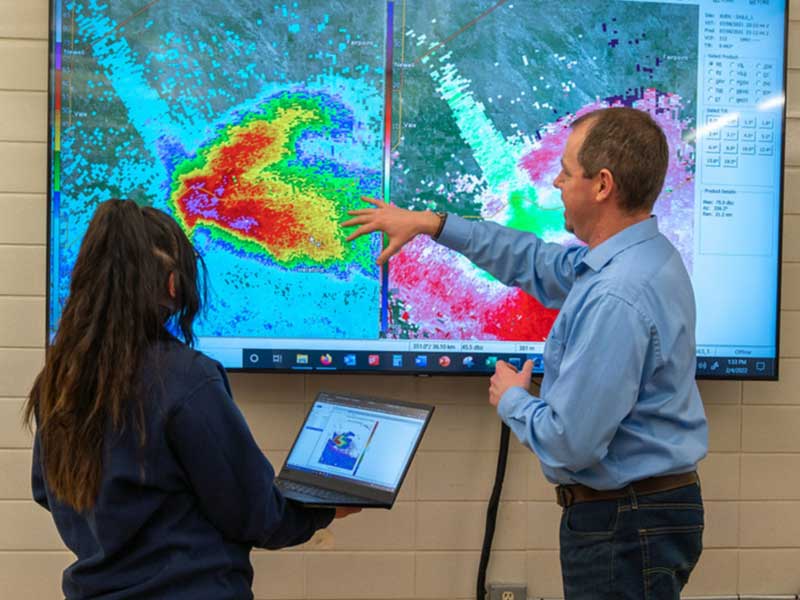
1:1 Advising
The Atmospheric and Environmental Sciences program at South Dakota Mines boasts an 11:1 student-faculty ratio, with 1:1 advising and a strong open-door culture among faculty.
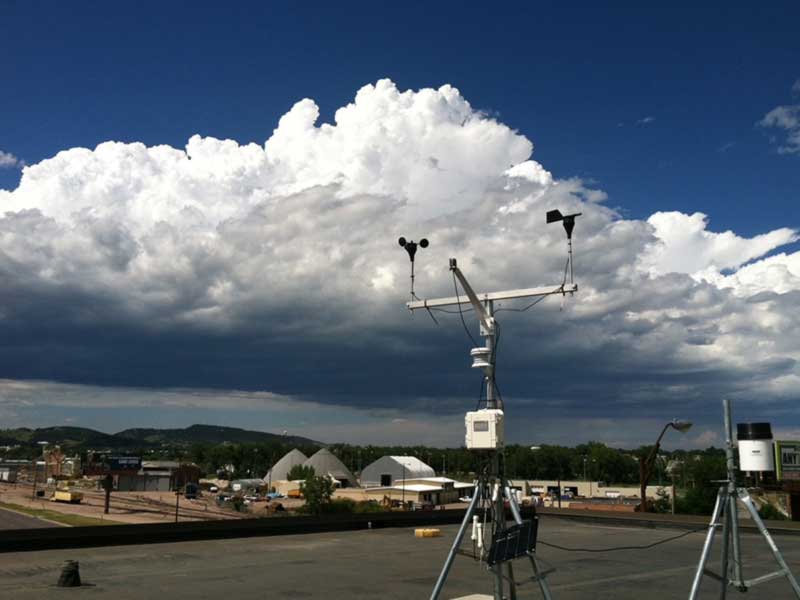
Our bachelor's degree program fulfills requirements for GS-1340 positions at the National Weather Service (NWS) and other federal agencies.
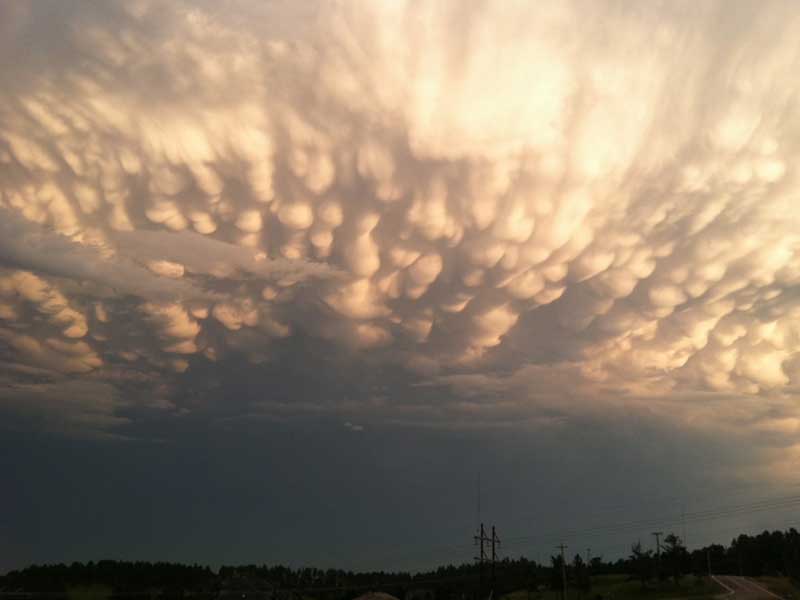
Mines has a long-standing relationship with the NWS office in Rapid City, located next to campus. Volunteer and co-op opportunities are available locally, or we can connect you with Mines alumni at NWS offices nationwide.
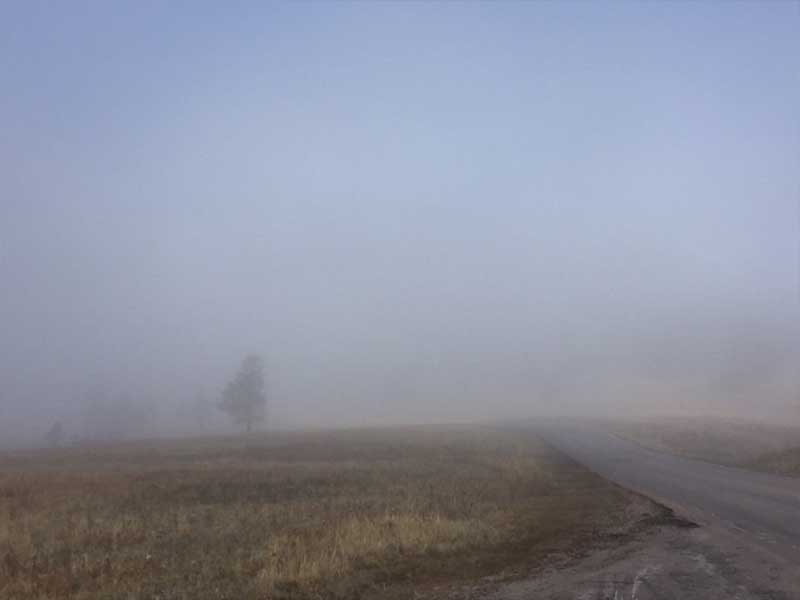
Research Opportunities
Undergraduate research is a key component of both AES specializations. Senior capstone projects are directed by students on topics of their choosing; paid positions are available in on-campus labs; and Mines students benefit from high placement rates at Research Experiences for Undergraduates (REU) sites across the country.
Student-Driven Activities
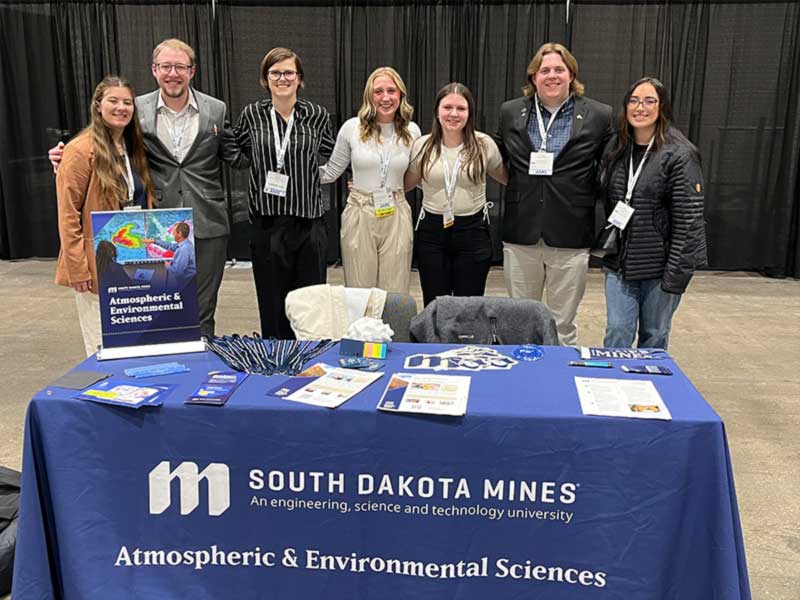
South Dakota Mines has an active American Meteorological Society (AMS) student chapter, known on campus as the Weather Club. Weather Lab workspace is open to all atmospheric science students, and interested students have the option to participate in WXChallenge forecasting competitions as well.
Location, Location, Location
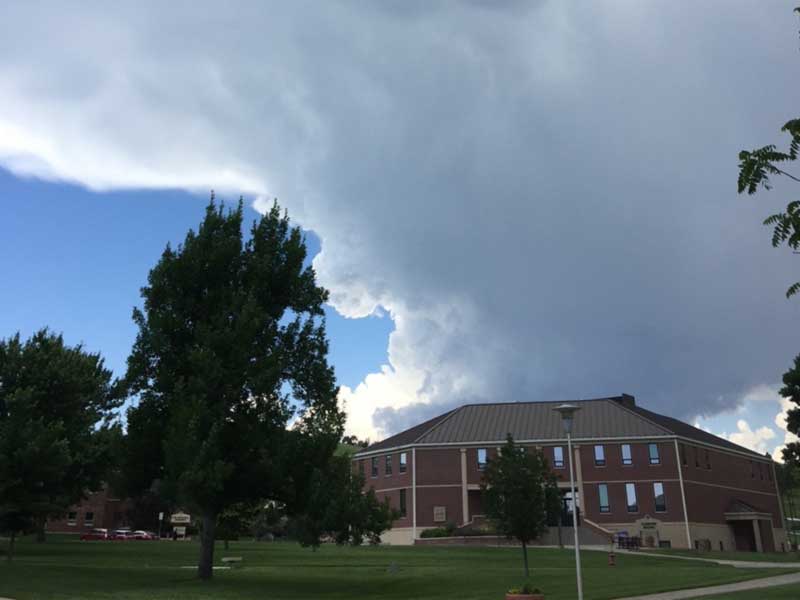
From severe thunderstorms in the summer to unseasonably warm temperatures in the middle of winter, our diverse and ever-changing weather in the Black Hills and western South Dakota makes South Dakota Mines the ideal setting for this field of study.
My favorite part of my National Weather Service internship was launching weather balloons and practicing my forecasting skills using the Advanced Weather Interactive Processing System. I also learned how to send information to decision-makers during weather events and how to process a severe storm warning.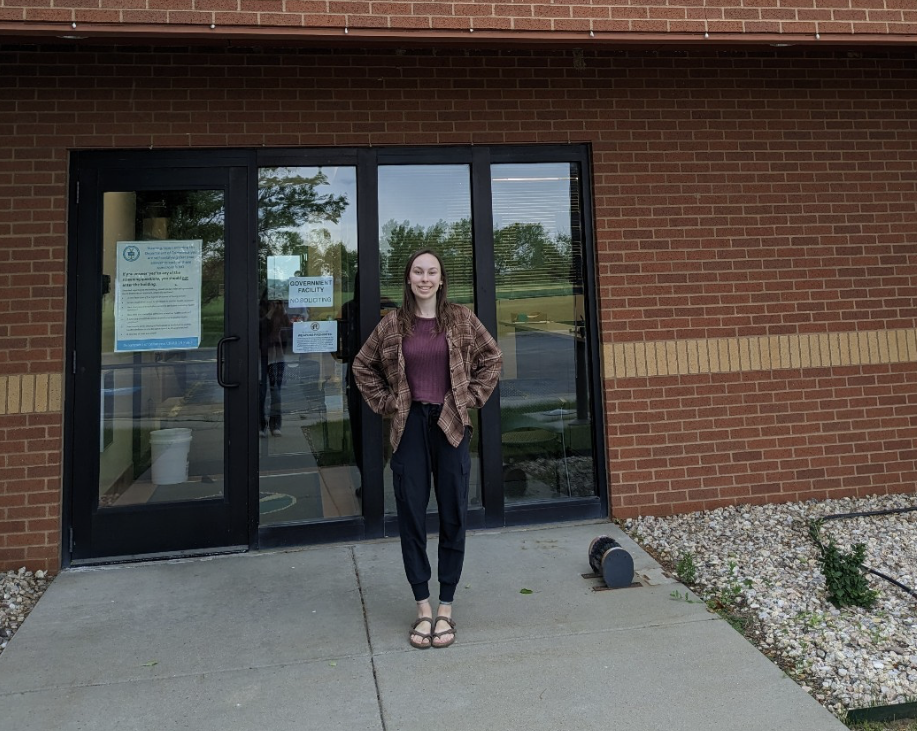
Thinking About Transferring to Mines?
Transfer students at South Dakota Mines work one-on-one with faculty and advisors to evaluate prior coursework and create a clear path to graduation, often within the same timeline as students who started here as first-years.
Courses in math, physics, engineering, environmental science, and related STEM fields often transfer smoothly into the Atmospheric and Environmental Sciences curriculum. To view our complete database of previous transfer credits, visit our Transfer Credit Database or use our Transferology tool. To see how standardized tests (AP, CLEP, GED, etc.), military experience, or industry certification might apply, view the Prior Learning and Validated Credit dashboard.
Transfer students are encouraged to get involved in research, internships, student organizations, and forecasting activities as soon as they arrive on campus.
Whether you come from a community college or another four-year university, you will have access to connections with the National Weather Service, paid research positions, and applied learning opportunities designed to help you confidently pursue a career in meteorology. With two large career fairs held each year, students have the opportunity to connect with employers offering internships, co-ops, and full-time roles.


Have more questions?
Dr. Adam French