

GeologyBS
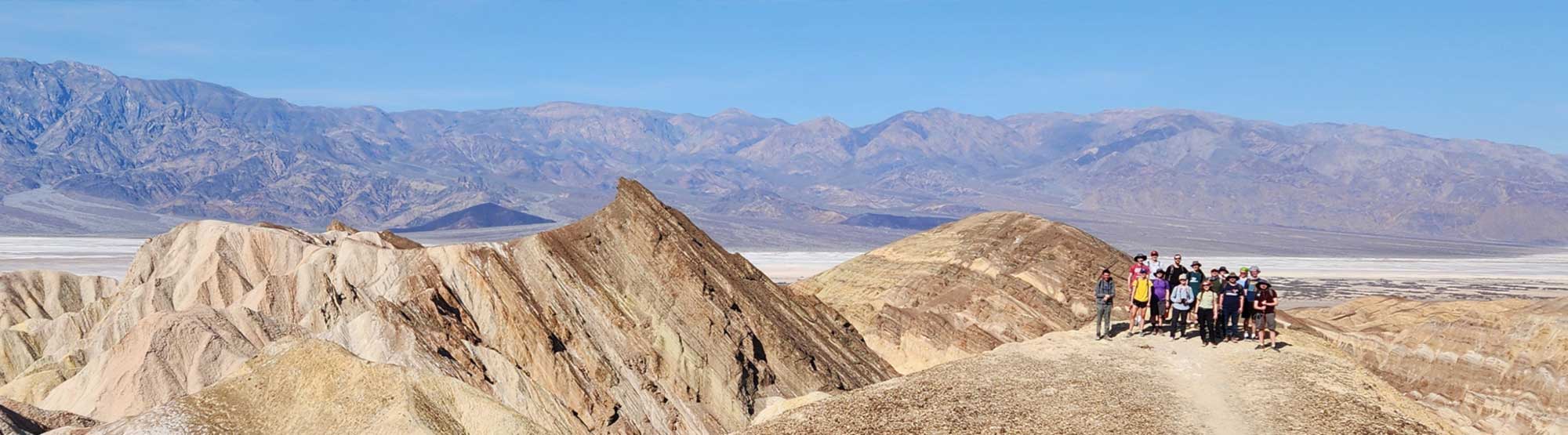
A world of opportunities awaits new and transferring students studying geology at South Dakota Mines. Our program combines field-based discovery with advanced laboratory research to prepare students for impactful careers in energy, environmental science, and much more. Plus, the geology and paleontology of the Black Hills and adjacent Great Plains provide us with an extraordinary natural classroom and lab. Geologists from across the country and around the world travel to western South Dakota to study in our backyard. Ready to join them?
Go Deeper in Geology at Mines
Academic Excellence
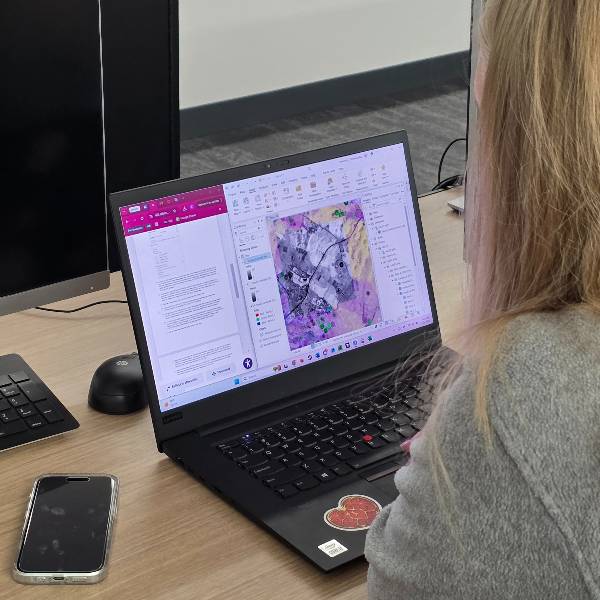
Geology students at Mines benefit from small class sizes, esteemed professors, and a high-quality curriculum. Our bachelor's program is only the second in the nation to be accredited by the Applied and Natural Science Accrediting Commission of ABET.
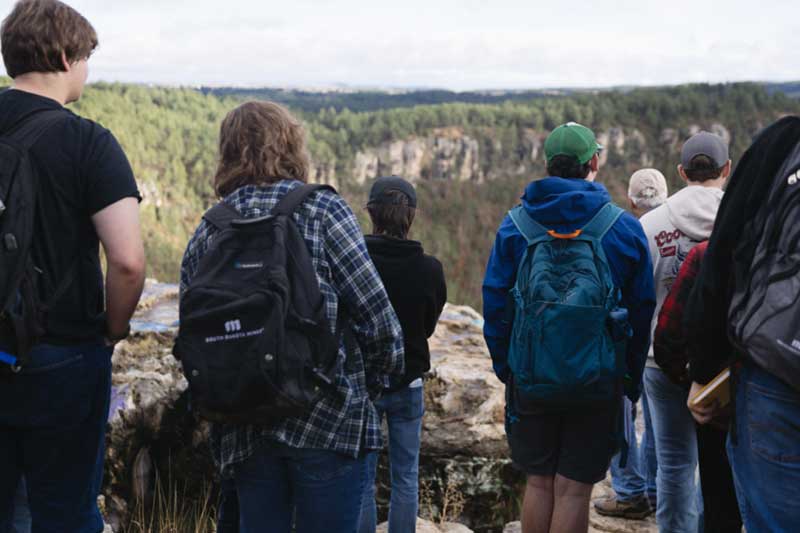
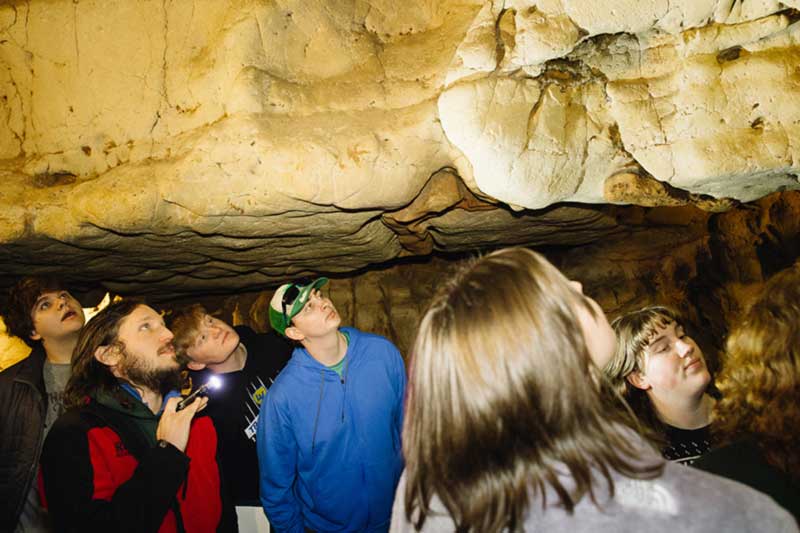
Situated between the beautiful Black Hills and Badlands National Park, Mines is the ideal place for students studying geology. On any given day, your classroom might be a cave that winds deep underground or atop a canyon wall that forms an incredible landscape.
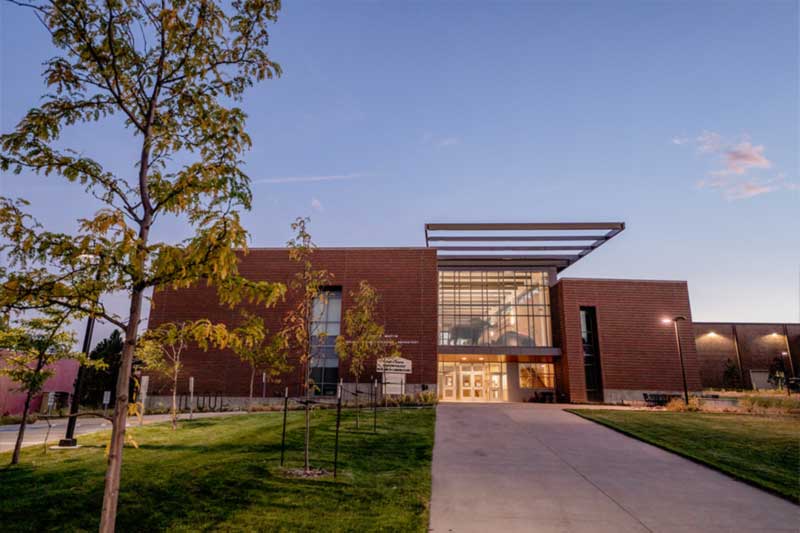
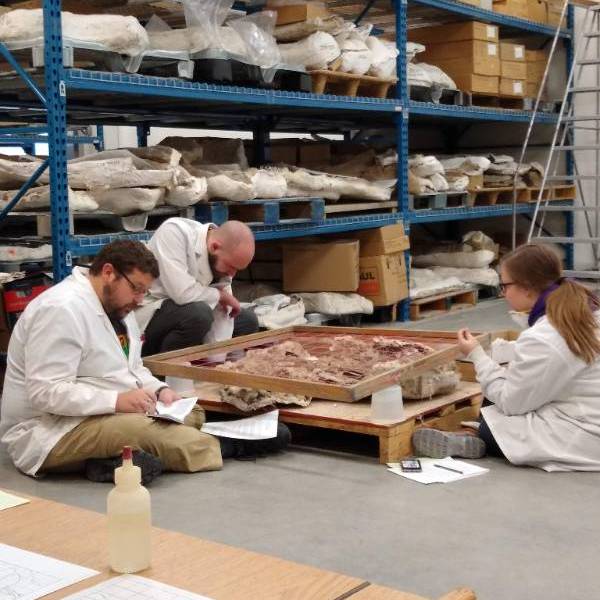
Whether you are an undergrad or graduate student, expect hands-on learning in our labs, in the outdoors, and in affiliated facilities, including the James E. Martin Paleontology Laboratory on campus and the Sanford Underground Research Facility in Lead.

Field Camps
The department operates the Black Hills Natural Sciences Field Station, one of the largest summer field camp stations in the United States, with opportunities for study spanning from the Black Hills to Hawaii, from Iceland to New Zealand, and beyond.
Accelerated Master's Program
Students with "junior" standing and a 3.0 or higher GPA can apply to Mines' Accelerated Master of Science Program. The program allows students to "double count" up to 9 credits toward their bachelor's and master's degrees, freeing up more time for research.
Student-Driven Activities
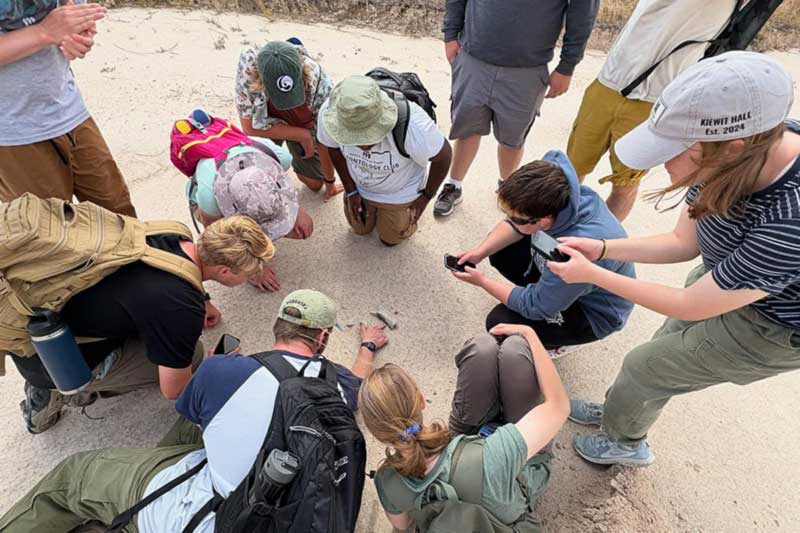
Three active student organizations fall under the Department of Geology & Geological Engineering: Society of Economic Geologists (SGE), Society of Petroleum Engineers (SPE), and the Paleontology Club. Students outside the department are also welcome.
I have had tons of fun and learned so much from the geology program at Mines. The faculty push me to be my best every day and truly care about my success. The Black Hills provide me with a multitude of opportunities to expand my knowledge of both geology and paleontology. I look forward to my future career, as I know it is backed by an amazing education.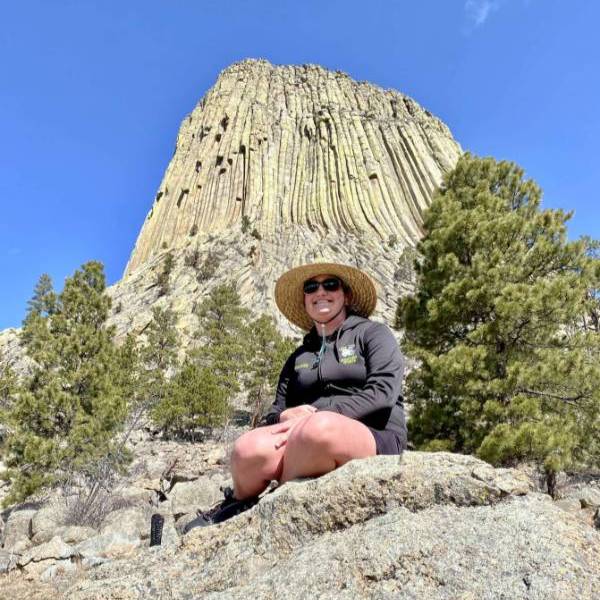
By the Numbers
Students can select courses from six areas of focus in the Geology bachelor’s program at South Dakota Mines: Environmental Geology, Geospatial Technology, Energy and Mineral Resources, Paleontology, Solid Earth and Tectonics, and Geophysics.
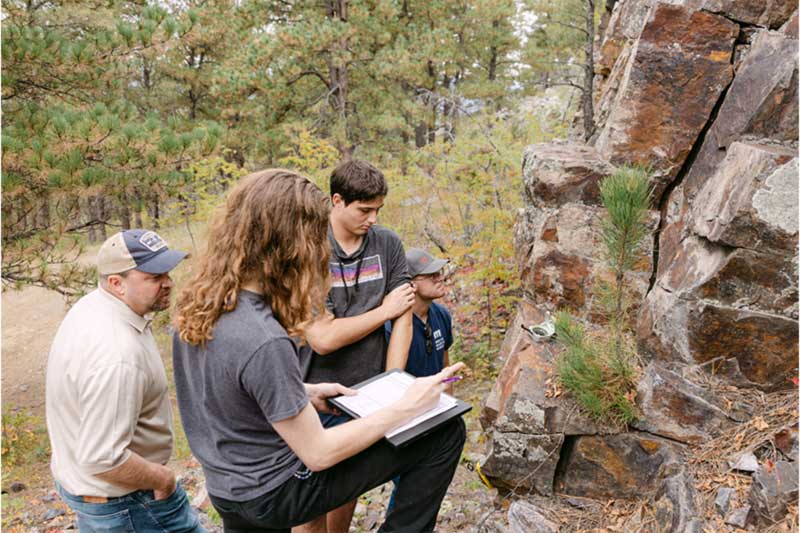
Of the 11 full-time faculty members in the Department of Geology & Geological Engineering, eight teach in the Geology/Paleontology focus areas. With only about 80 Geology undergraduates, you're guaranteed small class sizes and one-on-one attention.
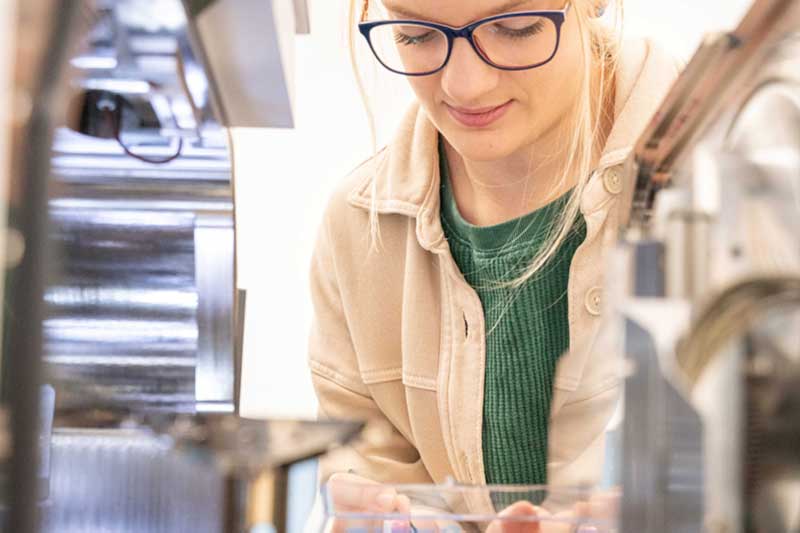
Mines is one of only five universities in the U.S. with all three mineral industry disciplines: Geology and Geological Engineering, Mining Engineering and Management, and Materials and Metallurgical Engineering. All are housed in Mines' new Nucor Mineral Industries Building featuring state-of-the-art laboratories.
Thinking About Transferring to Mines?
Transfer students at South Dakota Mines work one-on-one with faculty and advisors to evaluate prior coursework and create a clear path to graduation, often within the same timeline as students who started here as first-years.
Courses in math, physics, engineering, environmental science, and related STEM fields often transfer smoothly into the curriculum at Mines. To view our complete database of previous transfer credits, visit our Transfer Credit Database or use our Transferology tool. To see how standardized tests (AP, CLEP, GED, etc.), military experience, or industry certification might apply, view the Prior Learning and Validated Credit dashboard.
Transfer students are encouraged to get involved in research, internships, student organizations, and other activities as soon as they arrive on campus.
Whether you come from a community college or another four-year university, you will have access early and often to professional connections in your field of study. With two large career fairs held each year, students have the opportunity to connect with employers offering internships, co-ops, and full-time positions.


Have more questions?
Dr. Robert Hall