

Mines Students Create New Drone Technology to Improve Live Entertainment Coverage
From high-tech drone systems transforming live entertainment and AI software streamlining
medical claims to renewable diesel innovations and smart sensors delivering real-time
concrete mix analysis, South Dakota Mines students are tackling real-world challenges
through bold design and inventive thinking.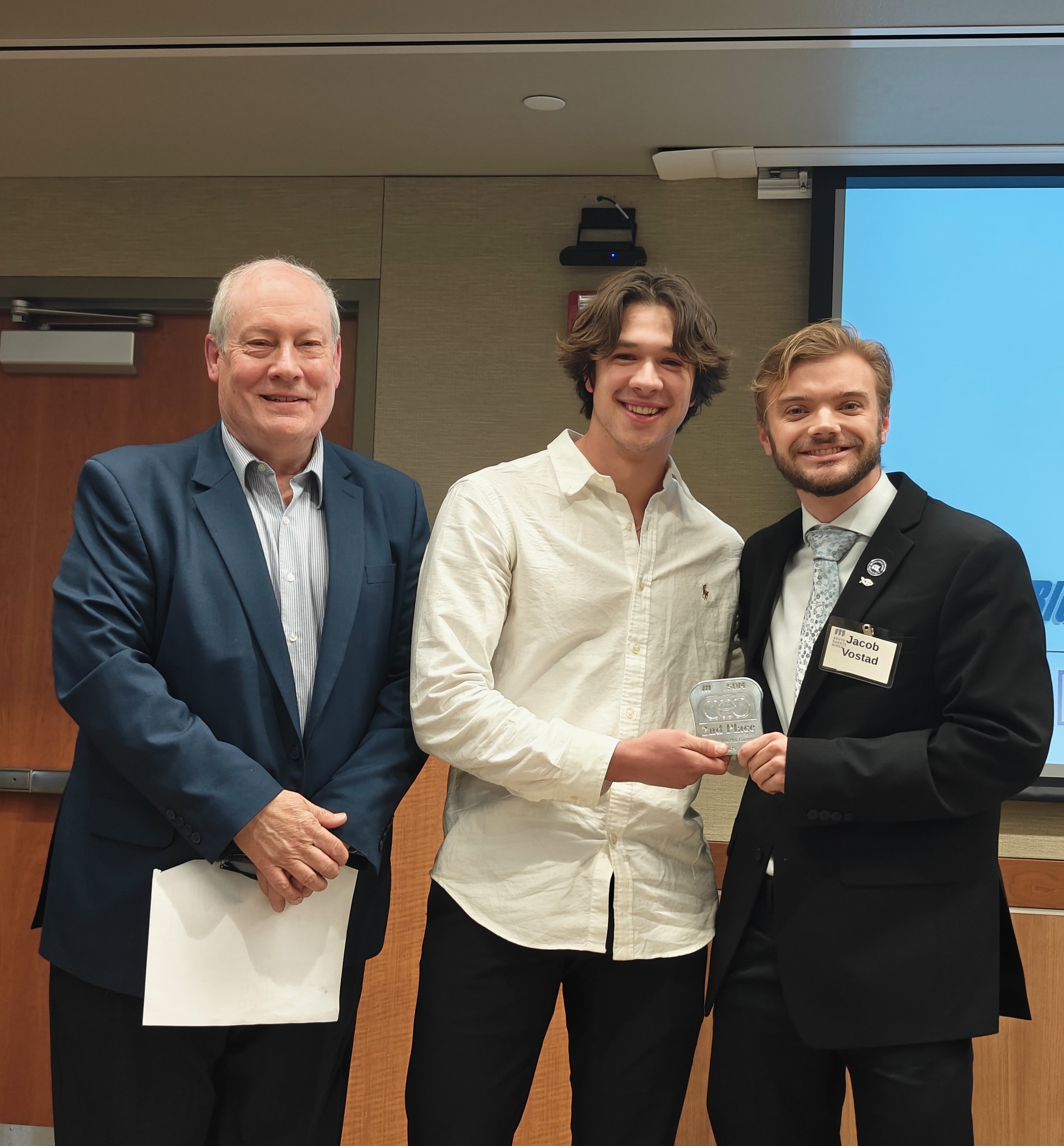
The CEO Business Plan Competition puts that innovation to the test, challenging entrepreneurs to pitch their ideas before an expert panel of judges competing for $14,000 in prize money. In its 12th year, the annual Mines event is the state’s longest-running university-sponsored business competition.
This fall, students participated in various activities within the innovation cycle, introducing them to the process of developing an idea into a business plan, leading up to the CEO Business Plan Competition.
“This year's CEO Business Plan Competition showcases the extraordinary depth and range of innovation coming from these students,” said Beth Lambeth, associate vice president of research-innovation and entrepreneurship. “All these ideas reflect not only what's possible in the lab or the classroom, but what can truly make an impact in our communities and industries.”
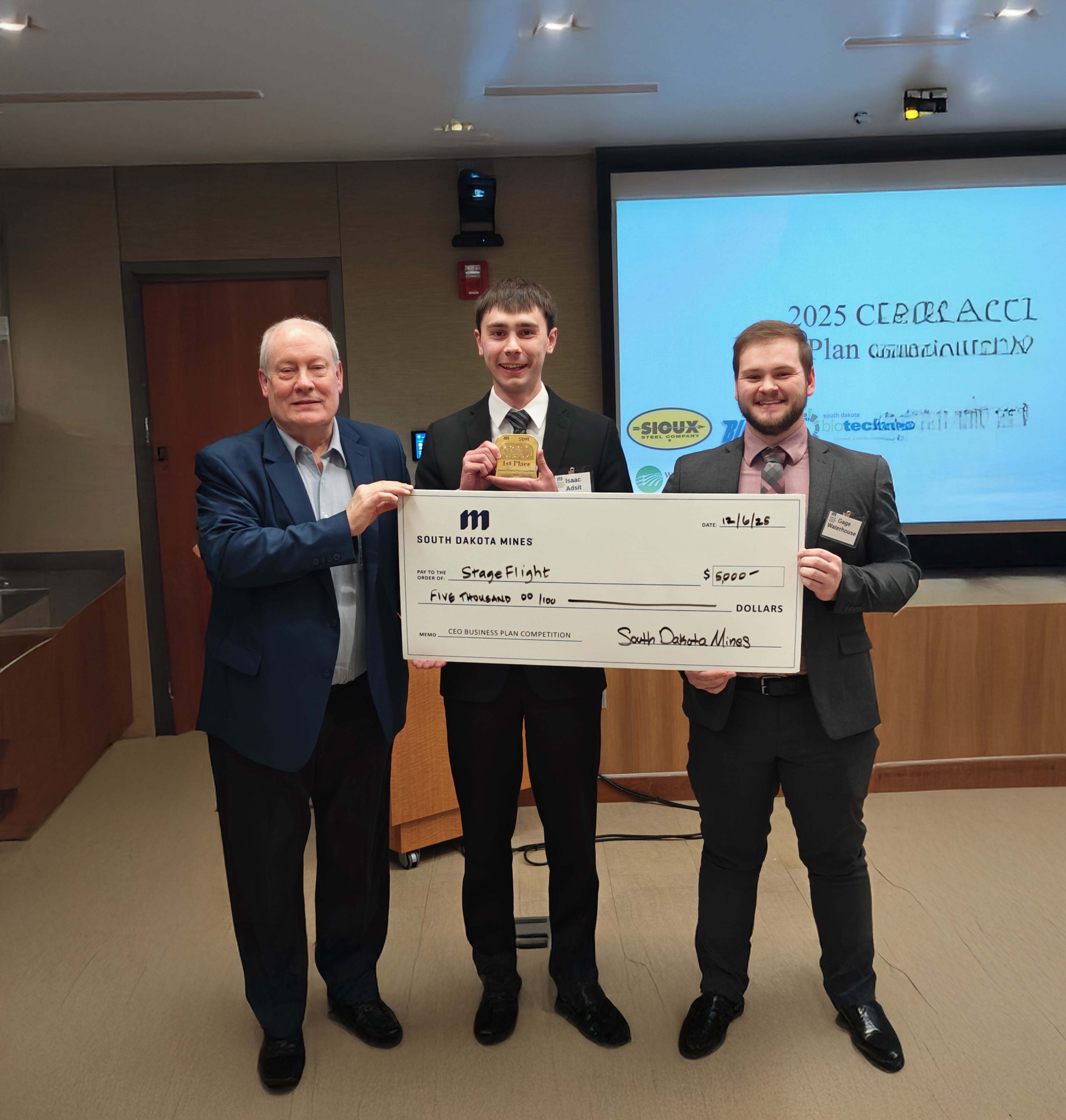
 Isaac Adsit, a sophomore computer engineering major, and Gage Waterhouse, a senior
mechanical engineering major, won first place and $5,000 for StageFlight, a Rapid
City-based drone technology company reimagining aerial coverage for live entertainment,
broadcasting and large venues. Adsit and Waterhouse, both involved in the concert
media industry, developed smart unmanned aerial systems designed specifically for
safe, compliant operation over crowds, eliminating battery limitations, reducing complexity
and delivering cinematic-quality visuals.
Isaac Adsit, a sophomore computer engineering major, and Gage Waterhouse, a senior
mechanical engineering major, won first place and $5,000 for StageFlight, a Rapid
City-based drone technology company reimagining aerial coverage for live entertainment,
broadcasting and large venues. Adsit and Waterhouse, both involved in the concert
media industry, developed smart unmanned aerial systems designed specifically for
safe, compliant operation over crowds, eliminating battery limitations, reducing complexity
and delivering cinematic-quality visuals.
Other winners include:
Second Place, $4,000: Sum-IT - Raleigh Martin, a senior mechanical engineering major,
and Jacob Vostad, a senior chemical engineering major, created an innovative AI-powered
platform that transforms how disability claims are prepared and evaluated, dramatically
reducing the time and complexity involved in building medically sound cases. The complex
AI-agentic technology converts raw medical records into structured, regulation-compliant
summaries, which are geared toward adjudicative hearing-level cases. These quality
medical summaries are structured to address the Social Security Administration criteria
and checkpoints outlined in the application.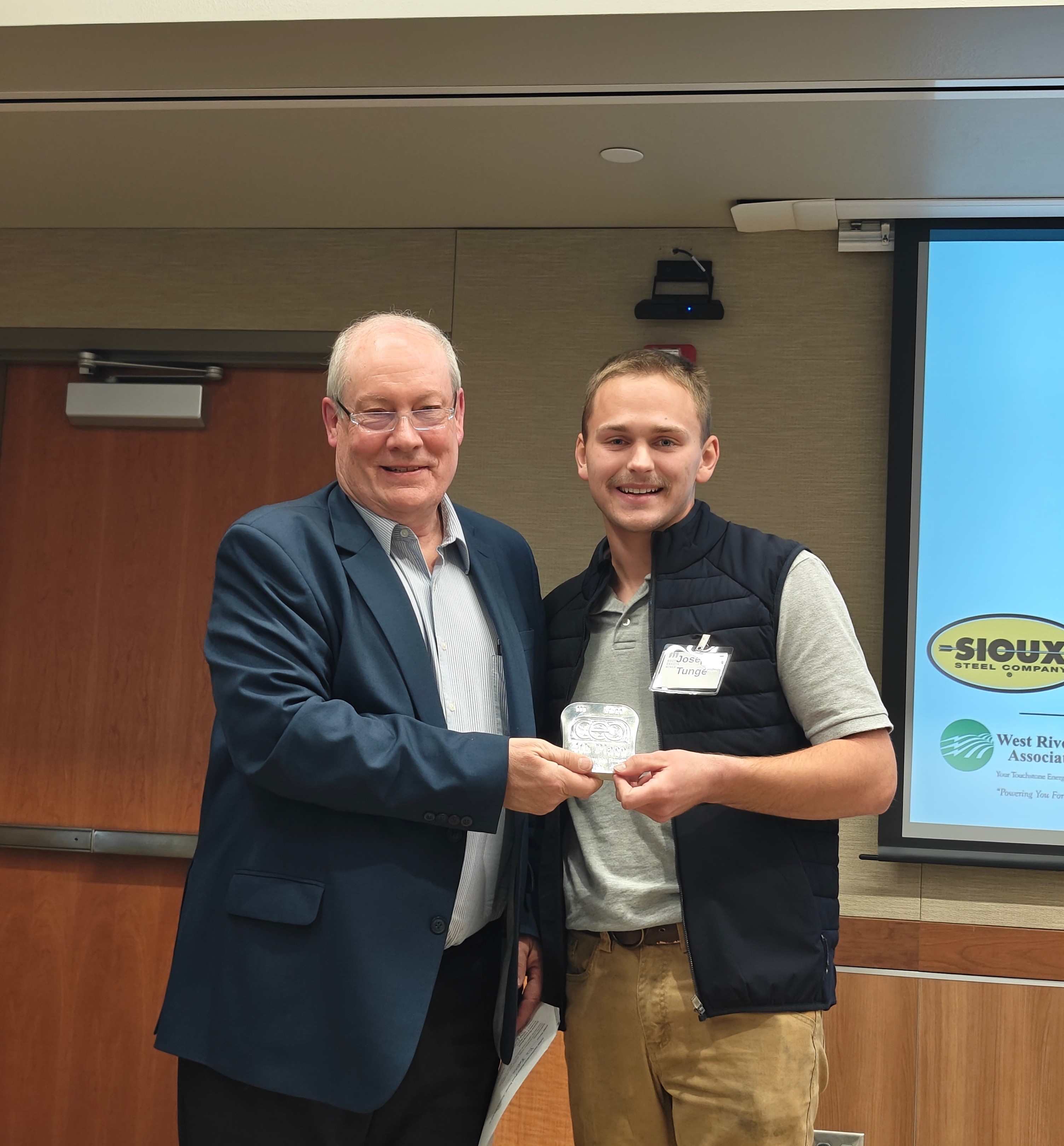
Third Place, $3,000: TruDiesel - Amelia Huffer, a biomedical engineering doctoral student, and Kelly Sutko, a chemical and biological engineering doctoral student, developed advanced cold-flow additives and a multitiered filtration system that enables renewable diesel to perform reliably in cold climates. Their technology removes impurities such as microbes and trace metals while preventing fuel gelling at low temperatures, an industry challenge that has limited renewable diesel options outside of warmer regions.
Fourth Place, $2,000: SlumpScan – Joseph Tunge, a sophomore biomedical engineering major, began helping his dad pour concrete at eight years old. He is now combining his years of real-world field experience to build a handheld sensor and software platform designed to bring data-driven precision to small-scale concrete work. Tunge hopes SlumpScan will become the “meat thermometer of concrete,” delivering instant, easy-to-understand measurements on hydration, mix consistency, temperature and workability before concrete is even poured.
“Competitions like this allow students to get valuable feedback from people who have been in the entrepreneurship industry for decades,” Vostad said. “The camaraderie that is made by partners working together in this competition is a vital part as well. A team learns the strengths of each member, how to effectively craft and work together on a pitch and how to come together to make a seamless argument for their product. The financial incentive is also a major positive, as teams who want to pursue their startup goals often need financial boosting to make leaps in product development.”
The CEO Business Plan Competition is open to all high schools in South Dakota, as well as higher education institutions. Participants receive business plan training throughout the semester, along with assistance from the Small Business Development Center in preparing financial statements and mentoring from local business leaders and South Dakota Mines Entrepreneurs-in-Residence.
“South Dakota Mines is deeply grateful to the many South Dakota businesses and individuals who generously support the CEO Business Plan Competition,” Lambeth said. “These sponsorships are essential to making opportunities like this possible for our students. Their continued investment reflects a shared belief in innovation, entrepreneurship, and the strength of South Dakota’s future workforce, and a confidence that top-notch ideas and technologies come from Mines, benefiting Rapid City and communities across the state.”