

South Dakota Mines Day of Giving Strengthens Student Success Across Campus
South Dakota Mines will celebrate its annual Day of Giving on Tuesday, Dec. 2., rallying alumni, friends and community members to support the programs and learning opportunities that help students stay focused, supported and successful.
From scholarship and emergency aid to experiential learning and student life, Day of Giving fuels every aspect of the student experience.
This year’s campaign highlights the importance of donor support in helping students succeed in all aspects of their educational journey.
“Many of these programs make sure students have the resources they need when challenges appear,” said Bailey Ellis, director of annual giving for the university’s Center for Alumni Relations & Advancement. “Donations, including those from the Day of Giving, allow us to respond quickly when funding shifts or new students' needs emerge. Every gift directly strengthens the student experience.”
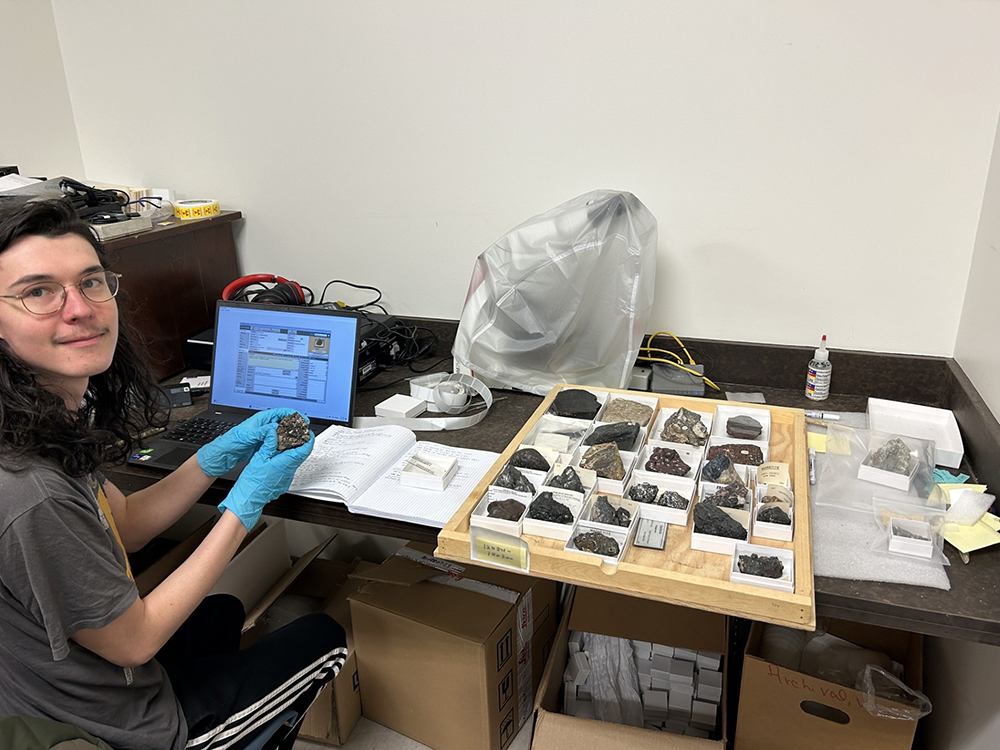
One of this year's Day of Giving campaigns is for the Mines Museum of Geology mineralogy project, which recently lost federal funding midway through a three-year grant through the Institute for Museum and Library Services, halting work and cutting off paid student positions critical to the project’s success.
Students like Ian Christiansen, a senior geology major, have spent the past academic year cataloging and curating the museum's more than 30,000 mineral specimens, work that is preserving and revitalizing one of the nation’s most distinctive mineralogy archives while providing invaluable hands-on learning.
“Working in mineral collections has given me an opportunity to learn about the rich geological history of the Black Hills area,” Christiansen said. “I am a hands-on learner, and being able to have access to these samples has allowed me to recognize geological structures, rocks and minerals out in the field. This work has also allowed me to improve my organizational skills, rock/mineral identification and proficiency with various databases and software.”
Darrin Pagnac, Ph.D., professor and director of the Museum of Geology, said the loss of federal funding threatens these experiential learning opportunities. “Students gain real-world, on-the-job training working directly with these specimens. Losing that experience is the real loss.”
The collection includes a suite of minerals from Black Hills mines that no longer exist. “Aside from being gorgeous, scientifically valuable minerals, they are the only evidence that some of these mines existed,” Pagnac said. “It is not just scientific; it is a historic archive.”
Other areas donors can support include the student emergency fund, campus food pantry, peer mentoring and student-success programs, athletics, CAMP, music, the student-run radio station KTEQ, and many other student organizations.
Individuals can visit this page to find all the ways to give.
“We thank everyone for being a part of what makes Mines special,” Ellis said.