

Mines, SDSU Nursing and Monument Health Collaborate to Advance Wound-Care Solutions
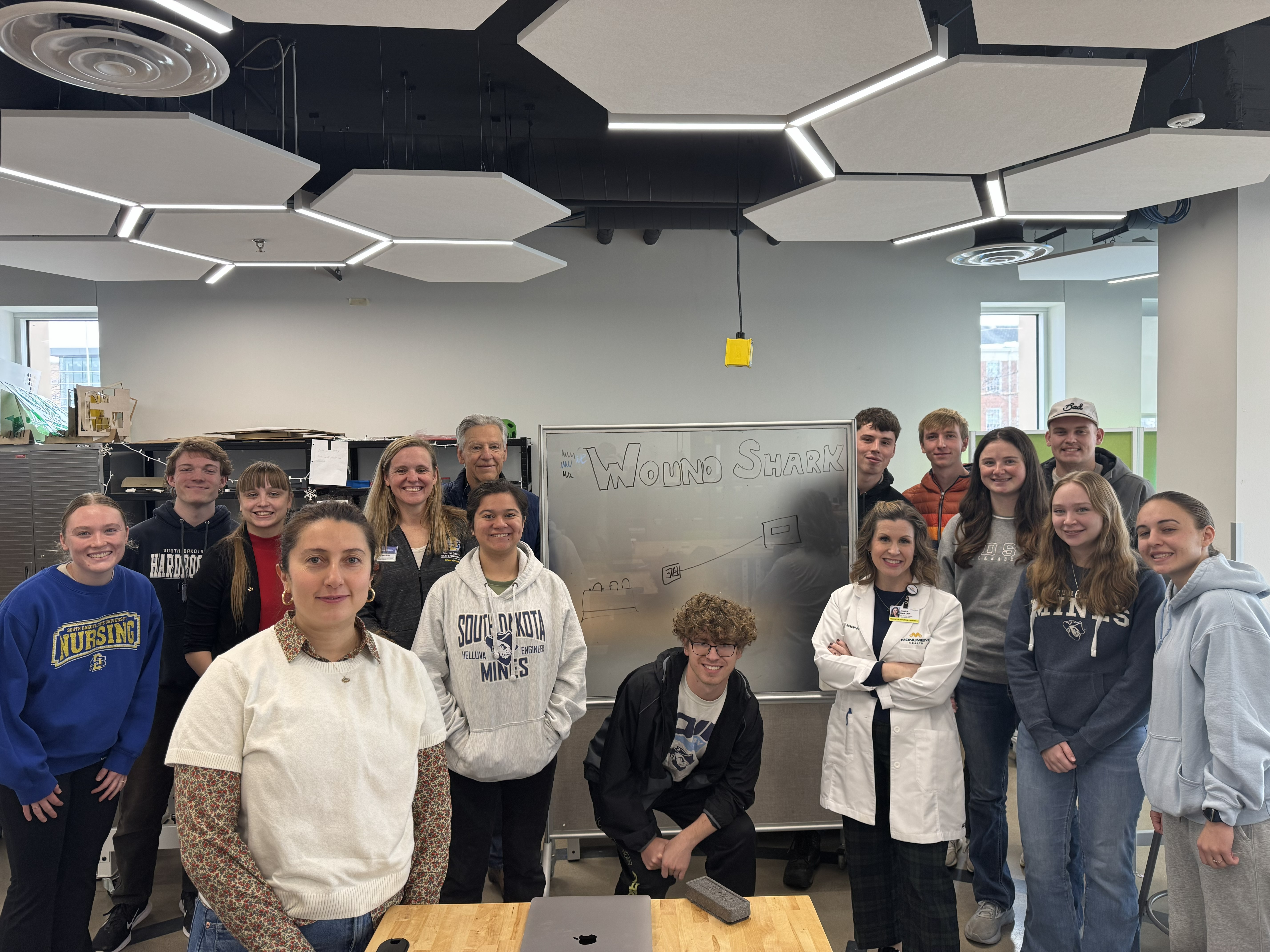
South Dakota Mines biomedical engineering students will pitch original wound-care product ideas to a panel of seasoned business and industry professionals and negotiate deals in a Shark Tank-style event, Friday, Dec. 12 from noon to 1 p.m. in the university’s Devereaux Library Makerspace.
Student teams will pitch innovative, biocompatible wound dressings that detect and treat wound-related odor, an early sign of infection, with a focus on improving care in rural, remote and frontier communities where access to healthcare is often limited.
This is the second year of the competition created by Tugba Ozdemir, Ph.D., assistant professor of nanoscience and biomedical engineering at Mines, to introduce students to innovation, entrepreneurship and real-world problem-solving in healthcare.
“This year’s cohort was challenged with an emerging and unmet need in the wound care field, the specific smells associated with specific wound infections,” Ozdemir said. “The students created wound care solutions to ‘smell’ the wounds. It is a rather unique and revolutionary approach. This year’s projects will not only be unique, addressing an unmet problem in the wound care field, but also trailblaze the potential commercial products that could have been developed for wound odor detection. I can't wait to see their final pitches.”
The students also learned how to turn ideas into viable ventures through business plan training led by Jim Quinn, Mines alumnus and entrepreneur-in-residence.
The event also showcases how collaboration between higher education and industry can accelerate innovation in patient care.
“Higher ed and industry collaborations drive innovation and create a practical, real-life application to the students' projects and ideas,” said Jessica Hart, certified nurse practitioner and wound specialist with Monument Health.
This is Hart’s second year involved with the Mines project. She served as a wound specialist consultant, providing lectures on wound healing pathophysiology and management. “I enjoy speaking, teaching and working on unique projects outside of my day-to-day patient care,” she said. “I feel like it stretches me, and I learn just as much as the students do.”
Mines students also spent time observing wound care in action at the Monument Health Outpatient Wound Care Clinic.
In addition to Monument Health, Mines collaborated with South Dakota State University (SDSU) College of Nursing in Rapid City. Sarah Mollman, Ph.D., SDSU associate dean for research and associate professor, reached out to Ozdemir after seeing a poster presentation by Cruz Franich, Mines biomedical engineering graduate student, on last year’s wound shark project. “I had a nice conversation with him and loved the concept behind it,” Mollman said. “I connected with Tugba and discussed how to incorporate nursing students.”
This year, senior nursing student Kirsten Veit designed a simulated wound experience at SDSU College of Nursing’s Healthcare Simulation Center. “The Mines students were able to experience simulated wounds to inform their product development,” Mollman said. “Kirsten and I answered their questions and gave suggestions on user-end applicability, such as vision and hearing loss, location of wounds, conditions of the environment and distance to healthcare.”
The wound shark competition demonstrates the value of higher education-industry partnerships in preparing students for the workforce while driving innovation that benefits society.
“These partnerships and collaborations are also beneficial for the greater community through mutual support of locally grown programs, driving economic growth through job creation and fostering a better prepared workforce,” Hart said.