

South Dakota Mines to Host 2026 ASCE Rocky Mountain Regional Conference
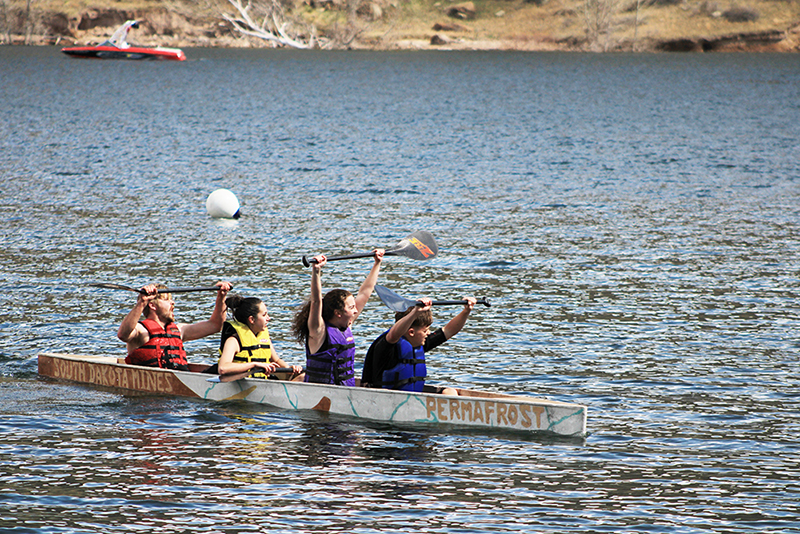
In addition to balancing their rigorous coursework and campus involvement, a group of South Dakota Mines students are taking on another monumental challenge: organizing and hosting a major regional competition that will bring more than 250 students and faculty from 11 universities to the area April 23 – 25.
South Dakota Mines will host the 2026 American Society of Civil Engineers (ASCE) Rocky Mountain Student Symposium, a three-day event that rotates annually among universities across the five-state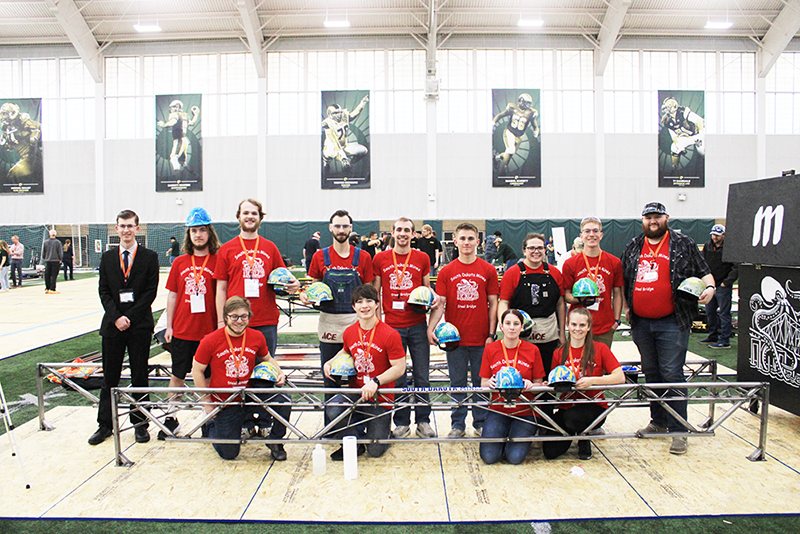 region. The symposium is one of 21 held nationwide each year and was last hosted
by Mines in 2018.
region. The symposium is one of 21 held nationwide each year and was last hosted
by Mines in 2018.
Planning and coordination of the event has been led almost entirely by students in the university’s ASCE student chapter, with senior civil engineering student Lucas Ransen serving as symposium chair.
“I have really enjoyed the planning, and it has been a really cool learning experience, but there have also been some stressful parts to it as well,” Ransen said, adding that the skills he developed through the planning process will help long after he graduates this May.
The symposium will feature a range of hands-on and technical competitions designed to test students' engineering knowledge, creativity and teamwork. The event begins Thursday, April 23, on the Mines campus with the Mystery Design competition and a welcome social.
On Friday, April 24, all competitions, including concrete canoe and steel bridge competitions, two of the symposium's marquee events, will take place at The Monument. Additional competitions include surveying, sustainable solutions and timber-strong design build.
The competition culminates on Saturday, April 25, with concrete canoe races at Angostura Lake, followed by an awards ceremony back on campus that evening.
All aspects of the competition are open to the public. A full schedule of events can be found here.
Top-performing teams will advance to national competitions. The steel bridge national competition is scheduled for May in Texas, while the concrete canoe national competition will take place in June in West Virginia.
Hosting the symposium is a significant honor and undertaking for the university and the students, requiring nearly two years of planning. Students are responsible for organizing logistics, coordinating volunteers, securing judges and managing event operations, with guidance from faculty advisors. Aside from organizing the symposium, the students are also competing in a variety of the seven events.
“The competition teaches us the engineering process and the skills necessary to execute the process,” said Zoey Thies, a senior civil engineering major and co-captain of the concrete canoe team. “We don’t have to be experts in concrete to be on this team, but we do have to be able to ask enough questions to be competent about concrete and what we can change to affect the properties to create a canoe to float, race and display.”
Being a civil engineering major is not a requirement. In fact, different multidisciplinary perspectives have proven beneficial to the team’s past success.
During Thies’ freshman year, a math major was the team’s compliance officer. “She knew nothing about concrete but could ask enough questions to double-check that the team was in compliance and following the rules,” she said. “We made it to Nationals that year without a single senior on the team. If she had not been in that position, I am not sure that as many rules would have been caught that year. She now works for a company that ensures everything is being followed for veteran programs at colleges across the country. That was a direct skill set that was practiced under concrete canoe.”
The symposium highlights the value of experiential learning, giving students the opportunity to apply classroom concepts to real-world scenarios. From designing and racing concrete canoes to constructing steel bridges, participants gain practical skills that translate directly to their future internships and careers.
For Ransen, the experience with ASCE has already paid off. “Getting involved early really opened the doors for an internship and full-time job after graduation, and has made my classes easier because I was learning concepts ahead of time,” he said.
It also builds camaraderie.
“Students are gaining a community from these competitions,” Thies said. “Everyone gains something different from this competition, whether it is a skill they developed and grew or friends they made along the way; everyone walks away with something.”