

Mines Team Completes Prestigious NSF I-Corps Program as the Only Great Plains and Northwestern U.S. Representative
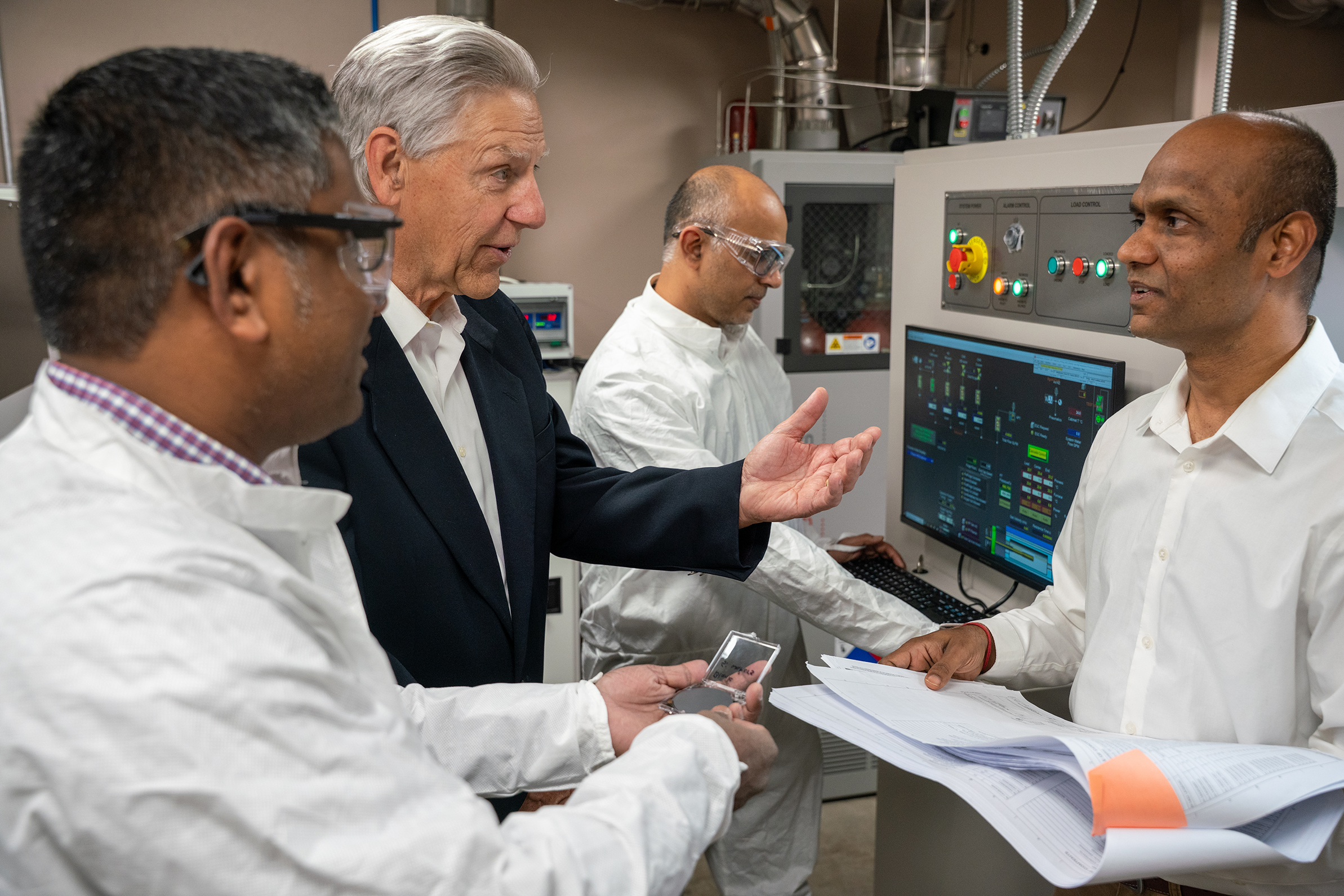
A research team from South Dakota Mines is advancing to the next phase of commercialization of its NanoGuard product, an invisible, nanometer-thin shield that protects devices from biological buildup and corrosion, after recently completing the prestigious National Science Foundation (NSF) National Innovation Corps (I-Corps) program.
The NSF I-Corps program is an immersive, entrepreneurial training program that facilitates the transformation of invention to impact. The seven-week training prepares scientists and engineers to broaden their focus beyond the university laboratory, accelerating the economic and societal benefits of NSF-funded and other research projects poised for commercialization.
“The I-Corps experience pushed us to think beyond the laboratory and listen directly to potential customers,” said Sunith Varghese, doctoral candidate and entrepreneurial lead for the NanoGuard team. “Through more than 100 interviews, we learned where fouling and corrosion create the most urgent pain points, especially for sensors, submerged devices and high-value assets. Those insights are now shaping our target markets, product design and next steps of commercialization.”
The Mines team was the only participant from the Great Plains and Northwestern regions selected for a national cohort that includes teams from institutions such as the Massachusetts Institute of Technology (MIT), Columbia University and the University of California, Berkeley.
“Being the only team representing the Great Plains and Northwestern U.S. regions was both humbling and energizing,” said Venkataramana Gadhamshetty, Ph.D., Mines professor of civil and environmental engineering and co-director of the 2D-Best Center on campus. “It showed that innovative research developed at South Dakota Mines stands alongside innovations emerging from institutions such as MIT, Columbia University, UC Berkeley and other leading institutions. It also reinforces the importance of bringing technologies developed in our region into national conversations on infrastructure resilience, defense readiness, environmental monitoring and advanced manufacturing. We are small, but mighty, all because of collegial, talented and convergence tech-focused faculty and students.”
With the NanoGuard coating invisible and thousands of times thinner than the human hair, it provides strong protection without getting in the way of how a device works. “It can protect delicate sensors, microelectronics and other high-value components without changing their size, shape, sensitivity or performance,” Gadhamshetty said. “It acts like an invisible shield that protects the device without interfering with its job.”
The idea for NanoGuard traces back to Gadhamshetty’s time at the U.S. Air Force Research Laboratory at the Tyndall Air Force Base and has been advanced over more than 15 years of research. “I-Corps gave us the opportunity to connect this research foundation with customer needs, market opportunities and a commercialization pathway,” Gadhamshetty said.
As part of the I-Corps program, the Mines team received $50,000 to support customer discovery and advance early-stage commercialization efforts. Through intensive entrepreneurship training and market research, the team evaluated the commercial viability of NanoGuard, exploring its potential as an innovative antifouling and anticorrosion coating solution.
The team will now focus on advancing NanoGuard beyond Technology Readiness Level 5 by expanding testing beyond the laboratory and validating the coating's performance across a wider range of real-world applications and operating environments.
Their goal is to help customers reduce the need for frequent cleaning, replacement, recalibration and chemical treatments by providing durable, low-maintenance surface protection that saves both time and money.