

South Dakota Mines Strike Gold at Collegiate World Mining Championships
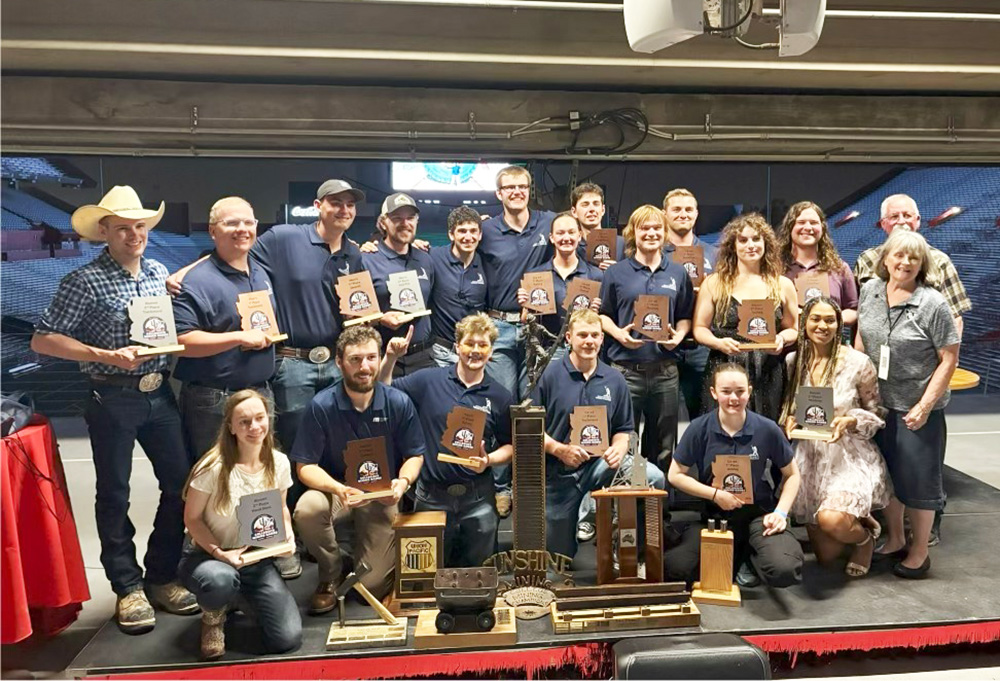
After nearly 50 years of competition, the South Dakota Mines men's mining and mucking
team captured the prestigious Sunshine Trophy, earning first overall in the fiercely
competitive field at the 48th International Collegiate Mining Competition.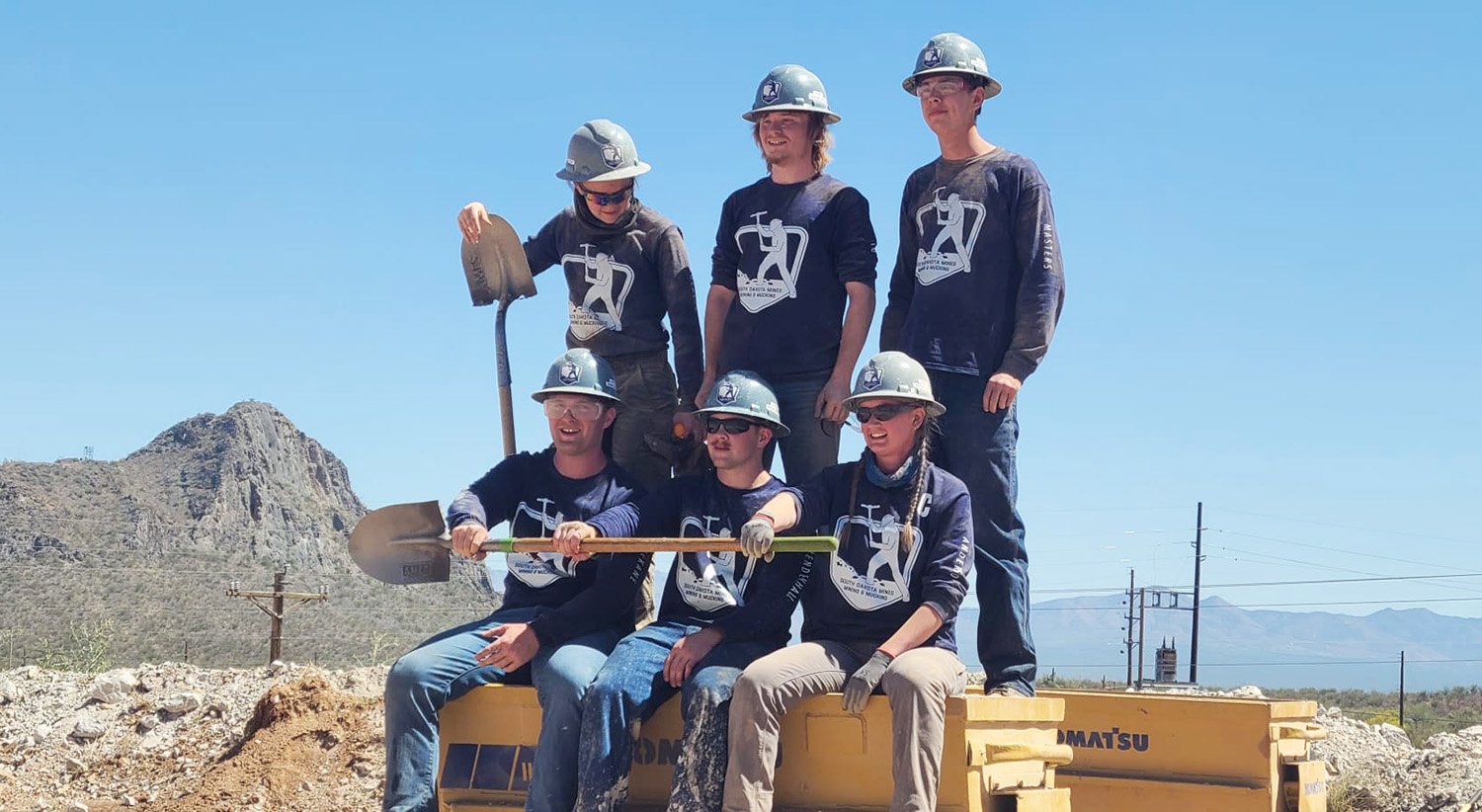
The momentum didn’t stop there. The university’s coed team continued its winning streak with another first-place finish, while the alumni team secured third overall.
More than 40 teams from across the United States, Australia, Canada, Germany and England competed in the championships, hosted at the University of Arizona in Tucson.
 “I couldn’t believe it,” said Brandon Armstrong, a senior mining and geological mining
major and captain of the men’s team. “When they announced that we had won the men’s
division, there were a couple of seconds of silence as we processed what they just
said. Once it hit that we had done it, we all jumped up and started hollering. I ran
around the table and hugged each of my teammates. I could not have been prouder of
each of them and how much we had accomplished together.”
“I couldn’t believe it,” said Brandon Armstrong, a senior mining and geological mining
major and captain of the men’s team. “When they announced that we had won the men’s
division, there were a couple of seconds of silence as we processed what they just
said. Once it hit that we had done it, we all jumped up and started hollering. I ran
around the table and hugged each of my teammates. I could not have been prouder of
each of them and how much we had accomplished together.”
The thought of bringing home the Sunshine Trophy has been on Armstrong’s mind since joining the team in 2021. “I dreamed that before I graduated, we would bring home the trophy and show the world what South Dakota miners are made of,” he said. “And finally, after overcoming innumerable challenges, we have done it.”
South Dakota Mines is one of the founding institutions of the Intercollegiate Mining
and Mucking Competition,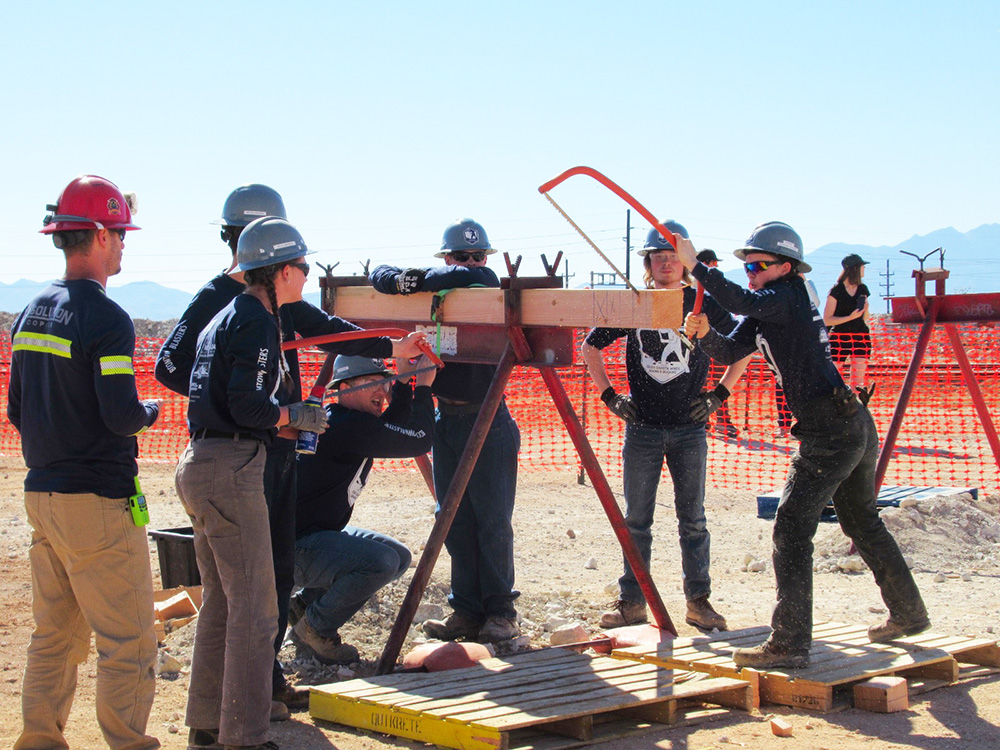 established in 1978 to commemorate the 91 miners who died in the Sunshine Mine disaster.
In May 1972, a fire broke out at the Sunshine Mine in Kellogg, Idaho. Smoke and carbon monoxide filled the area where the miners were working. At that time, the mining disaster was the largest in the hard-rock mining industry since 1917. The Sunshine Fire served as the catalyst for the Mine Safety and Health Act (Mine Act) of 1977, which still governs activities and has substantially decreased the number of mining fatalities.
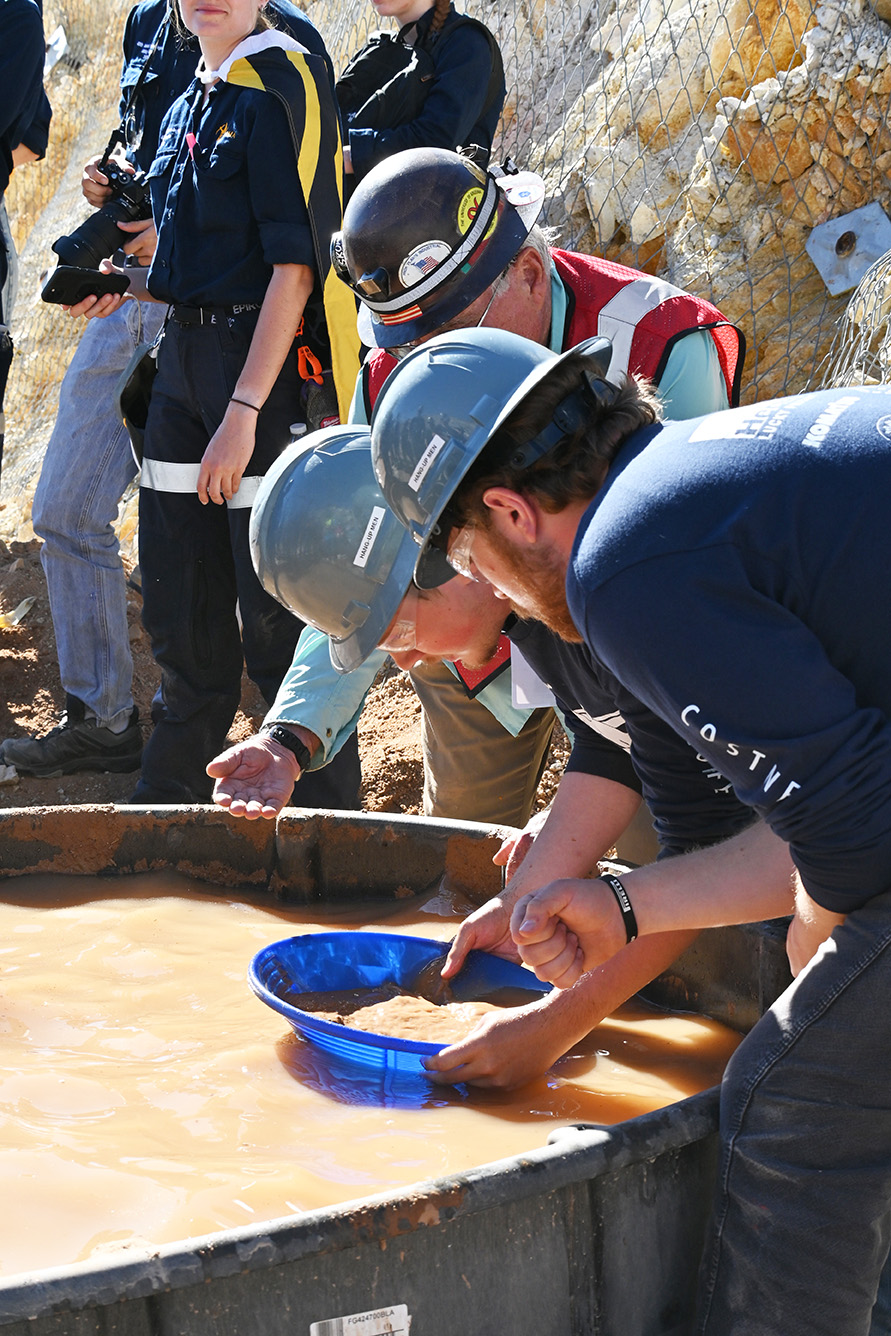
The mining games incorporate historical mining methods and practices, many of which were employed in the Black Hills following the 1876 gold rush. Skills demonstrated at the annual games include operating a pneumatic drill called a jackleg, hand steel, using a hammer and set of chisels to drill holes for explosives, and swede saw; mucking, the original method used by miners to shovel ore or “muck” into a cart after it was blasted out of the mine walls; mine surveying; gold panning; and track standing which requires contestants to erect a section of railroad track.
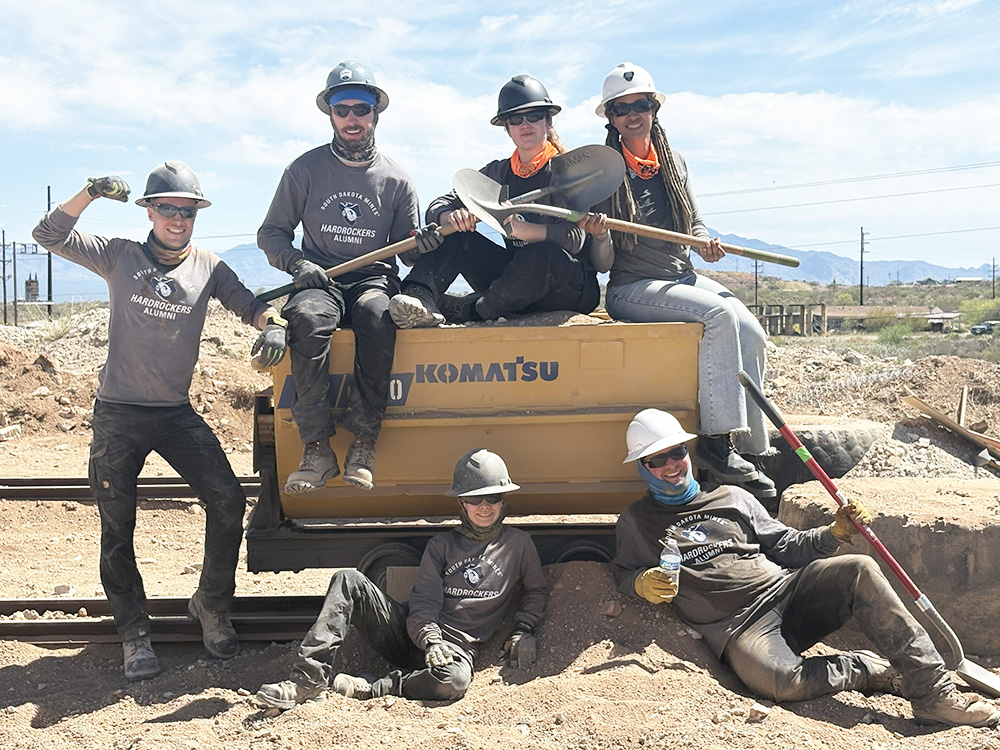 “It was amazing to do that well,” said Bayley Anderson, a junior mining engineering
major and captain of the coed team. “The coed team knew we had a pretty good chance
since we won last year, but we didn’t know exactly how well we would do.”
“It was amazing to do that well,” said Bayley Anderson, a junior mining engineering
major and captain of the coed team. “The coed team knew we had a pretty good chance
since we won last year, but we didn’t know exactly how well we would do.”
The coed team placed first in all but one of the seven events.
"Hard work does pay off,” said Ivy Allard, Ph.D., senior lecturer, business management in technology coordinator and the team advisor. “The mining and mucking teams consistently practice honing the skills they need to win their events. And, of course, it is more than practice. Teamwork is a major element in these competitions. The mining and mucking members know how to work as a team.”
Allard said it is the time put in and the teamwork that will make them successful in the workforce. “I am very proud of these men and women.”
Competing in mining and mucking competitions is no easy feat; it’s demanding and challenging, requiring grit and commitment. Each week, Mines students across all disciplines train tirelessly on their “practice field” high on the hill overlooking campus.
“Our success came from our dedication to the sport,” Armstrong said. “We’ve always been competitive and worked hard to get ready for competition, but we took it to a whole new level this year. We put the time and effort in, and it paid off.”
In addition to their classes and other activities, the Mines team practices four to five days a week, with extra hours dedicated to the specialty events, surveying and jackleg.
“Surveying is our most difficult event,” said Anderson, one of only two women on the team. “There are only two of us, and it’s very technical. You are out there with a theodolite (precision surveying instrument used to measure horizontal and vertical angles), from the 1980s, and this year we had to do it underground.”
The hope is to one day have an all-female team to compete. In the competition's 48 years, Mines has fielded an all-female team only twice. However, Anderson said she is working on recruiting.
While the time is demanding and the work is hard, it is all worth it, said Will Ford, a junior mechanical engineer. “It is hard work, but it is so rewarding,” he said. “It is fun to watch all the team members grow.”
A camaraderie forms when team members spend hours each week working side by side.
“The people are the best part,” Armstrong said. “Shoveling a couple hundred tons of rock, laying a few miles of track or drilling who knows how many feet of holes through rock with someone else forms a bond you can’t find anywhere else. Together, we’ve mucked in the dark, sawed in the heat, handsteeled in the cold, laid track in the snow and panned until our fingers pruned. We’ve become more than just a team. We work on homework together, have movie nights, hang out on the weekends and just enjoy each other’s company. I’ve made friends for life from the mining and mucking team.”
Despite graduating in May, Armstrong, who will work for Northern Star Resources at the Pogo Mine in Alaska, does not plan on hanging up his mucking hat quite yet.
“Mining and mucking have been the highlight of my time at South Dakota Mines,” he said. “I look forward to catching up with old friends at future competitions and continuing to represent our school as an alumnus.”
The International Collegiate Mining Competition is held in a different location every year. The 49th competition will be at Colorado School of Mines, and the 50th at Montana Tech, one of the founding institutions.