

High Schoolers Gain Hands-On Research Experience Through Army Outreach Program
From a young age, Brayden Sanderson’s curiosity for STEM has been fueled by a passion for discovery and by the encouragement of those closest to him. At the center of that support has been his dad, Jason, a 2003 South Dakota Mines computer engineering graduate.
“My dad has been a larger part of my interest in STEM throughout my life,” said the incoming senior at Central High School. “He has always been supportive in my passions for STEM, robotics, research and more.”
That combination of curiosity and encouragement has opened doors for Sanderson, including the opportunity to spend the past two summers conducting research at his dad’s alma mater through the Army Education Outreach Program. The program gives high-school students across the country meaningful, hands-on STEM experiences and the opportunity to explore real-world research.
“I was first informed of the program through school, where one of our teachers told us about it,” Sanderson said. “Being able to do research at South Dakota Mines was super interesting to me. This is my second year in the program. I did it last year, and had an amazing time, so I was compelled to join again this year.”
Mines has participated in AEOP since 2012. Katrina Donovan, Ph.D., professor of practice of materials and metallurgical engineering, has led the program since 2022. The program was originally led by Michael West, Ph.D., head of the Department of Materials and Metallurgical Engineering, who served as the principal investigator on the initial AEOP grant and mentored Donovan as she stepped into the role.
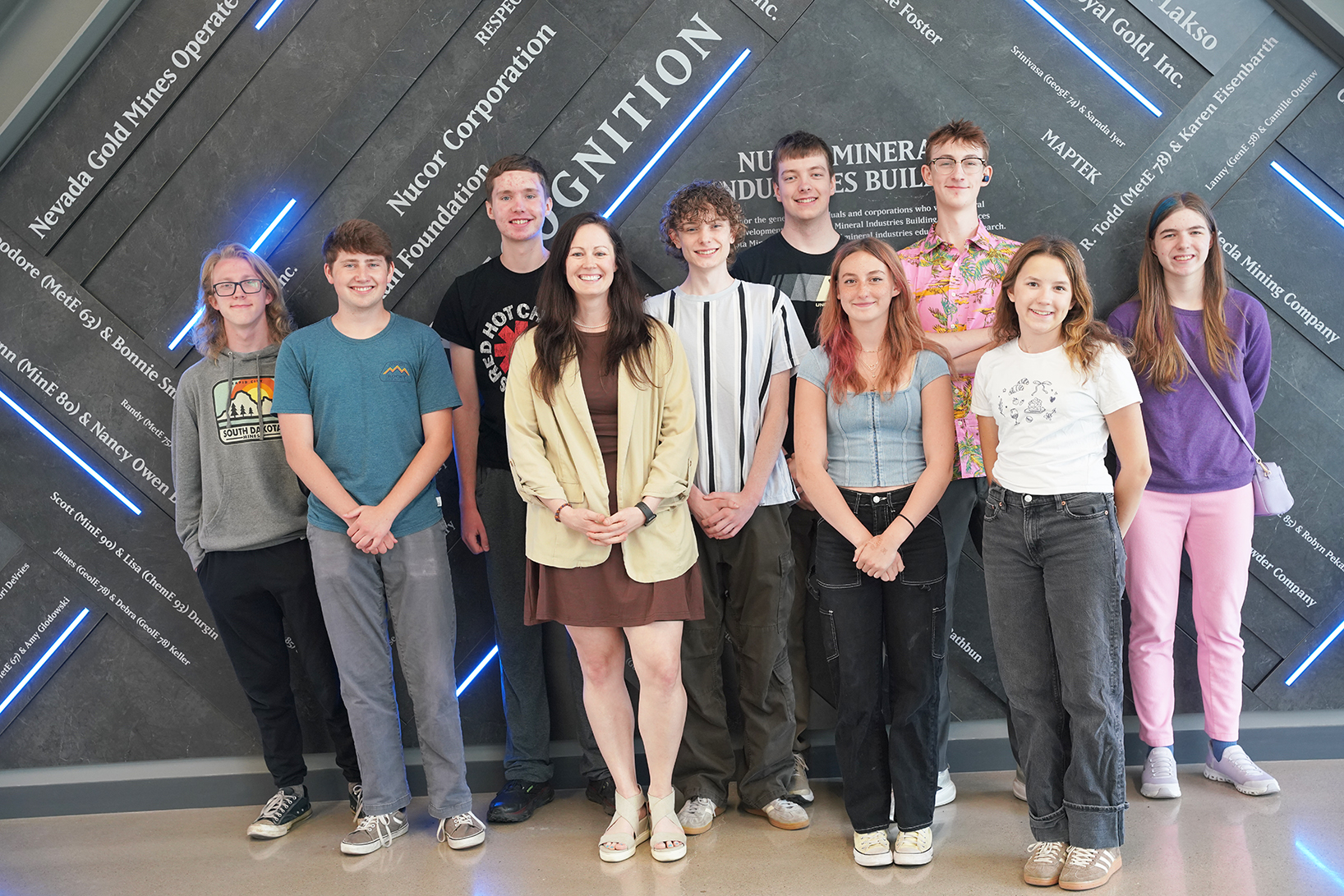
South Dakota Mines is one of just 14 research sites nationwide where students can participate in the program. This summer, Donovan welcomed the program’s largest cohort yet, with 10 students each dedicating 200 hours to hands-on research. Working primarily in groups, students explored projects at their own pace while gaining experience in the research process.
“This summer the students explored a diverse range of research areas, including materials science, lunar exploration, archaeology, environmental engineering and rare earth mineral extraction,” Donovan said. “Projects examined topics such as developing more efficient approaches for lunar missions, investigating how pottery composition and manufacturing techniques affect strength, and evaluating supercritical fluid extraction as a less wasteful method for recovering rare earth elements. Students also researched advanced polymers for removing pharmaceutical contaminants from water, gaining hands-on experience with materials testing, experimental methods and engineering approaches to real-world environmental challenges.
For Sanderson, each summer has brought new opportunities to explore. Last year, he worked alongside undergraduate mentors to investigate the potential of local minerals, developing and testing the mechanical properties of 3D clay pastes and creating ceramic coatings from materials such as bone ash.
This summer, Sanderson contributed to several AEOP projects while also taking part in the highly competitive NASA STEM Enhancement in Earth and Space Science (SEES) internship through The University of Texas at Austin’s Center for Space Research. The nationally recognized, NASA-funded program gives high school students the opportunity to work alongside scientists and engineers on authentic research projects focused on Earth and space science.
“AEOP taught me many important skills that I’ve been able to apply to my NASA internship, including research skills, technical communication, data analysis, and it gave me insight into many other scientific fields that I had not been exposed to,” he said.
During Sanderson’s NASA internship, he conducted hands-on activities, participated in field investigations, collaborated with NASA-funded scientists and engineers and contributed to research connected to ongoing NASA missions.
Along with hands-on research and immersive learning experiences, the past two summers have also taught Brayden the importance of building professional connections – a valuable skill to learn in high school. “I would not be where I am today without creating meaningful relationships with peers, mentors and many others.”
Sanderson encourages other high school students to take advantage of research and hands-on learning opportunities that align with their interests and passions.
“Being able to do hands-on work along with learning from incredible instructors is a truly amazing way to work your way into a STEM career,” he said.
While Sanderson is still deciding which university he will attend, he knows he wants to pursue mechanical engineering. Thanks to the experiences and connections he has gained the past two summers, he has a clearer vision, and a strong head start, on his path toward a career in STEM.