

South Dakota Mines Researchers Help Develop DUNE’s Light Calibration System
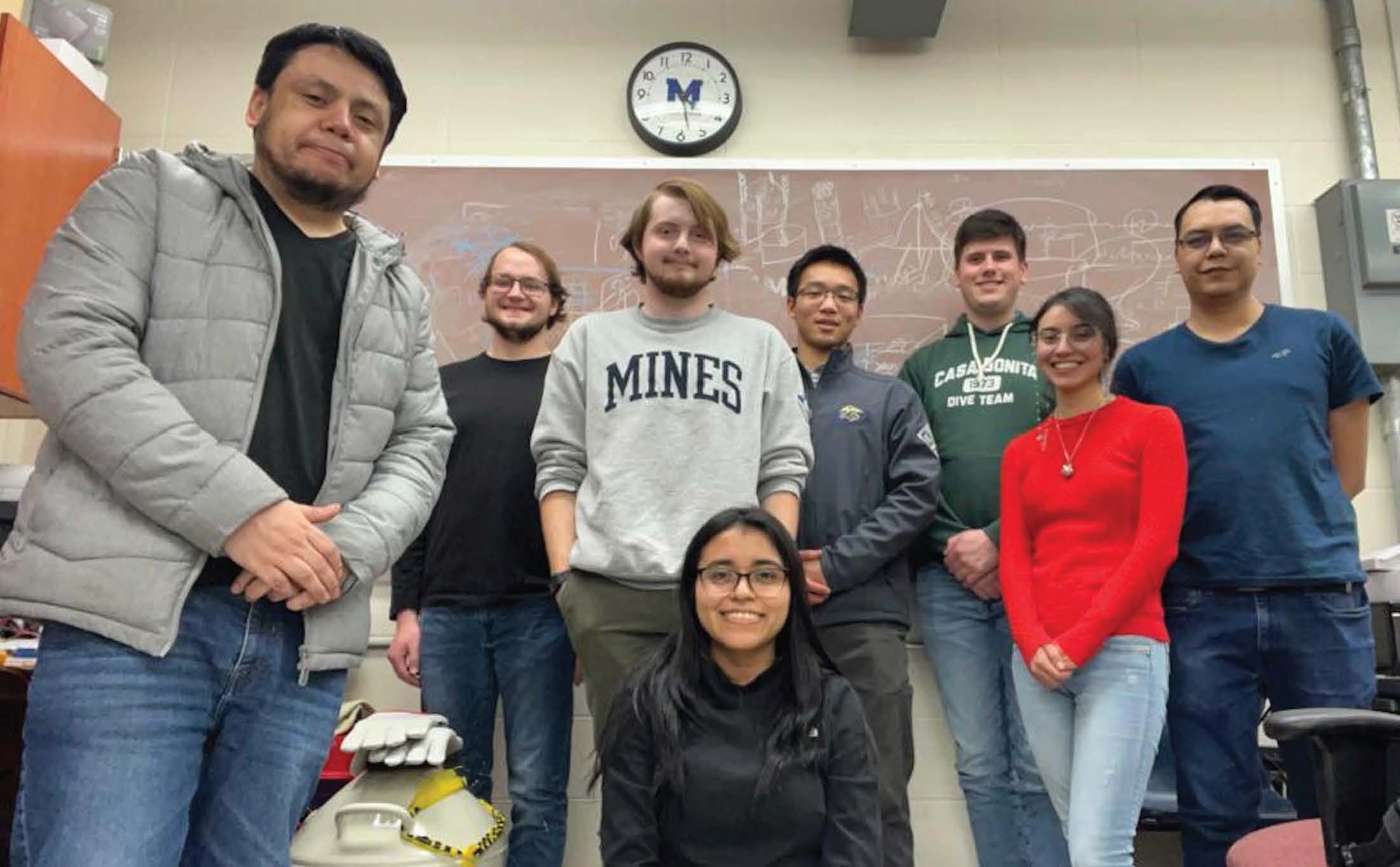
South Dakota Mines researchers, in collaboration with Argonne National Laboratory, are leading the development of a critical component of the photo detection system
for the Deep Underground Neutrino Experiment (DUNE), an international endeavor to understand neutrinos, the elusive ghost particles
that travel at nearly the speed of light.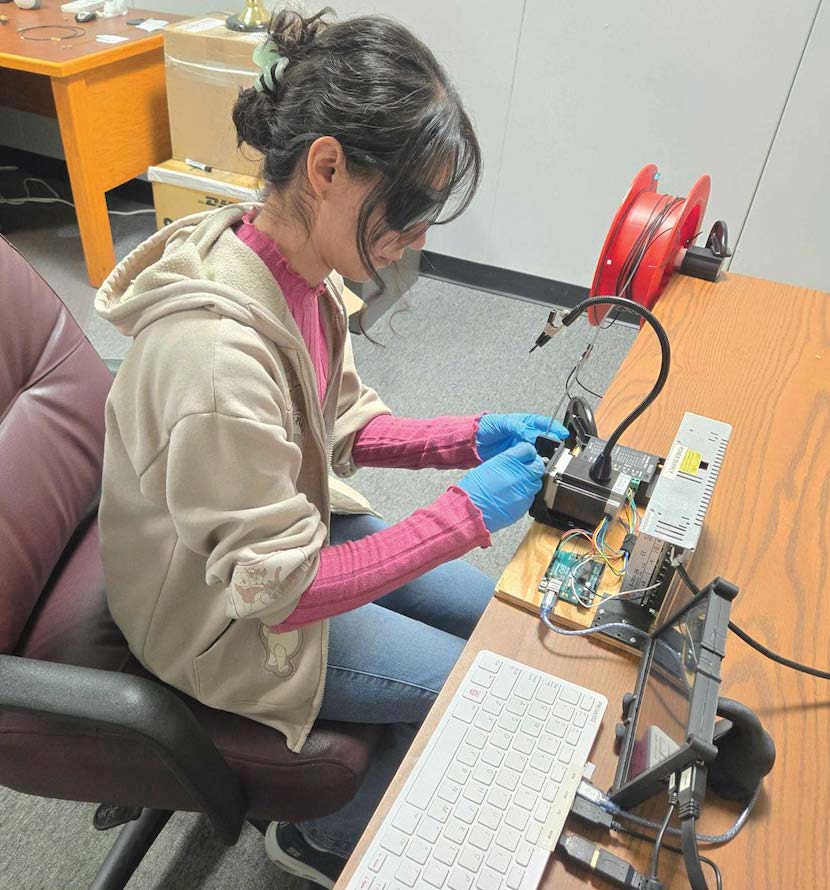
DUNE consists of two detector sites, one at Fermi National Accelerator Laboratory in Batavia, Ill., and one located at the Sanford Underground Research Facility (SURF). The experiment is supported by the U.S. Department of Energy and led by Fermilab and involves approximately 1,500 scientists from more than 220 institutions, including Mines, and over 35 countries.
The Mines team in collaboration with the ANL team led by Zelimir Djurcic, Ph.D., recently published a paper detailing years of research into the components of the ultraviolet (UV) light system that will be used to deliver UV light throughout the detector for calibration.
DUNE detectors will use liquid argon maintained at extremely low, cryogenic temperatures, -300 Fahrenheit (-184 Celsius). When particles interact with the argon, they will produce tiny flashes of light that can be detected by the experiment’s photon detection system. Scientists must be able to reliably ensure the operation of the light system throughout the decades-long operation of the experiment.
That makes calibration essential.
“Basically, what we do is send light pulses with a certain frequency and amplitude to understand the photon detection system response in function of time, and to be sure if the system is properly working or if we need to tune it up a bit,” said David Martinez Caicedo, Ph.D., associate professor of physics at Mines and the principal investigator for this research.
The light calibration system sends controlled pulses of UV light through optical fibers
to the detector. By measuring how the photon detection system responds to these pulses,
researchers can determine whether this system is performing as expected without interrupting
the experiment for extended periods.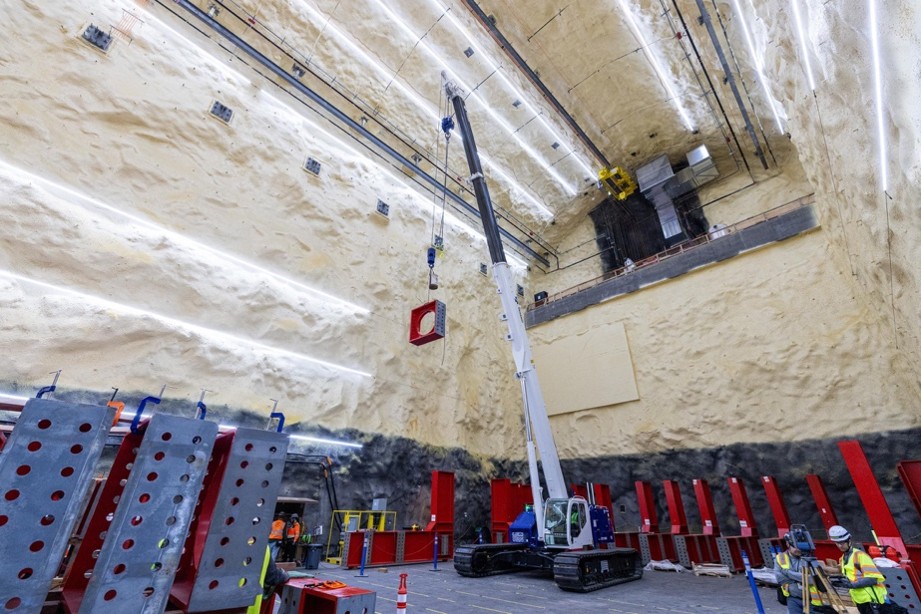
“Light detectors collect the light produced by neutrino interactions,” said Jairo Rodriguez, Ph.D., Mines postdoctoral researcher. “The calibration system sends UV light through optical fibers to test how the photon detection system responds. By sending UV light pulses and measuring the photon detection system response, we can make sure the system is working properly or identify potential issues beforehand so they can be addressed without stopping the whole experiment.”
One of the team's main challenges was finding optical fibers that met the stringent criteria needed for DUNE.
The fibers needed to transmit UV light effectively, under extremely cold temperatures and remain reliable for many years. The Mines and ANL teams spent years researching and communicating with companies that manufactured commercially available fibers, very few who could meet the performance requirements of the system.
The Mines team tested and characterized multiple fibers under different wavelengths and temperatures. The team also examined whether the fibers would continue transmitting light after being exposed to cryogenic conditions and found that the amount of light transmitted before and after the cryogenic testing was nearly the same.
“DUNE’s detectors will be filled with liquid argon and operate at cryogenic temperatures,” said Denis Torres, a Mines physics graduate student. “We always need to make sure the components we use can work reliably under those conditions. When particles interact with the argon, they produce a small flash of light, and detecting that light helps us understand when those interactions occur. That’s why making sure the light detection system works properly is so important.”
Ultimately, the team selected an optical fiber from Molex that met the project's criteria. The Mines and ANL teams played a leadership role in the installation, commissioning and operation of the UV light calibration system in one of the DUNE prototypes at CERN, one of the world's leading particle physics research laboratories, located in Switzerland.
The Mines team joined the project in 2019. To date, the Mines and ANL teams are the two institutions within the collaboration leading the development and deployment of the entire UV light calibration system for the DUNE Horizontal Drift detector.
While the university is leading the research on optical fibers and light diffusers, Argonne National Laboratory is working on the electronic components of the devices that generate the pulses.
The Mines team also developed 3D-printed protective housing for the light diffusers.
The original housing design was based on stainless steel, but researchers worked with the university’s undergraduate mechanical engineering students to redesign the components for 3D printing. After testing different approaches and materials, the team selected PEEK, a high-performance thermoplastic capable of withstanding the extreme temperatures required for the application.
The shift to 3D printing also offered a significant cost advantage compared with producing the components from stainless steel.
“We did a lot of research and development with this as well, working with the undergraduate mechanical engineering students on campus,” Rodriguez said.
Throughout the seven years, many graduate and undergraduate students helped with the project. Among those who made key contributions include Ian Helgeson, Kole Pickner, Robert Munyan, Brody Leisinger, Clive Uy, and Cooper Vermeulen from mechanical engineering; Charles Winkers, Alex Heindel, and Carter Geurts from physics, and Biswarnajan Behera, Ph.D., a former postdoctoral researcher.
“Something that is very nice about the construction of this detector is the development of new technology,” said Diana Leon, physics graduate student. “We want undergraduates to be involved, and we are happy that our team consists of undergraduates from physics and mechanical engineering.”
The students were also excited to see the pieces they designed make their way to Switzerland for testing at CERN, Leon added.
The collaboration between Mines and Argonne National Laboratory has created opportunities for students for extended research visits, including those by graduate student Torres, and Alex Heindel, a 2023 physics undergraduate. These visits have further strengthened the collaboration in the areas of photon detection system development, data analysis and machine learning research.
The multi-year research effort on the UV light calibration system and its successful operation in the DUNE prototype at CERN are important steps toward the much larger DUNE detector, which will contain approximately 17,000 tons of liquid argon.
The question now is how to scale up for DUNE, which requires hundreds of calibration devices and optical fibers. With a foundation for selecting and qualifying the optical components, Mines researchers are now leading the work on determining how the components can be produced and tested efficiently at that scale.
Their work is helping lay the groundwork for a critical part of DUNE while giving Mines students a hands-on role in an international effort to better understand the universe’s most elusive particles.