

Artists Invited to Create Ceramic Works from Rare Cretaceous-Era Clay in New South Dakota Mines Exhibition
Artists will have a rare opportunity to create ceramic sculptures from clay formed during the age of dinosaurs as part of “Echoes of Earth: From Sea to Stone”, a juried group exhibition at South Dakota Mines exploring the prehistoric history of the Black Hills.
The exhibition invites ceramic artists to reimagine the ancient life that once inhabited the region using a unique clay body derived from the Fuson Shale, a geological formation dating back to the Cretaceous Period.
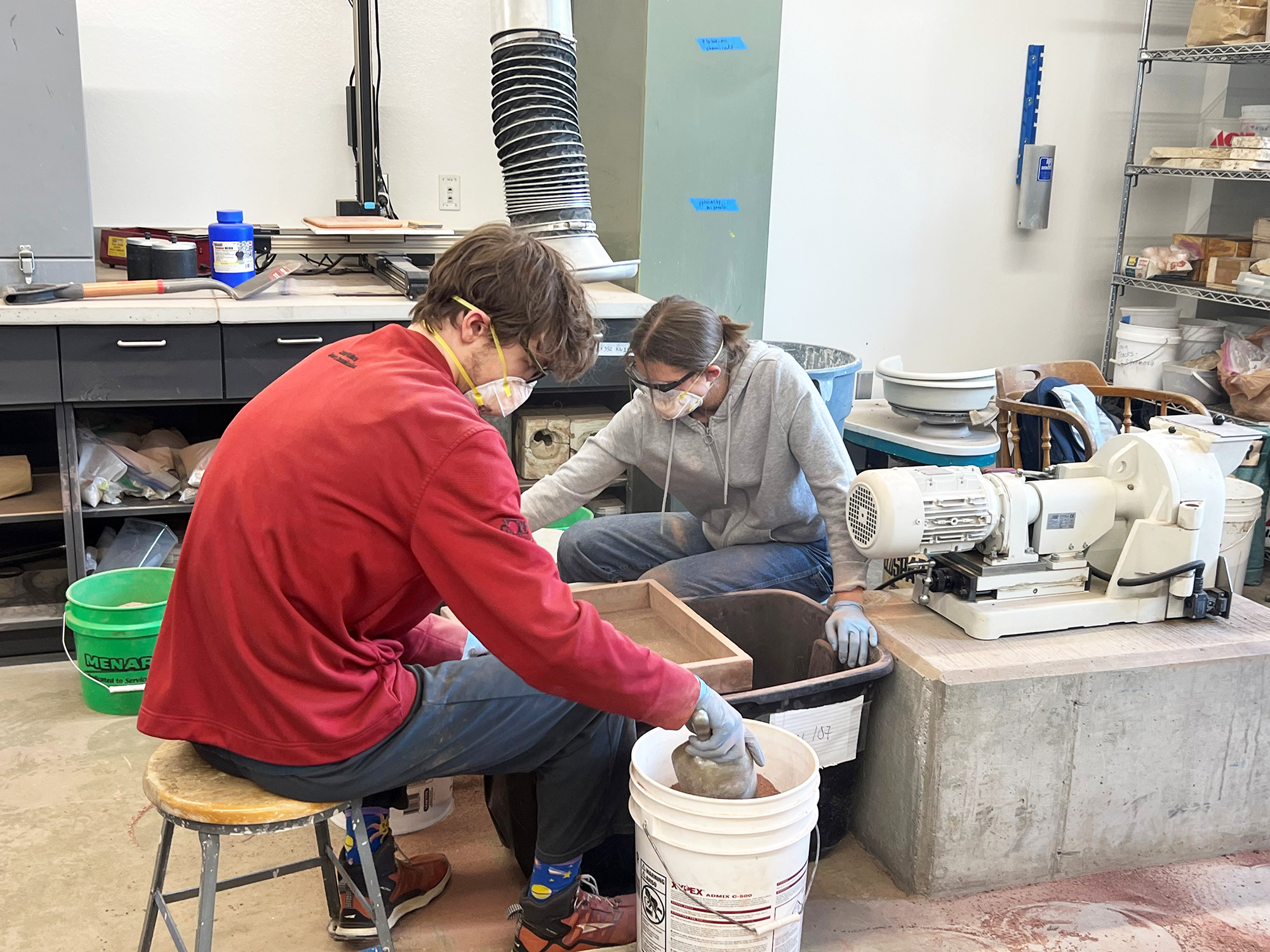
The clay has been carefully harvested and processed by Katrina Donovan, Ph.D., professor
of practice in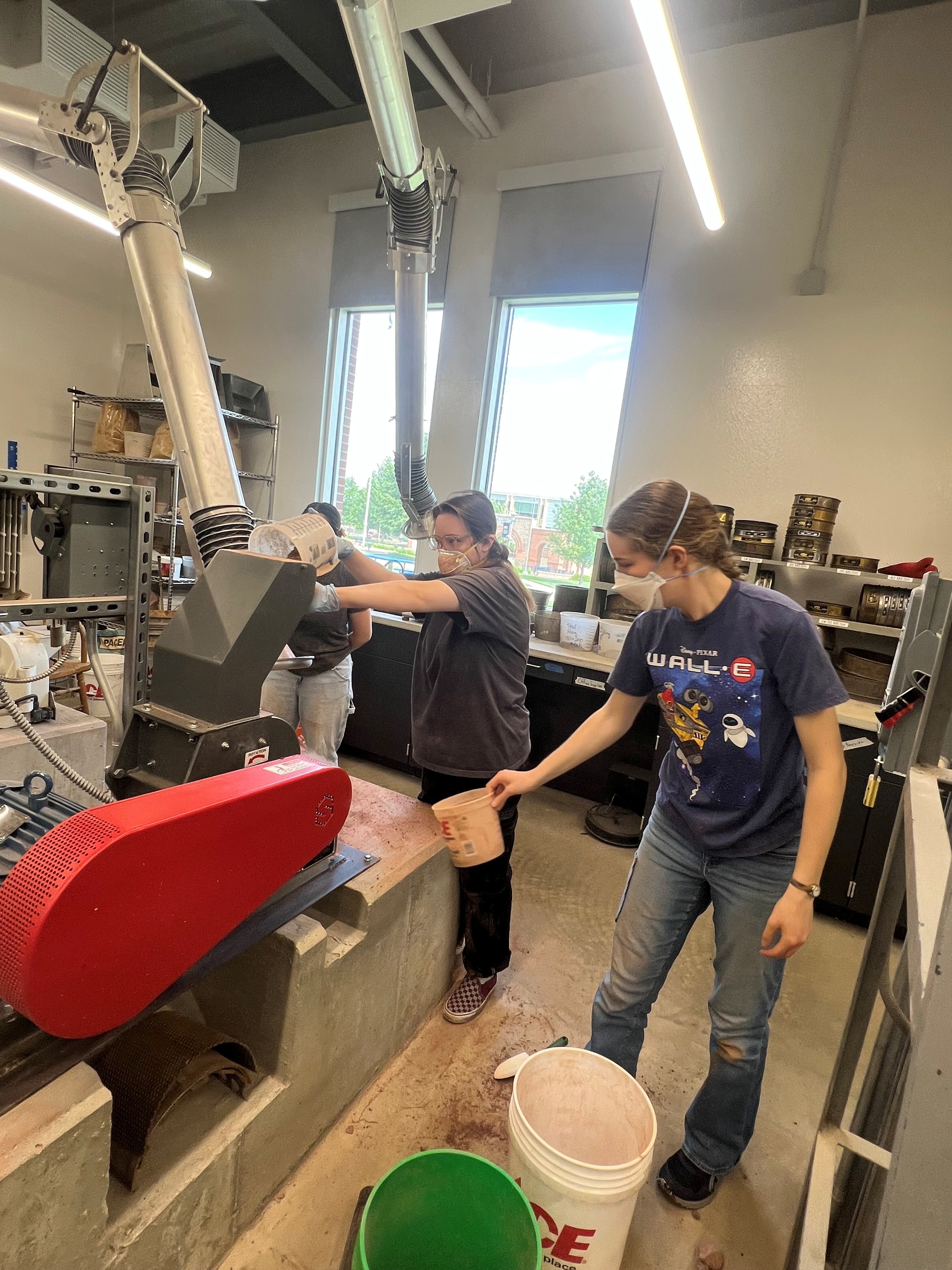 the Department of Materials and Metallurgical Engineering at Mines. The project transforms millions-of-years-old earth into a workable artistic
medium, creating a direct connection between contemporary artists and the prehistoric
landscape beneath their feet.
the Department of Materials and Metallurgical Engineering at Mines. The project transforms millions-of-years-old earth into a workable artistic
medium, creating a direct connection between contemporary artists and the prehistoric
landscape beneath their feet.
Matthew Whitehead, senior lecturer in the Mines Department of Humanities, Arts,and Social Science and director of the APEX Gallery, and Donovan are collaborating with Hope Christofferson, a Rapid City native and graduate student at the University of California, Santa Barbara (UCSB), on the exhibition. Christofferson first connected with Donovan during a summer spent at Mines, where she worked with Donovan through the National Science Foundation’s Black Hills Applied Ceramic Engineering (BACE) Research Experience for Undergraduates (REU) program. The program focuses on ceramics from a holistic perspective, encompassing the archaeological, cultural and technical understanding and utility of ceramic materials.
While at Mines, Christofferson created a series of sculptures using locally sourced clay and glaze, including a Tyrannosaurus rex skull. “I thought using the same soil and glaze from the land where this creature once lived was such a great way to demonstrate the versatile nature of the clay as well as the incredible paleontological and geological history of South Dakota,” Christofferson said.
During the Cretaceous Period, much of what is now western South Dakota was submerged beneath the Western Interior Seaway, a vast inland ocean that stretched across North America. The region was home to a remarkable array of ancient species, including Plesiosaurus, Mosasaurus, Triceratops, Ankylosaurus and Tyrannosaurus.
Artists selected for the exhibition will use Fuson Shale clay to interpret these ancient ecosystems through contemporary ceramic sculpture. “We encourage artists to explore connections between the prehistoric past and the modern-day Black Hills landscape,” said Donovan.
Because the clay originates from a limited, rare surface exposure of the Fuson Shale, the exhibition presents a singular opportunity for artists to work with material directly tied to the region's geological history.
Artists interested in participating should submit three images of previous ceramic work or provide a link to their portfolio.
Submissions should be emailed to Matthew Whitehead at Matthew.Whitehead@sdsmt.edu.