

Fort Pierre Couple’s Decades of Giving Inspires Next Generation of STEM Leaders
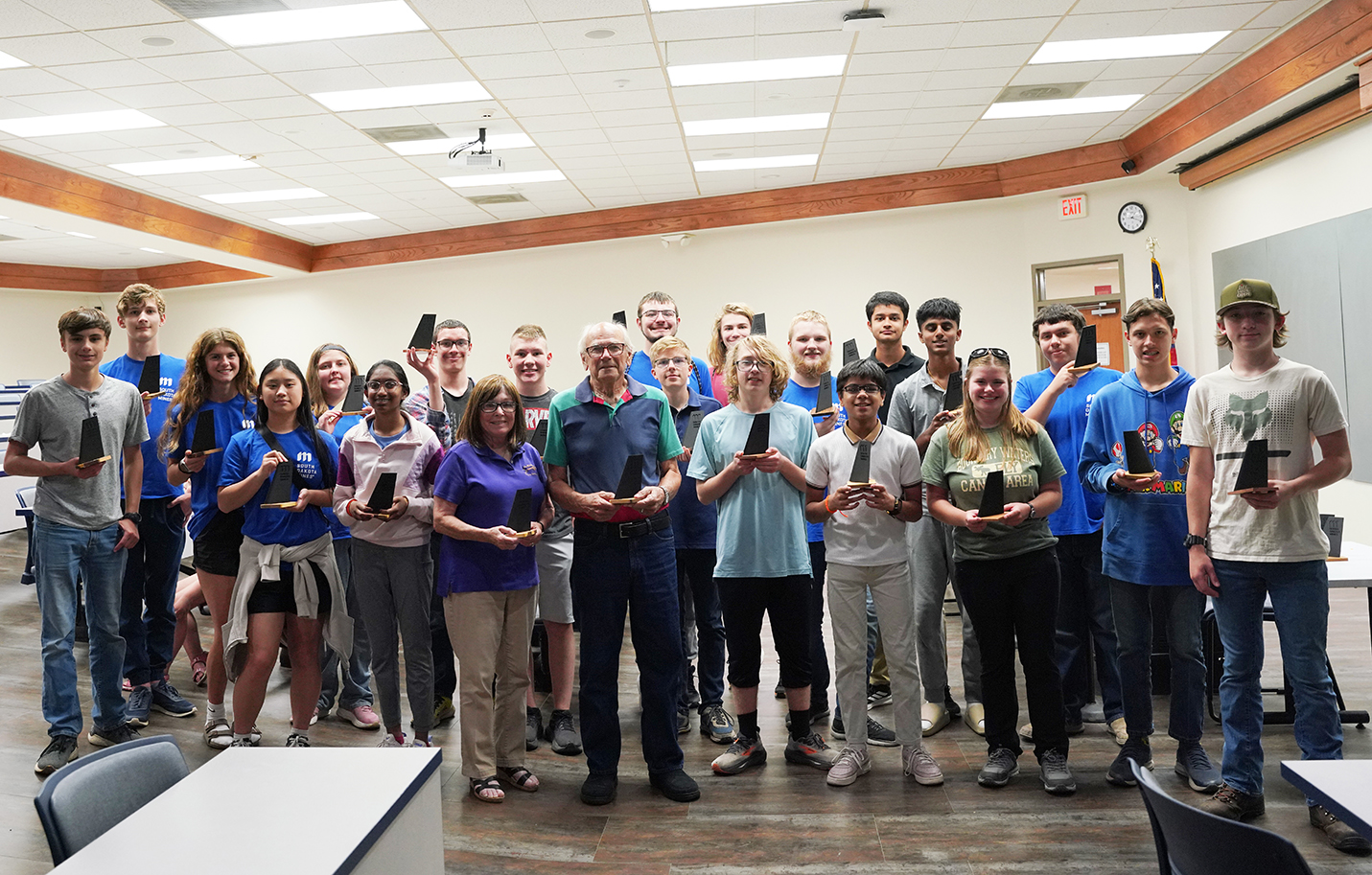
For Gary and Connie Grittner, investing in young people has always been about creating opportunities that can change the course of a life.
Gary knows this firsthand.
As a young teen, he attended a summer science camp that sparked his own interest in STEM. That experience led him to pursue his doctorate in chemistry and reinforced his belief that exposing students to STEM at an early age can shape their futures.
For more than a decade, the Fort Pierre couple has quietly helped hundreds of high school students discover the excitement of STEM through South Dakota Mines summer camps, such as the STEM Exploration camp, as well as other student scholarships. This year, the university recognized that enduring commitment by renaming STEM Exploration, the Grittner STEM Expedition camp.
“For years, Connie and Gary Grittner have been the driving force behind making this experience possible,” said Alyssa Shipper, director of summer camps. “Their generosity is rooted in their own experiences and their belief that continuing education, curiosity, and hands-on exploration can change lives.”
The name reflects not only the Grittners’ generosity, but also their vision that early exposure to STEM can inspire the innovators, problem-solvers and leaders of tomorrow.
“For over a decade, Gary and Connie Grittner have shown up for our summer camp students with scholarships and equipment, year after year,” said Molly Moore, associate vice president for enrollment management. “Because of them, hundreds of young people have discovered a love of STEM they might never have found otherwise. We are deeply grateful for their generosity.”
This summer alone, the Grittners provided 25 scholarships for students across the nation to attend the immersive camp, continuing a tradition that has made STEM experiences accessible to young people who may not otherwise have had the opportunity.
“This has always been close to our hearts,” said Gary, who spent nearly 30 years serving in the U.S. Navy, both active duty and reserves.
He and Connie also worked as civilians for the Navy research and development community and experienced firsthand the country’s need for more scientists and engineers.
Although neither Gary nor Connie attended Mines, the couple forged a lasting connection with the university after relocating to South Dakota in the early 2000s. Inspired to create opportunities for gifted youth across the state, they met with then-Secretary of Education Melody Schopp, who introduced them to then-Mines President Heather Wilson. That connection laid the foundation for a partnership that has helped inspire hundreds of young people to pursue STEM fields.
During the STEM camp, students participate in hands-on activities, laboratory experiences, and interactive demonstrations that introduce them to a variety of science and engineering disciplines. Campers also work alongside Mines faculty and researchers as they explore how STEM fields address real-world challenges.
In addition to their ongoing contributions to the STEM camp, the Grittners also donated nearly $40,000 to purchase a state-of-the-art particle image velocimetry (PIV) system, giving students access to the same advanced technology used by researchers and engineers to study fluid flow.
The PIV system provides detailed visualizations and precise measurements of airflow, allowing students to observe velocity and pressure fields within a fluid tunnel in real time. Joseph John Thalakkottor, Ph.D., assistant professor in the Leslie A. Rose Department of Mechanical Engineering, will incorporate the equipment into the Grittner STEM Expedition, giving campers a hands-on introduction to aerospace engineering concepts. The system will also enhance instruction and research opportunities in the university’s aerospace engineering courses throughout the academic year.
For the Grittners, the impact of their support isn’t measured by the number of scholarships or the equipment donated, but by the students who leave camp seeing new possibilities for their future.
“If we can give students an opportunity to discover a passion for STEM and help them realize what they’re capable of, then we’ve accomplished what we set out to do,” Gary said.