

Indian Exchange Students Gain Hands-on Biotechnology Research Experience During South Dakota Mines Internship
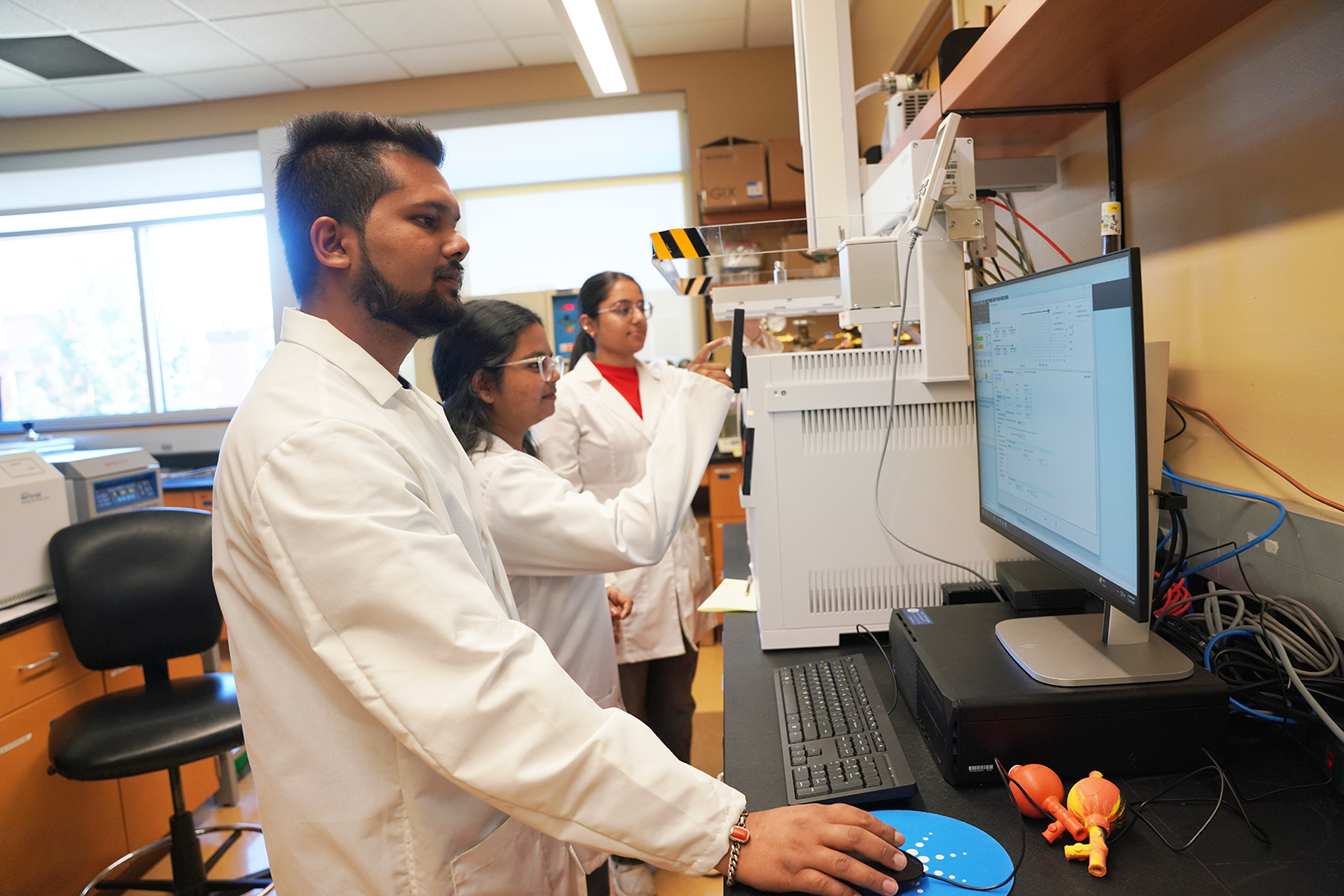
As soon as Nidhi Kapatia and Pragati Pandey enrolled in their undergraduate programs at Jaypee University of Information Technology (JUIT) in Solan, India, they had a goal – to be accepted into the exchange program with South Dakota Mines.
The two senior biotechnology majors fulfilled that goal by spending the last six months working as interns with Rajesh Sani, Ph.D., distinguished professor in the Karen M. Swindler Department of Chemical and Biological Engineering and Chemistry, Biology & Health Sciences, in his MASON laboratory. Since January, Kapatia and Pandey have been studying at Mines as part of the universities' ongoing international exchange partnerships. During the internship, they immersed themselves in campus life while gaining hands-on experience in engineering and science education, research and American culture.
“The experience was amazing,” Kapatia said. “I got exposure to research and experience with time management and planning for after graduation.” When Kapatia graduates later this summer, she plans to work in the industry, hopefully joining the team at Bicon, a global biopharmaceutical company with branches worldwide, including in India and the United States.
The exchange program reflects a shared commitment by both institutions to preparing students for success in an increasingly interconnected world by providing opportunities to study abroad, collaborate across cultures and develop a global perspective. The partnership between Mines and JUIT began with a memorandum of understanding (MOU) in 2013 and was renewed in 2023.
Since its inception, the exchange has welcomed 41 students, including Kapatia and Pandey, with 11 participants going on to pursue graduate or postdoctoral studies at Mines.
The partnership has also produced strong scholarly outcomes, including more than 10 joint research articles, three textbooks and seven book chapters. These outcomes demonstrate how sustained international collaboration can generate publications, train students and strengthen research capacity across continents.
“This partnership demonstrates what a successful international MOU should do: create opportunities for students, generate high-quality research, support faculty collaboration and build long-term institutional trust,” Sani said. “Over more than a decade, our collaboration with Jaypee University has helped bring talented students to South Dakota Mines and has strengthened research in extremophilic microbiology, microbial genomics, bioprocessing, biomaterials and biotechnology.”
During her time at Mines, Pandey worked on two projects, one of which used adaptive laboratory evolution to help heat-loving bacteria produce more of a natural biomaterial used to create biodegradable nanogels for targeted cancer therapy. The work supports the development of "smart" drug delivery systems designed to attack tumors while minimizing damage to healthy tissue.
Kapatia’s research focused on a methane-consuming bacterium with an unusual ability to sustain methane consumption under conditions that typically limit this process. Understanding how the microbe accomplishes this could lead to new approaches for improving biological methane mitigation and reducing one of the world's most potent greenhouse gases.
While they both enjoyed the research, the mentorship they received, including from Mines research scientist Dipayan Samanta, Ph.D., was a highlight of their experience.
“Nidhi and Pragati brought exceptional enthusiasm, curiosity and dedication to their research,” Samanta said. “Beyond developing technical skills in microbial biotechnology, genomics and bioprocessing, they learned to independently analyze scientific problems, communicate their findings and mentor other students. Watching them grow into confident young researchers has been one of the most rewarding aspects of this exchange program.”
"Our mentors are so kind and supportive and always check in to make sure we're doing well,” Kapatia said. “I really liked that part. We feel comfortable discussing all parts of our project, which makes the research easier and more interesting.”
In addition to participating in their own research, Pandey and Kapatia mentored high school and undergraduate students, sharing their knowledge and helping inspire the next generation of scientists and engineers.
Their experience has been so rewarding that they are already encouraging fellow JUIT students to apply for the exchange program.
"We have grown both personally and professionally and are better versions of ourselves," said Pandey, who plans to pursue graduate studies.
Their time at South Dakota Mines reflects the partnership's broader mission to build a global pipeline of engineering and science talent while fostering meaningful collaboration among students and faculty across international borders.
“The collaboration between Jaypee University of Information Technology and South Dakota Mines has created exceptional opportunities for our students and faculty and it began when Dr. Sani provided me an opportunity to work in his lab as a research scientist from 2011-2012,” said Sudhir Kumar of JUIT.
During his recent convocation address, R.K. Sharma, vice chancellor of Jaypee University, highlighted the research exposure of students at Mines.
“Through this partnership, students have gained access to advanced research training, international mentorship and graduate education pathways in the United States,” he said. “This MOU has become a strong bridge for scientific exchange, academic growth and long-term collaboration between India and South Dakota.”