

South Dakota Mines Research Team Works with First Graders to Create New STEM Toys
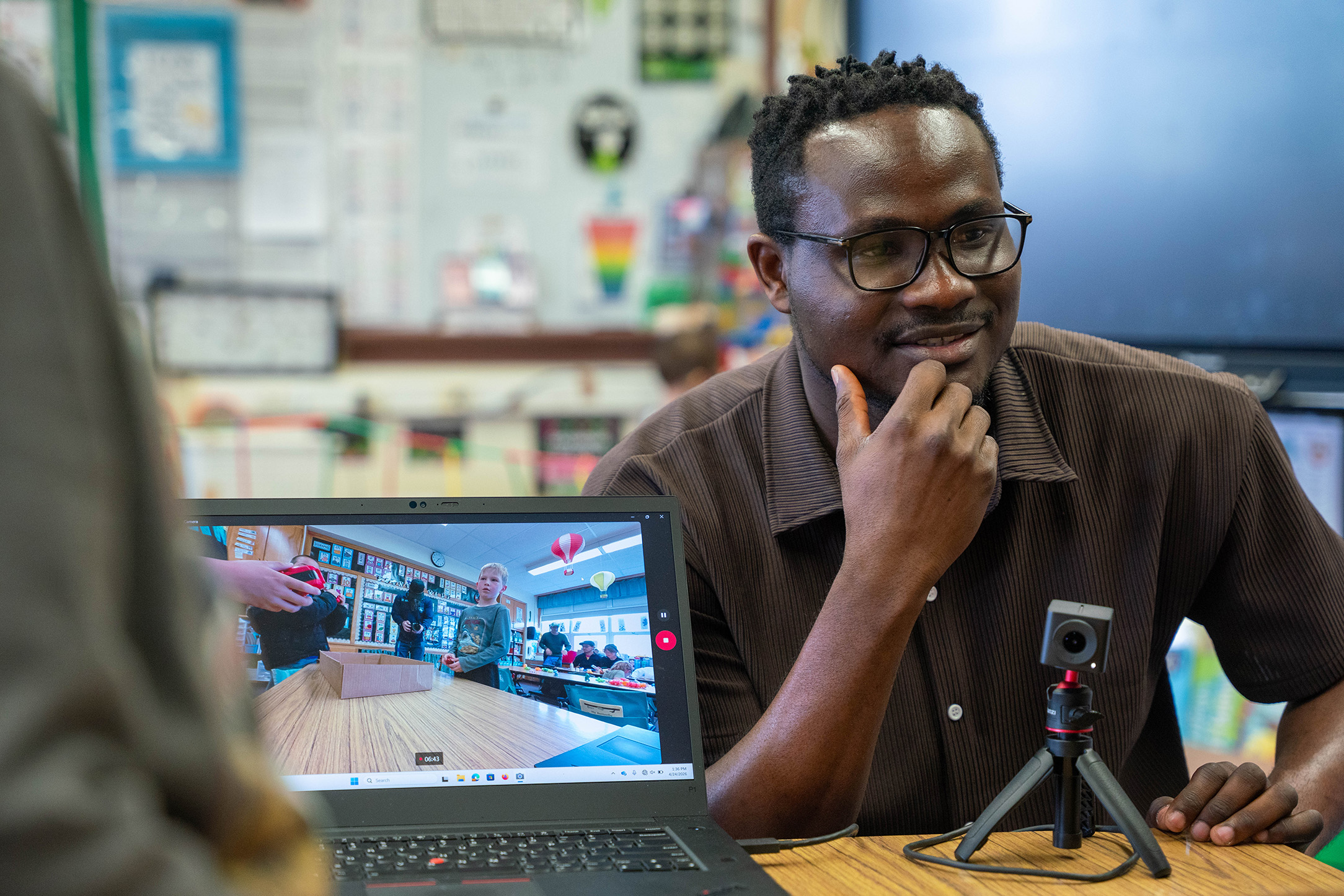
When it comes to designing new, effective learning tools, the best ideas come directly from the people who will use them most – especially when those users are curious, candid and creative first graders.
A new initiative at South Dakota Mines is reimagining how young children learn engineering by bringing elementary students, families, teachers and university faculty and students together to design mechanical engineering toys from the ground up.
The project “Designing Engineering Toys Through School-University Co-Design: A Pilot
for Inclusive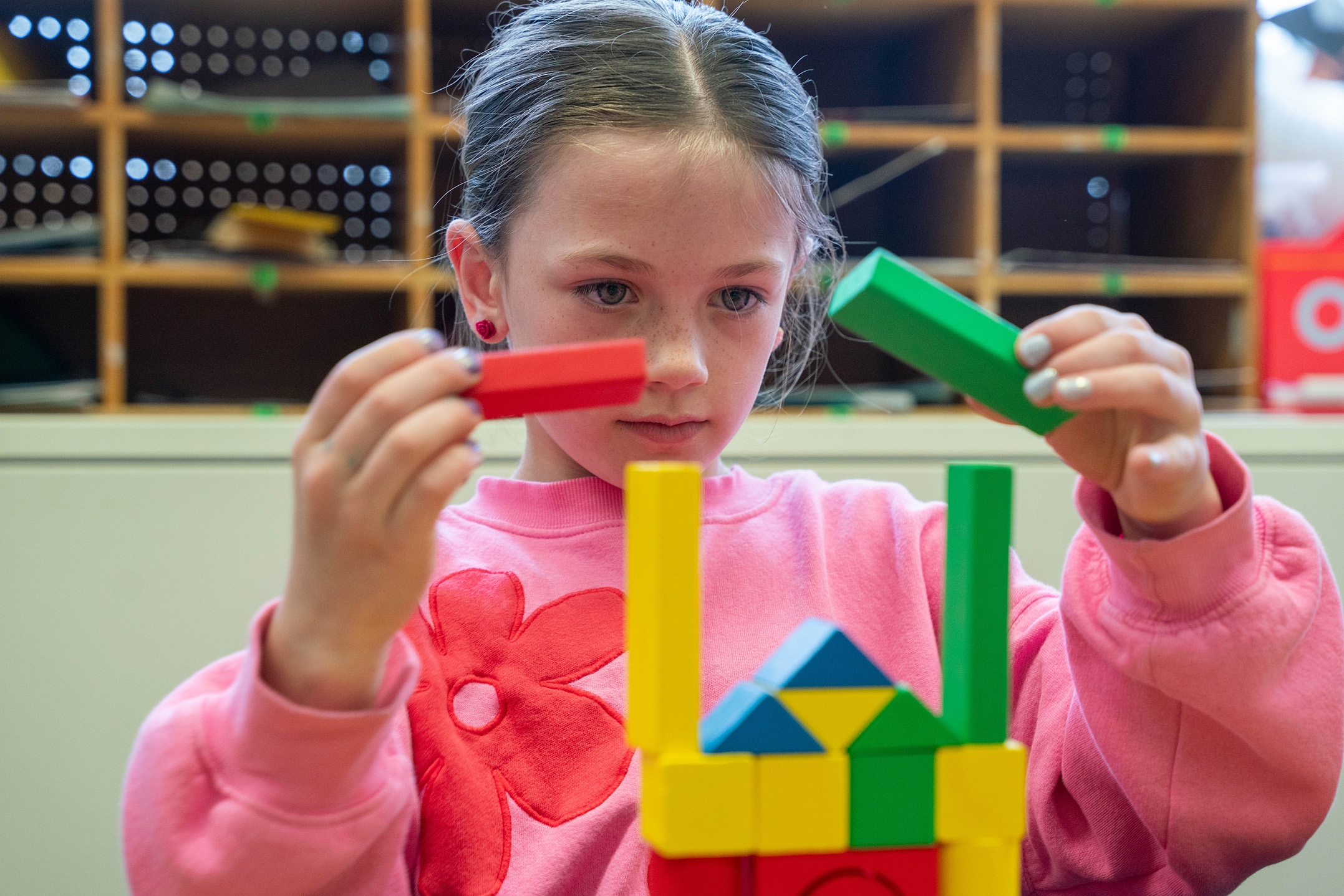 Learning,” partners researchers and engineering students at Mines with first-grade
teacher Ashley Whitehead and her students at Wilson Elementary School to create hands-on
toys that introduce foundational engineering concepts through play.
Learning,” partners researchers and engineering students at Mines with first-grade
teacher Ashley Whitehead and her students at Wilson Elementary School to create hands-on
toys that introduce foundational engineering concepts through play.
The idea came from Cristian Vargas Ordóñez, Ph.D., assistant professor in Mines’ Leslie A. Rose Department of Mechanical Engineering, and is funded through a National Science Foundation E-CORE Grant led by Black Hills State University. The effort aims to make engineering education more accessible, engaging and culturally responsive for young learners while strengthening connections between local schools and higher education.
Oftentimes, toys and other products are designed with a “top-down” approach, with the expert deciding what and how something needs to be created. “My philosophy is more the co-design way where all those who are going to be impacted or affected are involved in the process – asking everyone their perspective on what they want to bring to the conversation,” Vargas said. “With this, kids will be the final users, why not get them involved in the process?”
Vargas and his graduate and undergraduate students worked closely with Whitehead and
her first-grade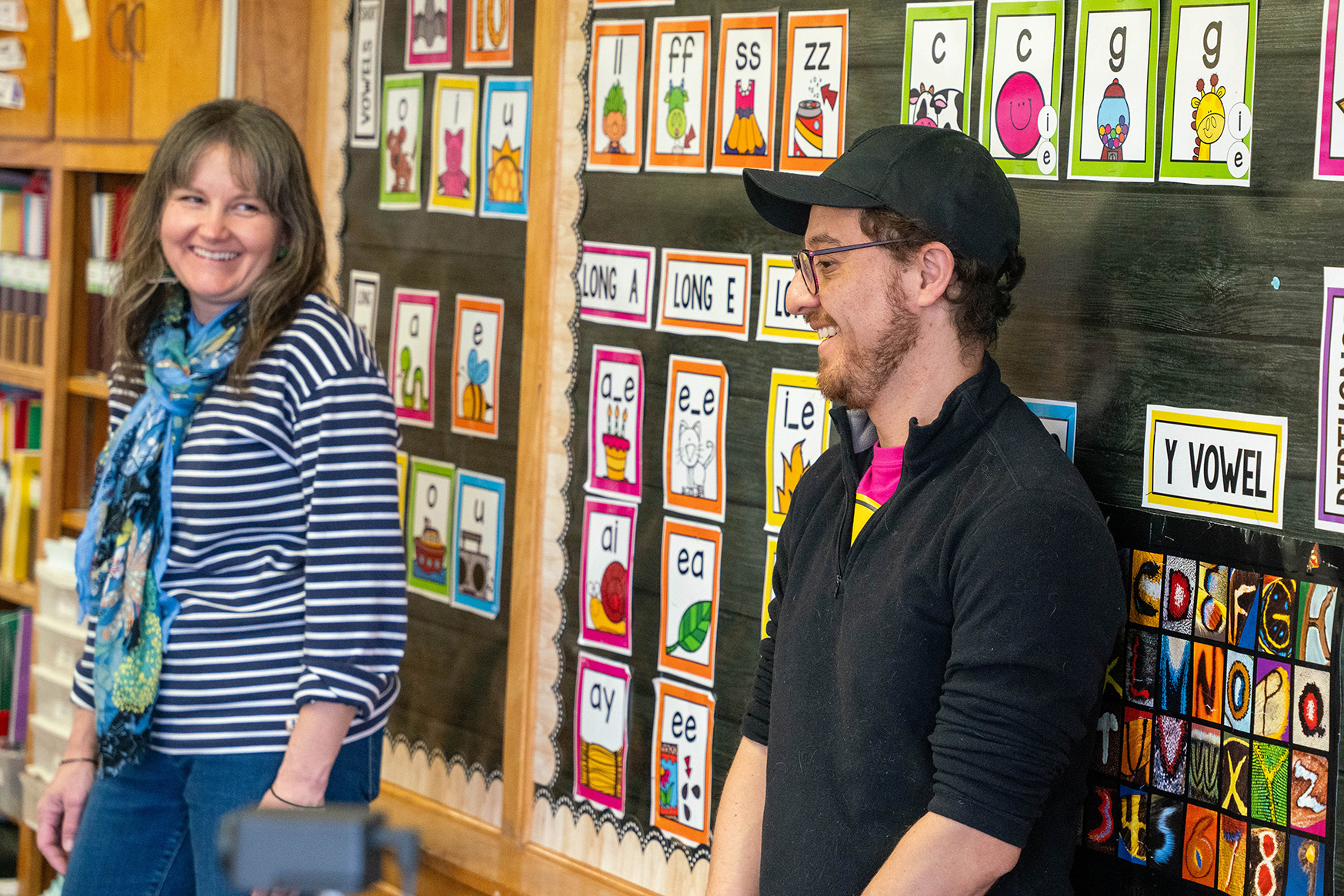 class, visiting several times throughout the semester to better understand how young
children interact with STEM toys. The project began with the Mines team bringing two-liter
bottle rockets for the students to experiment with. During later visits, the researchers
asked the children what they liked and disliked about different toys before setting
up cameras in the classroom to observe students playing with a variety of STEM toys
featuring mechanical engineering concepts. The team also gathered input from parents
about the types of toys their children enjoy, what they avoid and what families hope
children learn through play.
class, visiting several times throughout the semester to better understand how young
children interact with STEM toys. The project began with the Mines team bringing two-liter
bottle rockets for the students to experiment with. During later visits, the researchers
asked the children what they liked and disliked about different toys before setting
up cameras in the classroom to observe students playing with a variety of STEM toys
featuring mechanical engineering concepts. The team also gathered input from parents
about the types of toys their children enjoy, what they avoid and what families hope
children learn through play.
Ayomide Oladele, a mechanical engineering graduate student at Mines, said his goal with the project is to help make engineering more exciting and approachable for young learners. “As a young kid growing up in Nigeria, when you heard engineering, it was very technical,” he said. “My point is to make engineering more accessible and one way to do this is to make true toys. If kids are interacting with them through play, they are gathering some knowledge.”
Oladele said his favorite part of the project has been watching the students simply play. “It was fun to see the kids’ reaction to the toys we brought in, what they played with and what they did with the toy,” he said. “They are giving us insights and ideas we never thought of originally. This is all helping us make not just a toy, but a meaningful toy that helps kids learn something.”
Whitehead said her students loved serving as the focus group for the pilot project and were constantly asking when the Mines team would return. The collaboration also aligned perfectly with her spring curriculum, which explored inventions and included reading about a toy inventor.
Soon, her first graders will be able to say they helped in creating a new toy.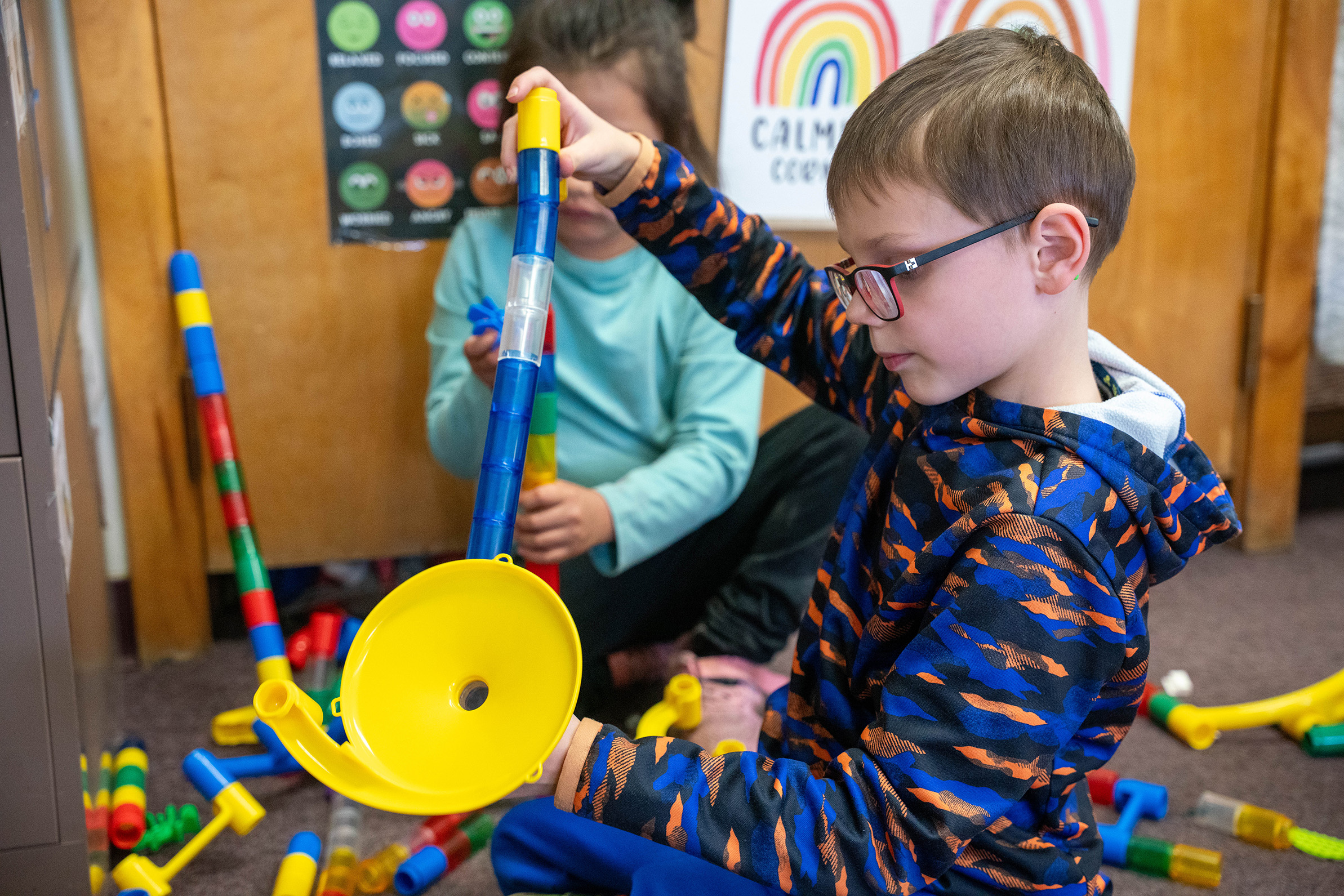
Using insights gathered from classroom video footage, parent feedback, students’ drawings and simple conversation with the students, the Mines team will spend the summer designing and building two new interactive toys centered on mechanical engineering concepts.
Scott Bormann and Dale Burks, both freshman mechanical engineering majors at Mines, are charged with creating the toys - one built from wood and another created through 3D printing.
The completed toys will then be brought back to Whitehead’s new class of first graders to test out. The toys will also be shared with their co-designing second graders.
“It’s really neat that they get to make a tangible toy that they helped design and create and get to play with,” she said.
The completed toys, along with open-access lesson plans and teacher guides, will remain with the classroom for continued use and future student learning.
Vargas said the long-term goal is to establish a scalable model for engineering toy co-design that can support early engineering identity development and inspire more students to see themselves as future engineers.