

From India to Ohio to South Dakota: High School Student Gains Research Experience at South Dakota Mines

Growing up around her family’s seed company in India, Aanvee Chawda saw firsthand
how science could be used to improve crops and solve real-world problems. This summer,
the Ohio high schooler turned that early curiosity into hands-on scientific discovery
during a four-week research internship at South Dakota Mines, where she worked alongside
faculty, undergraduate and graduate students and research scientists in cutting-edge
laboratories.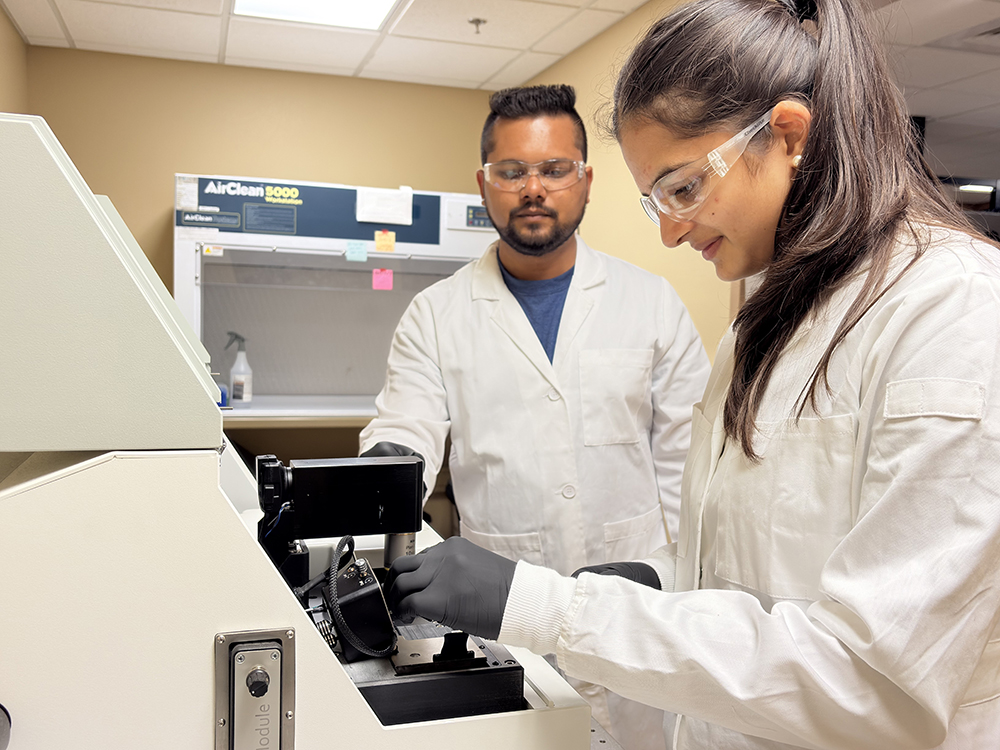
Chawda, an incoming Western Reserve Academy senior who plans to pursue biotechnology and biomedical research, worked in the Multi-omics and Synthetic Biology Center (MASON), a laboratory led by Rajesh Sani, Ph.D., distinguished professor in the Karen M. Swindler Department of Chemical and Biological Engineering and the Chemistry, Biology and Health Sciences.
Chawda is from Raipur, Chhattisgarh, India, but attends boarding school in Ohio.
For Chawda, the internship moved science beyond the classroom and strengthened her desire to pursue a career in industrial biotechnology. “I was immediately drawn to the collaborative nature of the MASON Lab and the opportunity to work alongside researchers with different areas of expertise,” she said.
She rotated through multiple research areas and training experiences. She learned laboratory safety procedures, sterile techniques, microbial culture methods, DNA isolation, gel electrophoresis, polymerase chain reaction (PCR), molecular cloning, microscopy and scientific presentation skills. She also gained exposure to advanced analytical tools, including gas chromatography, confocal microscopy, nanoscale infrared spectroscopy and transmission electron microscopy.
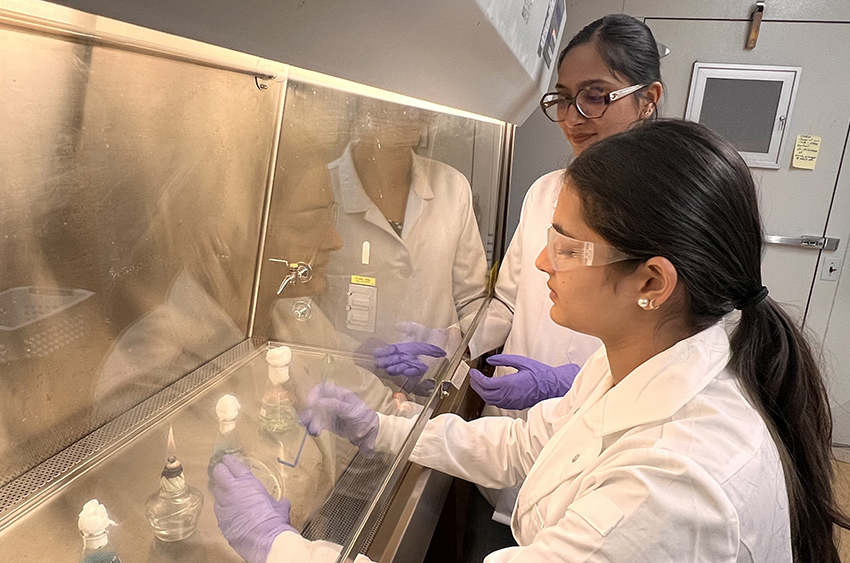 Her training included work with cyanobacteria, archaea and methanotroph microorganisms,
as well as research involving bioinformatics, antibacterial testing and advanced imaging
technologies.
Her training included work with cyanobacteria, archaea and methanotroph microorganisms,
as well as research involving bioinformatics, antibacterial testing and advanced imaging
technologies.
The internship is part of Sani’s commitment to developing future scientists through immersive research experiences and a unique model that connects learners at every stage of their academic journey.
The “pyramid mentoring framework” is a structured and sustainable training model that connects participants at multiple career stages, creating a continuous pipeline of scientific training, leadership development and hands-on research experience.
“At South Dakota Mines, we are not only conducting research, but we are building people,” said Sani. “When young students are welcomed into a serious research environment and guided by a strong mentoring team, they begin to see themselves as part of the scientific community. That is how we prepare the next generation.”
The experience was supported by a team of mentors that included undergraduate and graduate researchers, postdoctoral scholars and research scientists from across the MASON Lab.
“Each mentor offered a unique perspective on scientific discovery,” Chawda said. The skills and experiences I gained in molecular biology, microbiology and bioinformatics reinforced my passion for biotechnology and will help me make the most of future research opportunities as I continue my academic journey.”