

South Dakota Mines Researchers Awarded Grant to Advance Targeted Cancer Therapies

Researchers at South Dakota Mines have received a new biomedical research award aimed at improving how cancer treatments are delivered, with the long-term goal of making therapies more effective and less harmful for patients.
The project is led by Rajesh Sani, distinguished professor in the Karen M. Swindler Department of Chemical and Biological Engineering and Chemistry, Biology & Health Sciences, and director of the MASON Laboratory, and is supported through a grant administered by the Haarberg 3D Center at South Dakota State University and funded by the South Dakota Board of Regents.
At the heart of the project is the development of “smart” cancer drug carriers, tiny
biodegradable materials designed to deliver medication directly to tumors while limiting
damage to healthy tissue. One of the biggest challenges in cancer treatment today
is that powerful drugs often affect the entire body, leading to serious side effects.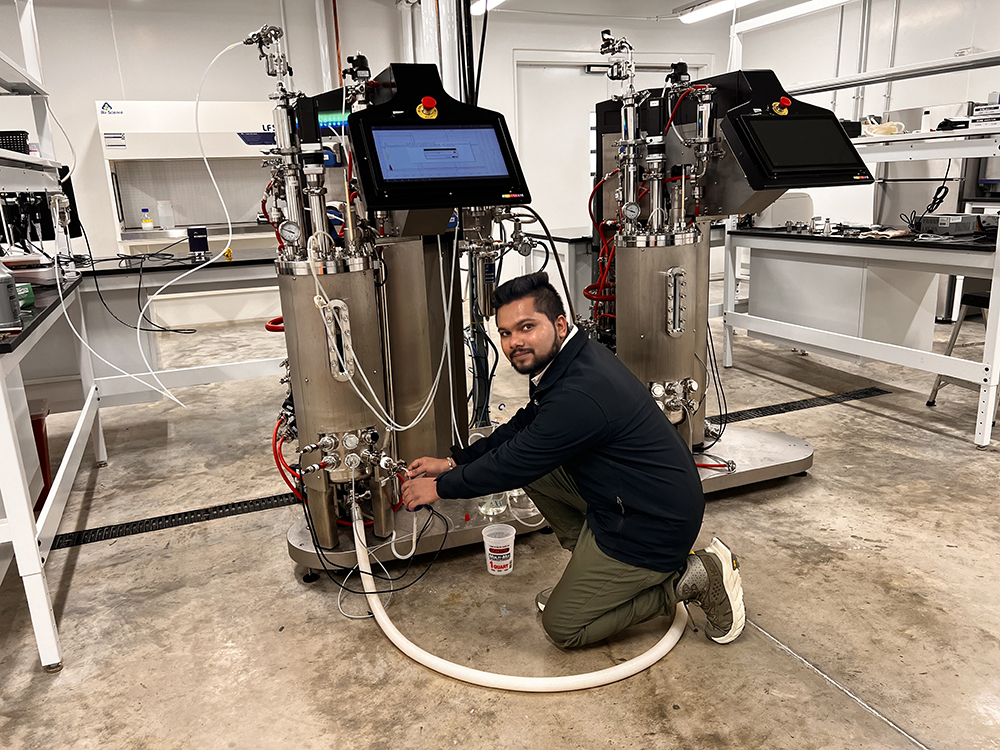
Sani and his team hope to change that.
“Our goal is to help cancer treatments work where they’re needed most while reducing the burden on patients,” Sani said. “If we can deliver drugs more precisely, we can improve outcomes and quality of life at the same time.”
Sani and his team are partnering with Dakota BioWorx and its new industrial bioprocessing facility in Brookings, S.D., to advance biomedical research.
“South Dakota Mines is doing important work at the leading edge of biomedical research,” said Craig Arnold, CEO of Dakota BioWorx. “Dakota BioWorx exists to provide the infrastructure that helps that kind of innovation scale, giving researchers the ability to test, refine, and advance their work in a real-world bioprocessing environment.”
Sani’s team, which includes Mines research scientist Dipayan Samanta, Ph.D., CO-PI,
graduate student Anjali Thapliyal and undergraduate researchers Nathaniel Strickland,
Samantha Harris, Kaleb Borges and Kara Fletcher, is adapting naturally derived materials,
originally developed for uses ranging from clean energy to space exploration, into
new tools for cancer therapy.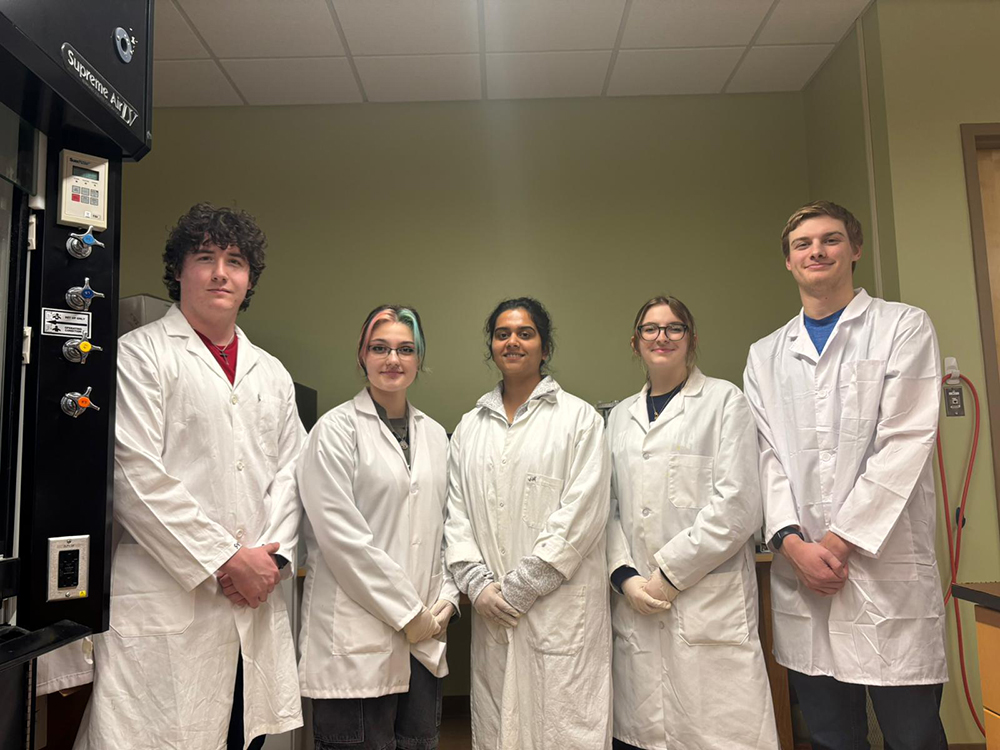
“This award represents a significant milestone in my research program, marking the first time my group’s extremophile-based biopolymer platforms are being translated into biomedical and cancer-focused applications,” Sani said.
These materials are designed to safely break down in the body and respond to conditions found in tumor environments, releasing drugs only when and where they are needed.
The work is being developed with future clinical use in mind, following standards that could eventually support regulatory approval and industry partnerships. The research represents an important step toward more personalized, patient-friendly cancer therapies, Sani added.
The award highlights Mines growing role in biomedical research and its commitment to applying science and engineering to challenges that directly impact human health and well-being.