

Cardiac Emergencies Inspire New Beginnings for South Dakota Mines Coach and Doctoral Student
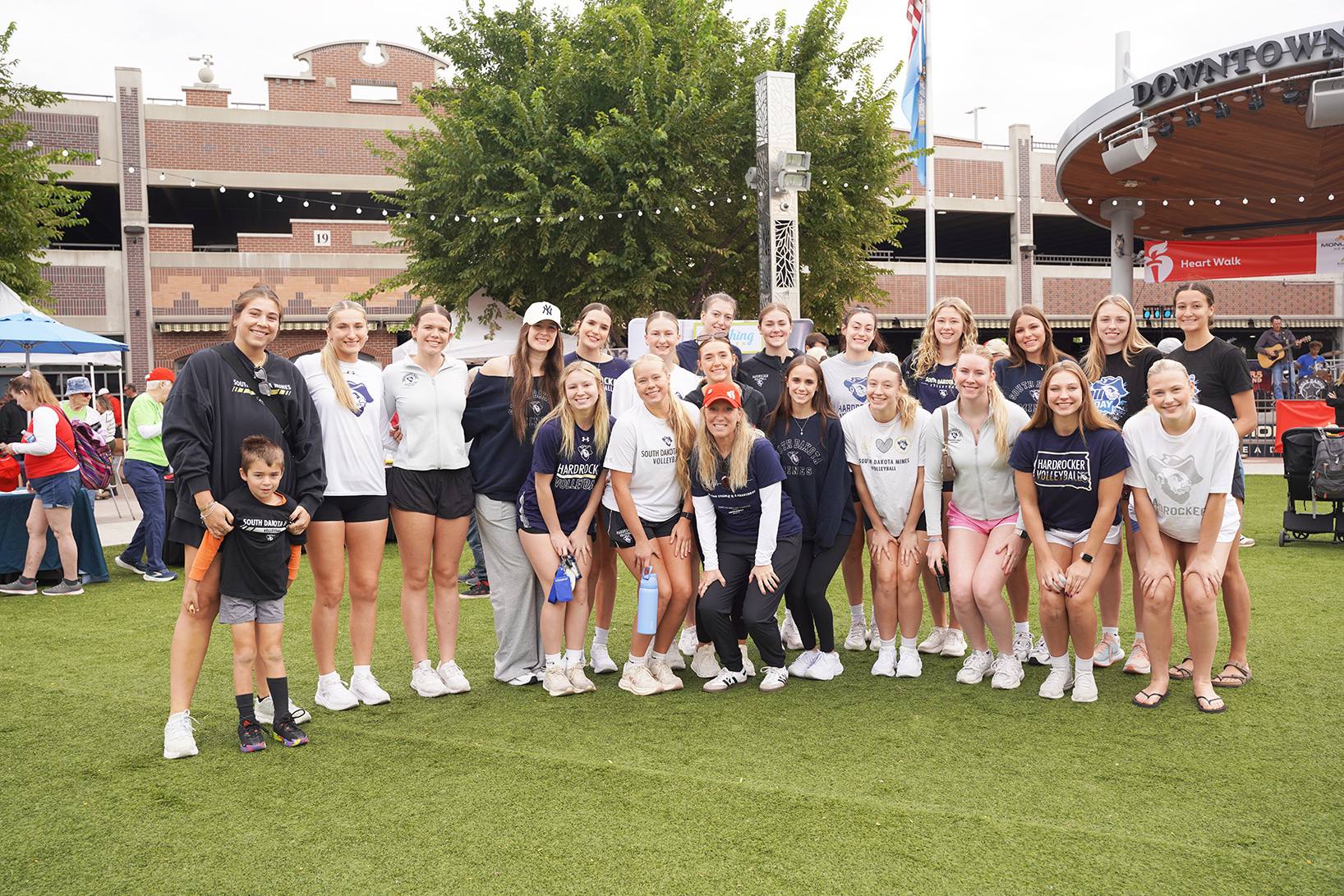
South Dakota Mines Assistant Volleyball Coach Sarah Tucker and doctoral student Chandler Brooks know how quickly life can change.
Last year, in a moment, both of their lives took a dramatic turn.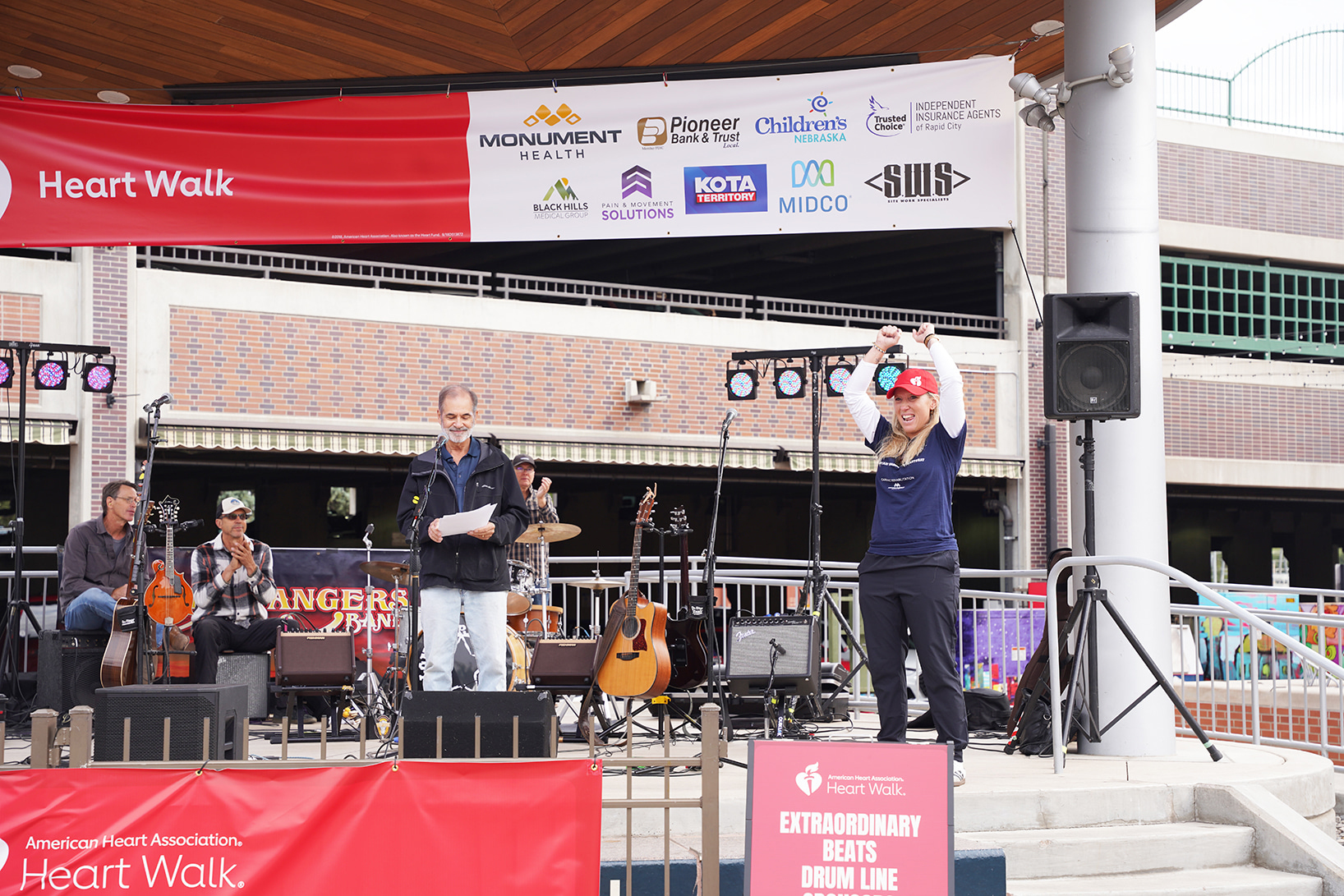
Both had cardiac emergencies, giving them a new perspective, forcing them to slow down, rethink their health and gain a new appreciation for the moments that matter most.
Now each is moving forward with renewed confidence, making lasting lifestyle changes, embracing life and sharing what they’ve learned with others.
Both Tucker and Brooks were recognized at the recent American Heart Association Heart Walk after being nominated by Monument Health Cardiac Rehab for their journeys and the positive changes they have made following their serious heart events.
Sarah Tucker: Finding Confidence Through Change
Last summer, Sarah Tucker was preparing for another high school volleyball season. Two-a-day practices. Building plays. Strategizing. The all-consuming drive to have a successful season kept her constantly moving. However, the demands began to take a toll on the then-42-year-old coach.
Throughout the summer, she did not feel 100 percent, having brief moments where a slight chest pain would force her to slow down, regroup and keep pushing forward.
But things changed on Sept. 10, when the chest pains did not subside.
Doctors discovered a small tear in an artery restricting blood flow. Tucker was diagnosed with a Spontaneous Artery Dissection, or SCAD, a condition where a small tear develops in the wall of an artery.
She has since recovered, but that moment made her reflect and make some meaningful changes.
Tucker stepped down from her head coach duties and said goodbye to her longtime Mountain Dew habit.
She continues to work on reducing her sodium intake, incorporating heart-healthy foods into her diet, exercising regularly and reducing stress.
But that did not mean completely stepping away from the sport she loves.
This fall, Tucker began her first season as an assistant coach for the Hardrockers, bringing her years of experience and deep passion for volleyball to a new role.
At first, she was nervous about how her heart would respond to the demands of running drills, training athletes and managing the many responsibilities that come with coaching. However, she has now learned to listen more closely to her body. Tucker takes breaks when she needs them and uses breathing techniques she learned in cardiac rehab to help manage stress and anxiety.
Now, she is looking forward to traveling with her team and sharing more of her experience with others.
“I think being able to share my experience and help inform others is important,” Tucker said.
Head coach Lauren Prochazka and the entire Mines volleyball team came out to support Tucker during the Heart Walk. Their presence served as a powerful reminder that she is right where she belongs, on the court surrounded by a team that has her back.
Chandler Brooks: Slowing down and making room for what matters
It was race day.
After weeks of training, Chandler Brooks arrived at the starting line for the 2025
Mickelson Trail Half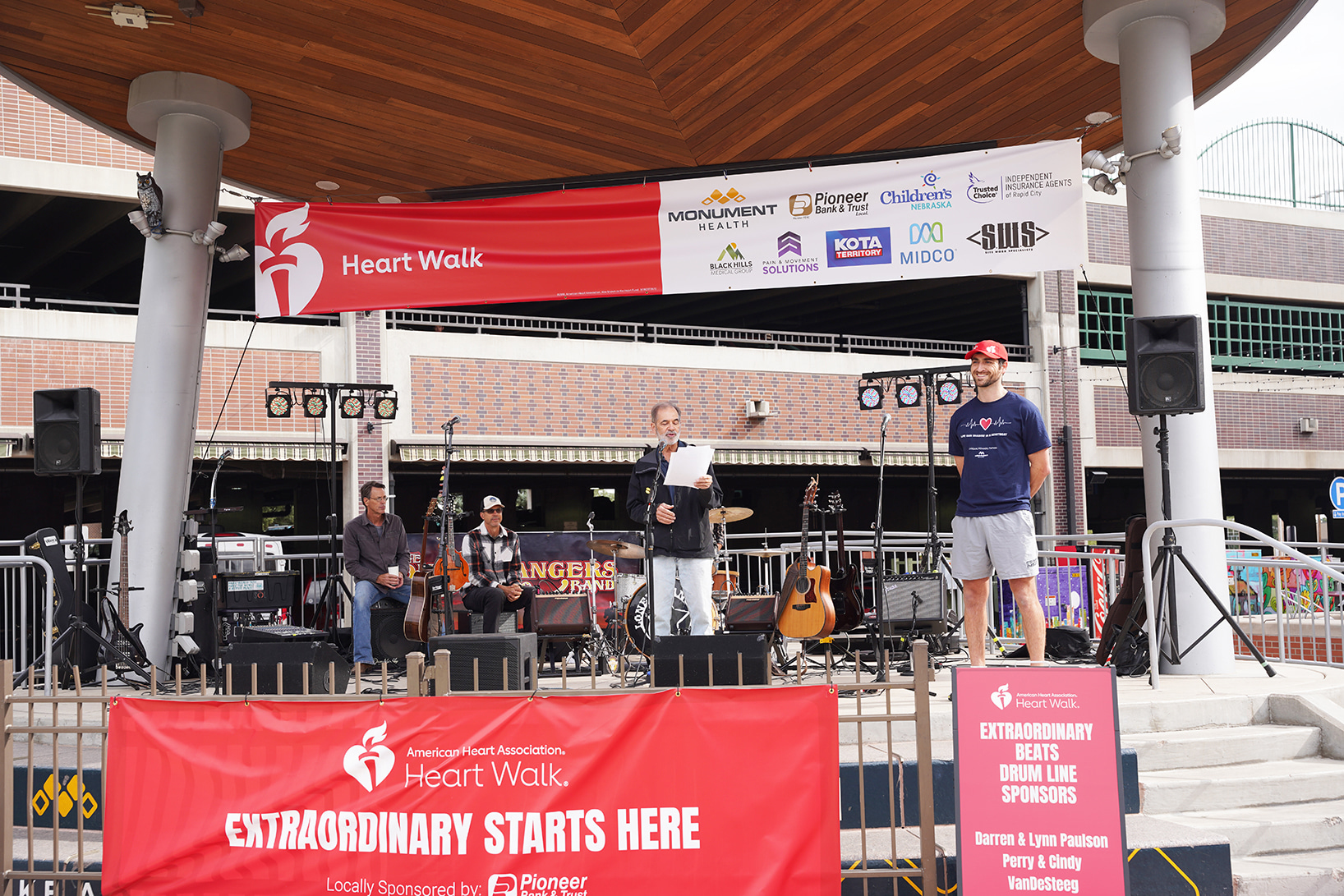 Marathon, ready to take on the 13.1-mile challenge.
He warmed up and started running.
Then his memory becomes fuzzy.
He remembers bits and pieces: the 3-mile marker sign, talking with a friend from his running group, people cheering, someone directing traffic.
“The next thing I remember is hazily waking up in the ICU and seeing my brother-in-law,” he said, asking if he had finished the race.
He did.
After crossing the finish line, Brooks immediately went to the first aid tent, collapsed and was rushed to the hospital.
“Apparently, I finished and walked straight to the medical tent and said I didn't feel good and then collapsed,” he said. “They performed CPR before I was transferred to Deadwood Hospital.”
Meanwhile, his wife, Alyssa, who was 36 weeks pregnant, and his father-in-law, Michael Kadrmas, were patiently waiting to congratulate him.
When he didn't arrive with the rest of the group, they figured he was grabbing water until his phone location showed he was at the hospital.
Brooks was helivaced to Monument Health in Rapid City and met by Alyssa and Kadrmas, a longtime orthopedic surgeon at Black Hills Surgical Center, who passed away earlier this year. His angiogram showed a blockage. His official diagnosis was a spontaneous coronary artery dissection of the left anterior descending artery (LAD SCAD), also known as the widow maker.
After several days of recovery, Brooks left the hospital. He returned four weeks later, but this time for the birth of his son, Oliver.
Today, Brooks takes a more intentional approach to his health. He focuses on fueling his body well, warming up before workouts, attending his medical appointments, and, perhaps most importantly, slowing down and enjoying life. He feels a sense of accomplishment in spending quality time with his family without worrying about the small things.
And he knows things could have turned out much differently. At the time of his race, Brooks was working in wildlife management, which took him to many remote areas. “I was nearing a year when the event happened,” he said. “This is why I needed a career change, as my family wasn’t fond of me being in the field alone.”
He is now working toward his doctorate in environmental ecology, currently researching the livers of the local deer population to determine the amount of per- and polyfluoroalkyl substances (PFAS), or forever chemicals, in their tissues. He is also working with local tribes along the Kootenai River to determine the environmental conditions affecting native fish.
He plans to earn his doctorate by 2028.
As he looks toward finishing his Ph.D., Brooks hopes the ability to slow down will continue to create time and space for the things that matter most, spending time with his family, watching his son grow up, observing life as it happens and celebrating the successes of those around him.
For both Tucker and Brooks, recognition at the American Heart Association Heart Walk represents more than a milestone. It is a celebration of the everyday choices they have made to take care of themselves, the people who helped them along the way and the lives they are continuing to build.