

Turning Emissions into Opportunity: Mines Startup Advances Carbon Capture Technology
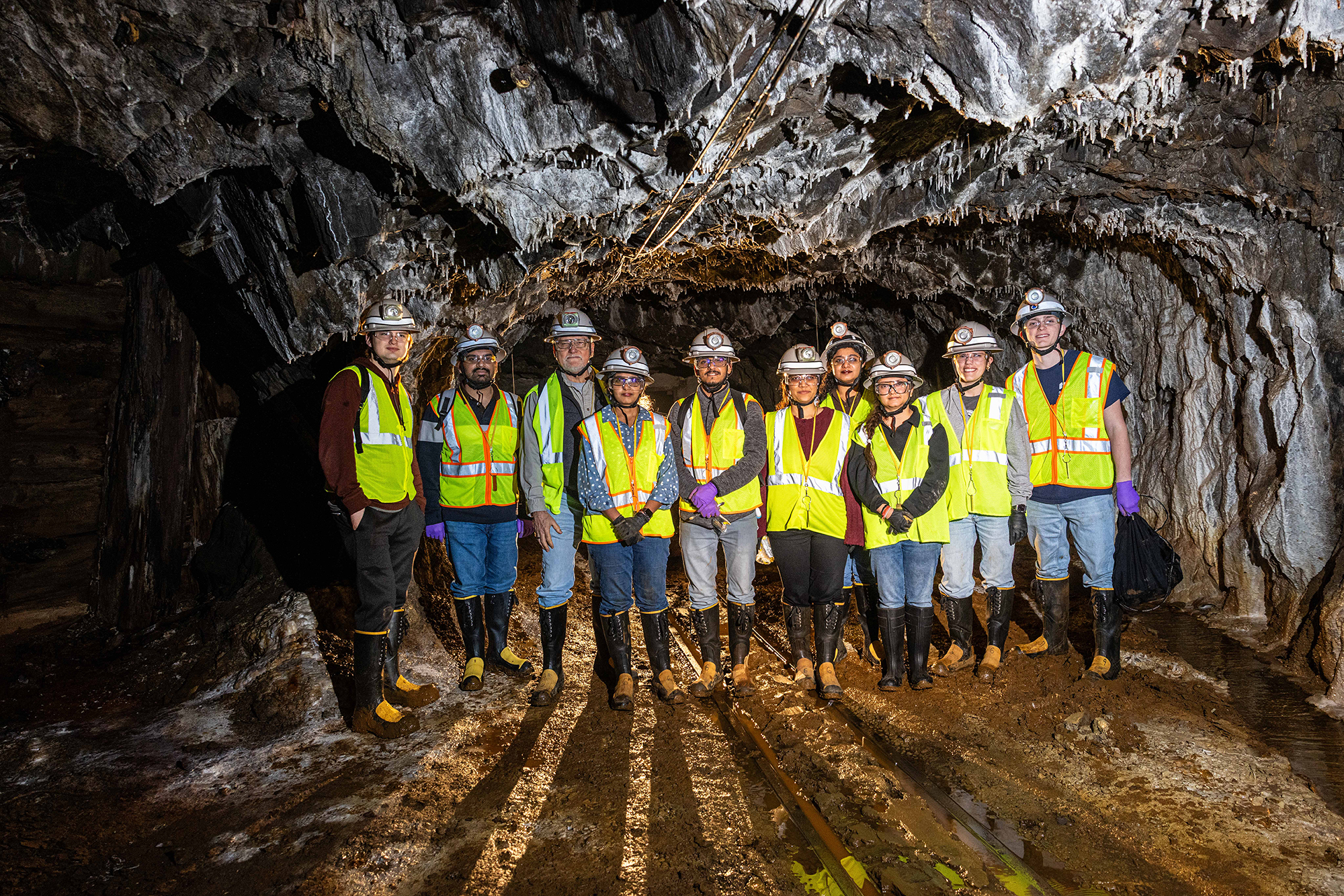
Editor’s Note: This is a follow-up to a story released by SURF on South Dakota Mines assistant professor Tanvi Govil’s research and her new startup Carbon EnZero. See the related story here.
For decades, scientists, engineers and industry leaders have pursued the same elusive goal, finding a carbon capture solution that is both environmentally sustainable and economically viable.
From sprawling pipelines and deep underground storage wells to slow-acting enzymes, promising approaches have emerged, but none have achieved the right balance.
Now, a multidisciplinary team at South Dakota Mines, led by Tanvi Govil, Ph.D., assistant professor in the Karen M. Swindler Department of Chemical and Biological Engineering, may have found a breakthrough in an unexpected place. Deep beneath the Black Hills,
microbes thriving in the extreme environment of the Sanford Underground Research Facility (SURF) have inspired a technology that could help industries reduce carbon emissions without
sacrificing the energy resources the world still depends on, a true win-win for both
the economy and the environment.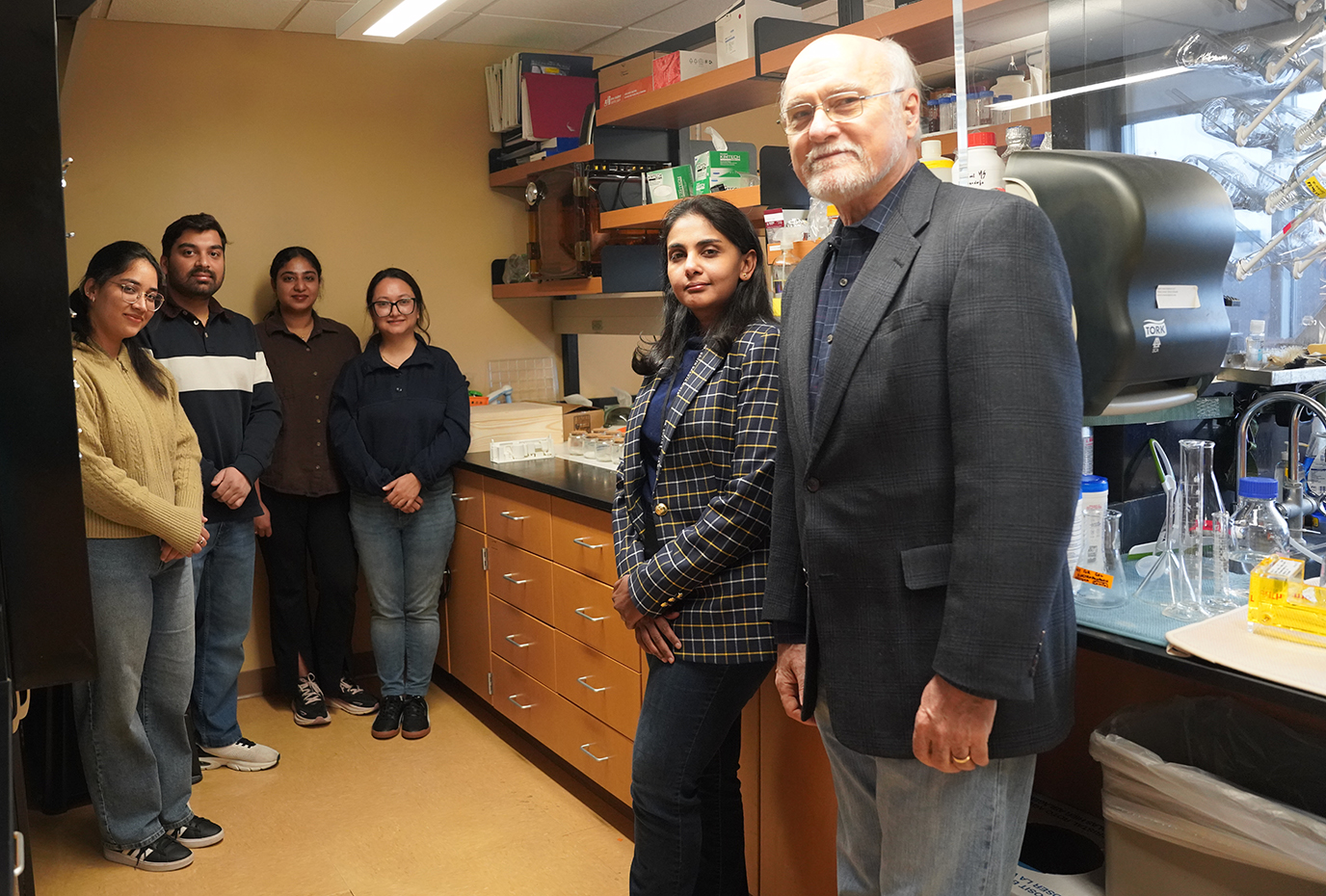
“Dr. Govil and her team have developed technology that can convert fossil fuels into green energy – this is pretty eye-opening,” said Merle Symes, Mines Entrepreneur-in-Residence and CEO of Carbon EnZero, a company started by Govil to commercialize the technology. “We see this as the first win-win solution that should satisfy both sides of the aisle. It satisfies people who think fossil fuels are the way we should be going, and it satisfies the people who are concerned about climate change. I’ve been involved in a number of startups, but I’ve never been involved in one where all the moons are aligning like this one. Every factor is working toward this is the solution.”
The research team uses microbes, or tiny bugs, collected in SURF and other areas around the country to specially engineer high-performance enzymes capable of operating in harsh industrial environments, including high heat, pressure, acidity and exposure to toxic metals. Using these advanced enzymes as powerful biocatalysts, the process permanently captures carbon dioxide (CO2) from industrial flue gases and converts it into minerals. “These enzymes take 100 percent of the CO2 out of the flue gases,” Symes said. “Industrial flue gases make up 50 percent of carbon emissions, and 90 percent of those come from fossil fuel power plants.”
While using enzymes for the chemical reaction is not new technology, the specialized
enzymes developed by Govil and her team greatly accelerate the process, reducing it
from years to a few minutes. In addition, technology enables the removal of greenhouse
gas emissions directly at the source.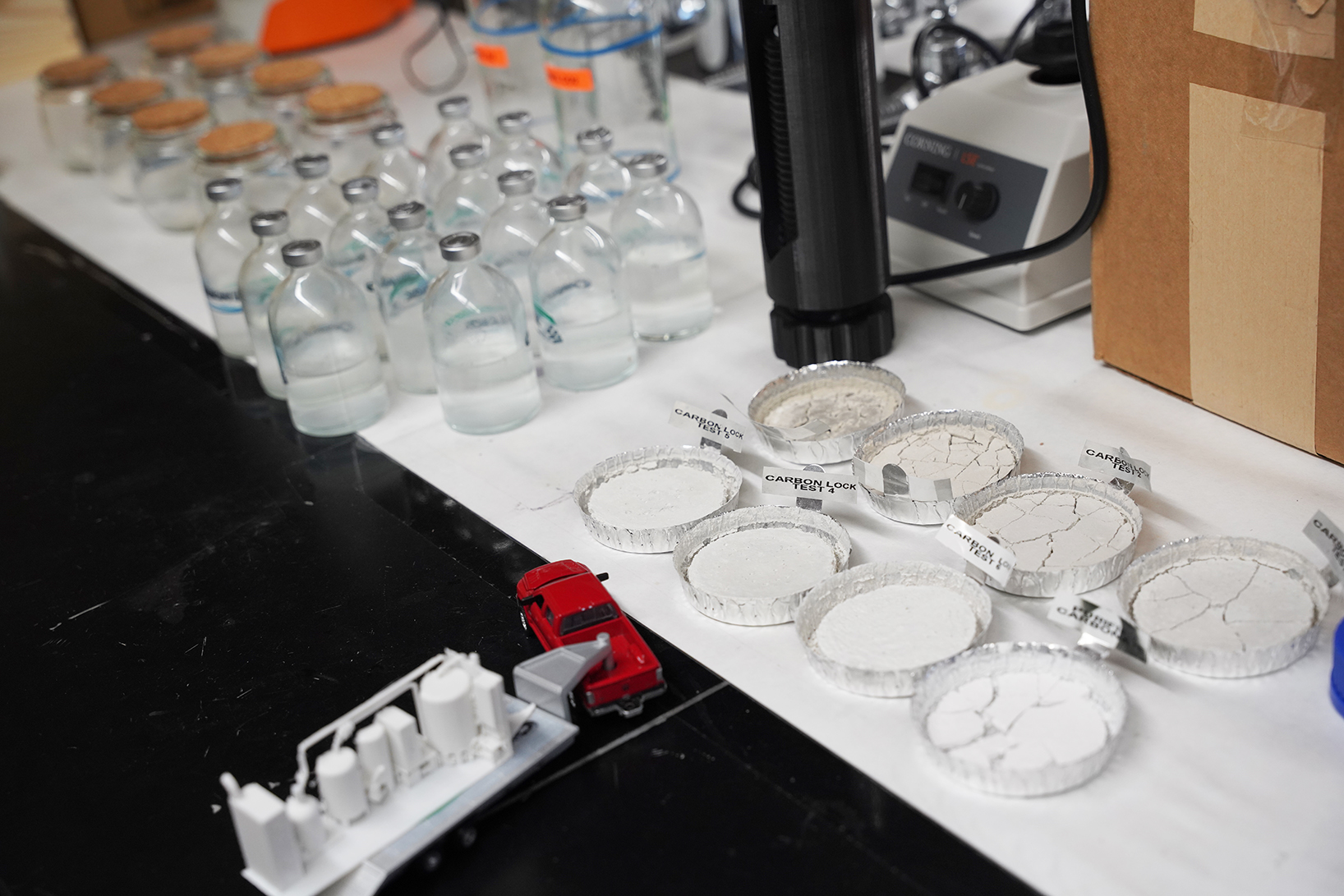
Unlike many existing carbon-capture systems that require pipelines and underground storage wells, the enzyme process is designed to operate directly at industrial sites, significantly reducing infrastructure and transportation costs associated with traditional carbon sequestration.
“What we learned from these organisms helped us engineer enzymes that can efficiently remove CO2 directly from the industrial emissions,” Govil said.
In addition, the research addresses another major industrial waste stream – coal ash. Coal ash, a byproduct of coal-fired power plants, contains calcium that reacts with captured CO2 in the enzyme process to form calcium carbonate.
According to Symes, the resulting mineral can be used as a concrete-strengthening additive to extend the lifespan of bridges and other infrastructure.
While the original research focused on microbes themselves, the commercialization strategy shifted toward isolating and optimizing the enzymes those organisms produce.
“The workhorse behind all of this is the enzymes,” Symes said.
And those enzymes are what Carbon EnZero will be selling.
Earlier this spring, Govil won first place and $20,000 at the South Dakota Governor’s Giant Vision Business Plan Competition, providing momentum for pilot-scale development and commercialization efforts.
She also recently received a South Dakota Board of Regents (SDBOR) Competitive Research Grant to further her work with extremophiles, the tiny organisms that inspired the ground-breaking technology. This is the second SDBOR grant Govil has been awarded for this work.
“We envision 2026 as being our beta launch year,” Symes said. “We utilized the Giant Vision money to really go out and start raising bigger money as well as continue the design and development work.”
Carbon EnZero’s business model centers on supplying the enzymes while partnering with established engineering firms, already working with power plants, that would design and install industrial-scale systems.
“We like to say we will sell the razor blade while engineering firms sell the razor,” Symes said.
The research team has already worked with regional industrial partners to obtain flue-gas samples and coal ash for laboratory validation. Black Hills Energy has provided industry insight during early development efforts.
The next step is construction of a mobile pilot-scale carbon scrubber that will allow them to test the system directly at industrial facilities.
Govil and Symes credit the university’s entrepreneurial culture, multidisciplinary department collaboration and support network for helping translate laboratory research into a commercial venture.
“We have a university president and administration that is really moving Mines toward being more entrepreneurial,” Symes said. “It has created an environment to allow this to happen. This is building a tremendous biological research capability at South Dakota Mines.”
Govil and Symes believe Carbon EnZero could eventually reach far beyond the United States, where thousands of fossil-fuel power plants continue operating worldwide.
“This has the potential of completely turning around the coal industry and making it the most desirable fuel in the country and the world again,” Symes said.