

South Dakota Mines Creates New Center to Advance Academic Innovation
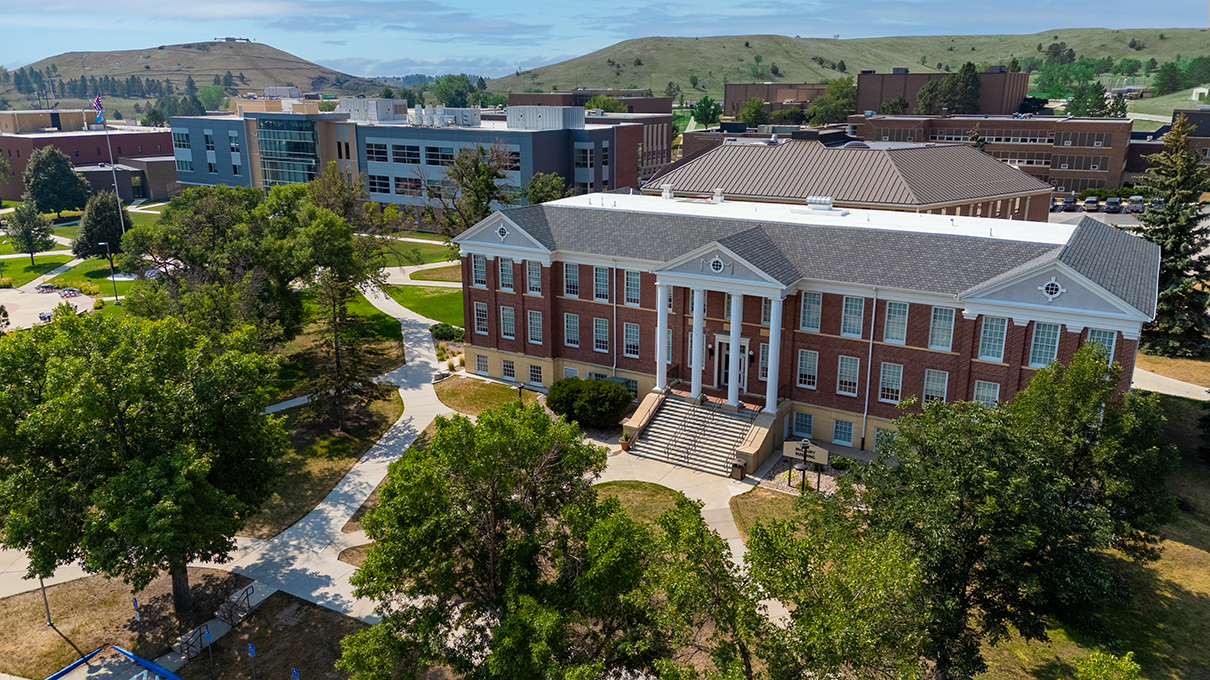
South Dakota Mines is taking a bold step to reimagine how STEM education is developed and delivered with the creation of its new Center for Education Innovation. The center will serve as an academic innovation hub designed to rapidly develop new education models, strengthen industry partnerships and prepare graduates for the evolving demands of the workforce.
Created to operate with the agility of a startup while leveraging the strength of the university’s brand, the Center for Education Innovation will function as an academic research and development laboratory. Its mission is to revolutionize post-secondary STEM education by creating new approaches to experiential learning, responsive academic programs and high-quality teaching that can benefit students across Mines, and ultimately, the South Dakota Board of Regents system.
"The world is changing rapidly, and engineering education must evolve with it,” said Darcy Briggs, Ph.D., vice president for strategic initiatives and learning innovation at Mines. "The Center for Education Innovation allows us to think differently about how students learn, how faculty teach and how we partner with industry to prepare graduates who are ready to solve complex challenges from day one."
Rather than replacing the university’s existing academic structure, the center will complement it by serving as an incubator for innovation. The center will allow the university to experiment, learn quickly and scale what works, creating a space where innovation in higher education can thrive while continuing to build on the strong academic foundation that has defined Mines for more than 140 years.
“South Dakota Mines has always combined academic rigor with real-world relevance,” said Mines President Brian Tande, Ph.D. “The Center for Education Innovation will help us build on that foundation while moving more quickly to meet the changing needs of students, employers and the state. It gives us a place to test bold ideas, learn from them and expand the approaches that work.”
The center was inspired by a growing number of universities that have established academic innovation units to respond to more quickly changing student and workforce needs. Similar initiatives at institutions including Arizona State University, Georgetown University and a pilot program at Suffolk University have demonstrated how operational flexibility can accelerate innovation while strengthening the broader institution.
University leaders said the traditional model of engineering education has remained largely unchanged for decades, even as today’s challenges have become increasingly complex. Modern engineering problems rarely fit neatly within a single discipline, requiring graduates who can collaborate across fields, think creatively and adapt to rapidly changing technologies.
The Center for Education Innovation will focus on three priority areas:
- Expanding experiential learning opportunities,
- Developing responsive academic programs, and
- Advancing high-quality teaching.
Tande describes the vision for the center as an academic Skunk Works, an innovation model conceived by Lockheed Martin’s Clarence “Kelly” Johnson in 1943 that emphasizes small, empowered teams, rapid prototyping, close collaboration with customers and the freedom to innovate outside traditional bureaucratic structures.
In an academic setting, the approach means designing and launching new programs, working directly with employers to meet workforce needs, testing new educational models and continuously improving them through iteration.
For recent Mines graduate Jacob Vostad, the center builds on the kind of learning experiences that have had the greatest impact on his education.
"Project-based learning, innovation-based learning and entrepreneurship are critical for developing new engineers," Vostad said. "One of the best parts of my education has been working in teams on projects that are based on real-world problems. That's been an amazing experience."
Now pursuing a master's degree in chemical engineering at Mines, Vostad believes expanding those opportunities will better prepare future graduates.
"When you're solving real problems with other people, you learn so much more than technical skills," he said. "You learn how to communicate, collaborate and think through challenges. Those experiences prepare you for whatever comes next.”