

From Farm Waste to Sustainable Plastic: Fulbright Fellow Spends Year at South Dakota Mines Developing Sustainable Alternatives
Lata Pawar grew up visiting her grandparents in the hillsides of India, where people lived off the land surrounding them, making ropes from hemp fibers and baskets woven from bamboo. Her grandfather farmed using wood ash as a natural source of nutrients for the soil.
“There was a strong sense of living with the environment rather than against,” said Pawar, a doctoral researcher and Fulbright-Nehru fellow who is spending the next year studying at South Dakota Mines.
After finishing her undergraduate degree, Pawar returned to her village and witnessed
a change. Plastic waste has become more prevalent, impacting the once pristine surroundings.
“That experience made me think about the contrast between the sustainable practices
I had seen during my childhood and our growing dependence on synthetic, petroleum-based
materials,” she said.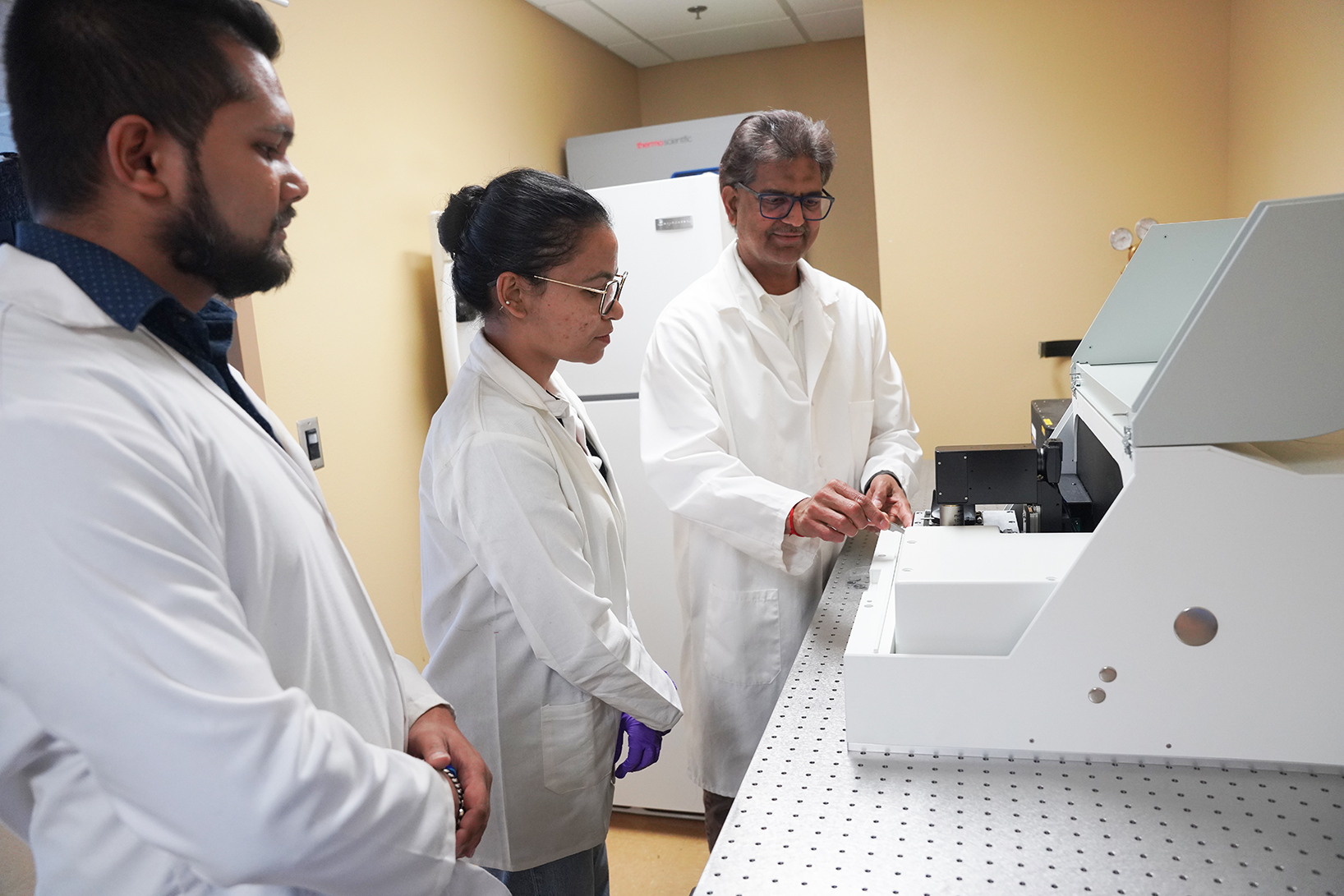
That curiosity influenced her decision to continue her studies and research the possibility of developing packaging materials that could perform well while being more environmentally friendly.
Pawar is now bringing her curiosity to South Dakota Mines through the Fulbright-Nehru Fellowship, a prestigious bilateral exchange program that fosters academic and cultural collaboration between India and the United States, and studying how to transform renewable plant biomass, like corn stover, into sustainable high-performance alternatives to petroleum-derived plastics. Supported by the United States and India, the Fulbright-Nehru program selects scholars through a rigorous, merit-based review.
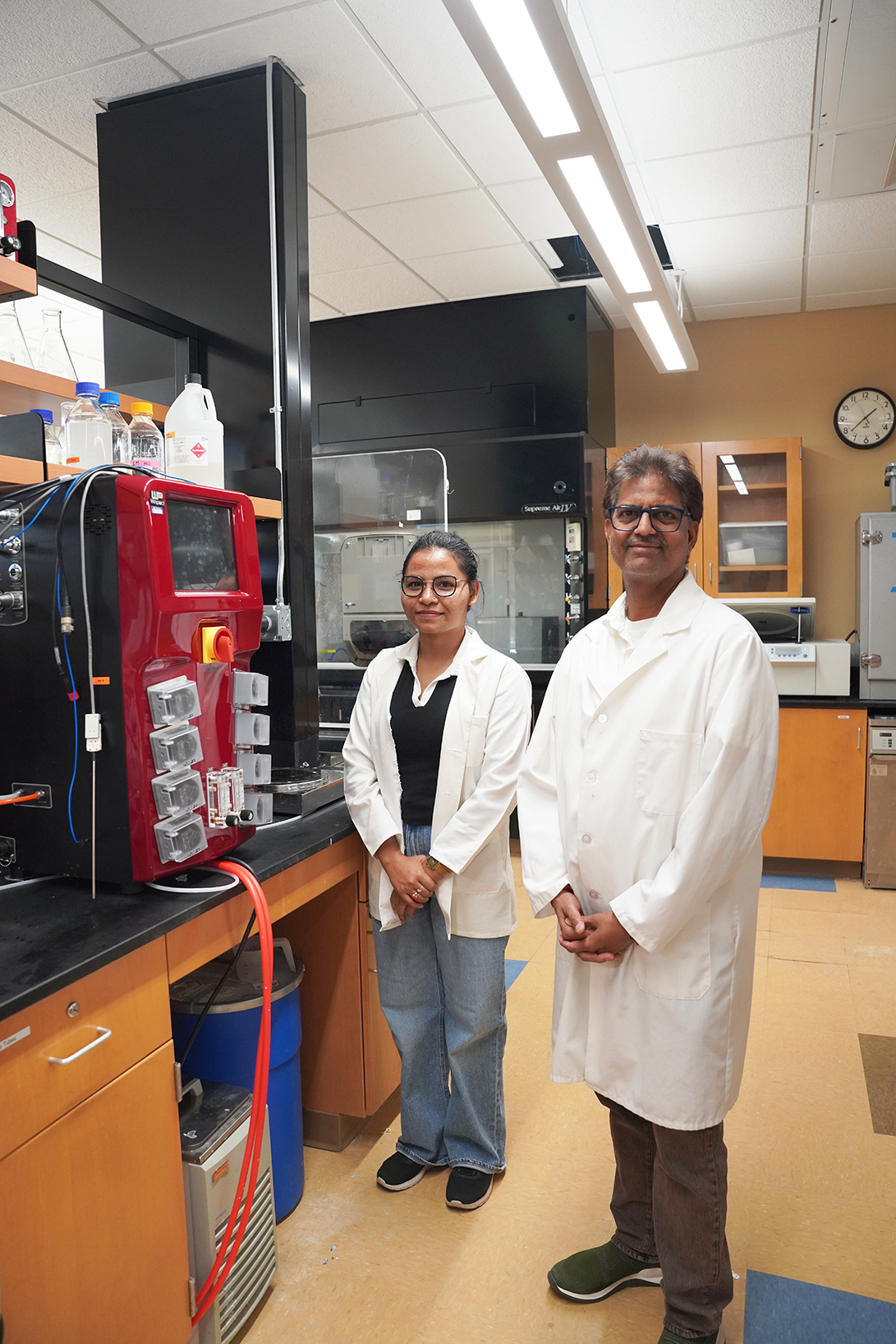
Pawar is conducting her Fulbright research in the MASON (Multiomics And Synthetic Biology Center) laboratory in the Karen M. Swindler Department of Chemical and Biological Engineering and Department of Chemistry, Biology, and Health Sciences under the mentorship of Rajesh Sani, Ph.D., distinguished professor.
“Welcoming Lata to South Dakota Mines through the Fulbright-Nehru program is tremendously exciting for our research team and for MASON,” Sani said. “Her work addresses one of the major challenges in sustainable biotechnology: how we can efficiently convert renewable biomass into high-value materials that could reduce our dependence on fossil resources. She brings outstanding experience in enzyme biocatalysis and bioprocess development, and we look forward to combining that expertise with the capabilities available at South Dakota Mines.”
Pawar was first introduced to Mines after hearing a talk Sani gave during a biomanufacturing workshop in 2024 at the National Agri-Food and Bio-manufacturing Institute. “He spoke about novel thermophilic microbes that his laboratory had discovered and their potential applications in biotechnology,” she said. “I found his research interesting, particularly because of its connection to microbial biotechnology and biomanufacturing.”
With a strong connection between her research interests in biocatalysis and sustainable biomanufacturing and the interdisciplinary research environment at Mines, she decided to reach out to Sani. “I shared my interest in developing a Fulbright research proposal under his guidance,” Pawar said. “He readily agreed to host me and was very supportive throughout the proposal-development process.”
She is working with Sani and his team until next June to further her research in developing biodegradable packing materials. “The idea is to use agricultural waste, such as corn cobs, as a renewable raw material,” she said. “Instead of treating this biomass as a waste, I want to convert it into useful chemical building blocks and eventually into bioplastic materials.”
Pawar’s research brings her back to the lessons of her childhood, finding ways to live with nature rather than against it. She hopes her work can help turn that early inspiration into sustainable solutions for the future.