

Mines Graduate Student Helps Advance Early Detection Research for Alzheimer’s Disease
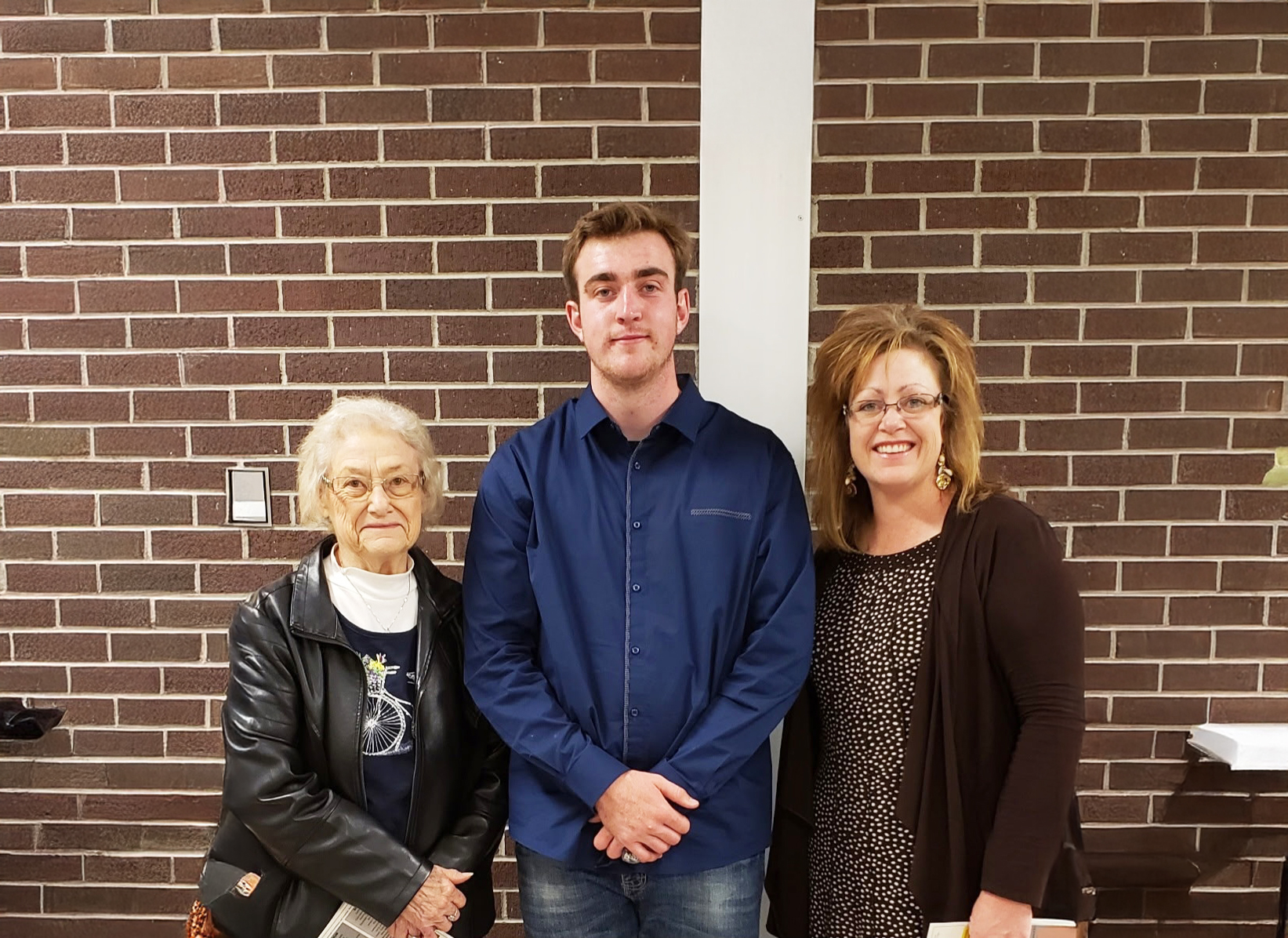
For Hunter Paxton, the path to cutting-edge Alzheimer’s research began long before he became a student at South Dakota Mines.
Raised in a family deeply connected to assisted living care, Paxton spent much of his childhood alongside his mother and grandmother, both facility managers, chatting up residents and building relationships. It was during those interactions that he also noticed the effects of cognitive decline.
“Some days they don’t remember you,” said Paxton, a Mines computer science and engineering graduate student. “It has become so personal for me to work on this project.”
Those early experiences are what inspired him to get involved with research currently being done at Colorado State University.
“When this project came along, it was perfect for Hunter,” said Prasoon Diwakar, Ph.D., associate professor in the Leslie A. Rose Department of Mechanical Engineering. He could put his degree and knowledge to something he cares about.”
Diwakar brought Paxton into the mechanical engineering department as an undergraduate and introduced him to Neha Lodha, Ph.D., Colorado State University (CSU) associate professor and director of the Movement Neuroscience and Rehabilitation Lab. Lodha’s team is researching how subtle changes in mobility, such as how people drive, can be an early detection of Alzheimer’s disease and other forms of dementia.
“Alzheimer’s disease and related dementia pose a growing global health challenge with early detection still being a major hurdle for effective treatment,” Paxton said.
Over the past three years, Paxton has been working with CSU researchers to develop a model to analyze data from the I-Drive study, which tracks real-world driving behavior among older adults.
“CSU is doing a lot for Alzheimer’s research, looking at older individuals and how they progress with certain dementias,” Paxton said.
His research explores whether subtle changes in everyday driving habits, such as speed, navigation patterns and trip frequencies, can signal the onset of mild cognitive impairment (MCI), often a precursor to Alzheimer’s disease. MCI can develop years before a formal diagnosis.
“On a daily basis, these subtle changes in behavior can go unnoticed and undiagnosed,” Paxton said.
That is where the research comes in.
“The idea is if we can pick up on mild cognitive impairment, then we can get these individuals the treatment they need to help them before it gets to dementia or Alzheimer’s,” he said.
Participants in the study have a small sensor installed in their vehicles that collects data every 30 seconds. That data is analyzed across multiple timeframes, from individual trips to weekly behaviors and a variety of destinations visited.
The data is collected across the current 51 participants with Paxton cleaning up the data and developing a model that uses machine learning and artificial intelligence to figure out patterns.
“In our study, we are seeing how well we can rank people – how likely are these individuals to have MCI, the probability they will have it or do have it,” Paxton said.
With this information, intervention can start earlier.
“The biggest issue that comes into play just globally with MCI cases is that symptoms are so subtle that people aren’t getting tested because they have no idea they have it,” Paxton said.
And the current diagnostic measures, such as cerebrospinal fluid analysis, are invasive.
“We are trying to offer a method that is accurate and non-invasive,” Paxton said. “You just put it in your vehicle, and it runs in the background.”
While the current study includes data from 51 participants over the past two years, the goal is to conduct larger-scale research to improve accuracy and expand real-world applications.
Paxton graduates this May and is headed to Austin, Texas, to start his career in AI and machine learning, but his involvement with this research will continue to shape his path.
“It is super rewarding to work on such an impactful project. These tools are interesting and cool, but they are nothing if we can’t apply them to helping people,” Paxton said. “If we can’t see the human impact from these tools, they are not valuable beyond novel research.”