

South Dakota Mines Students Use Agriculture Roots to Create Sustainable Fertilizer Solutions for Farmers
Growing up on a family farm near Sterling, Colo., Zach Karg witnessed firsthand the
challenges facing today’s farmers. Now, as a mechanical engineering doctoral student
at South Dakota Mines, he is helping develop innovative technologies designed to make
agriculture more efficient, affordable and sustainable.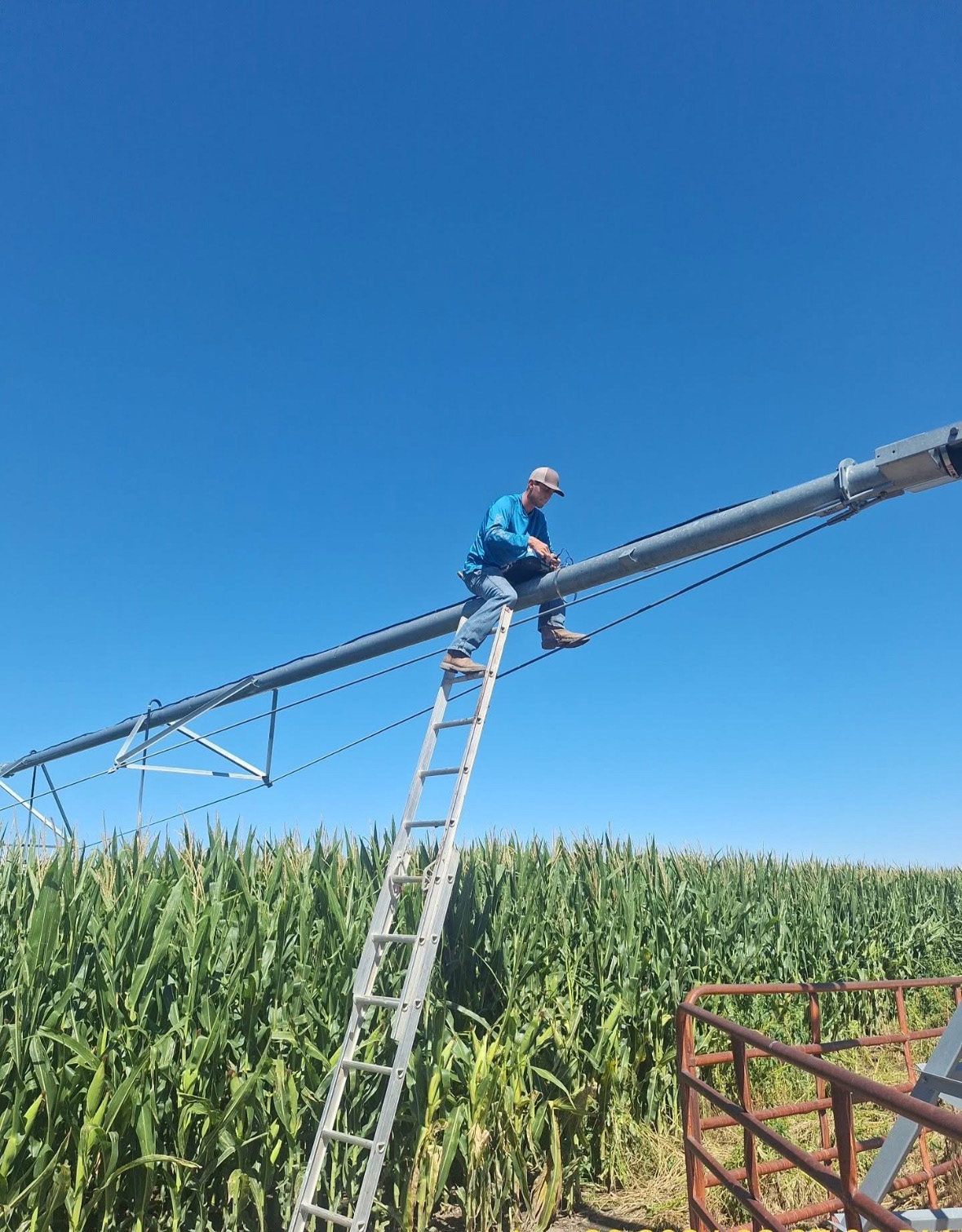
Karg is part of a research team that includes Carson Daly, a senior double major in mechanical and electrical engineering; Stirling Wallace, a senior mechanical engineering student; and Prasoon Diwakar, Ph.D., an associate professor in the Leslie A. Rose Department of Mechanical Engineering. Together, they are working to reduce fertilizer costs, improve crop yields and advance more sustainable farming practices.
Their work is part of the National Science Foundation-funded Advancement of Microbial Technologies for Sustainable Agriculture (AMiTSA), a multidisciplinary and institutional collaboration led by South Dakota State University (SDSU) that explores microbial-based fertilizers as an alternative to traditional synthetic fertilizers.
Along with Mines and SDSU, North Dakota State University and Sitting Bull College are also part of the $4 million research award, now in its third year.
“The core of this project is precision agriculture,” Diwakar said. “If we can help farmers know exactly which parts of a field need attention, farmers can reduce fertilizer use, lower costs and minimize the adverse effects on the soil.”
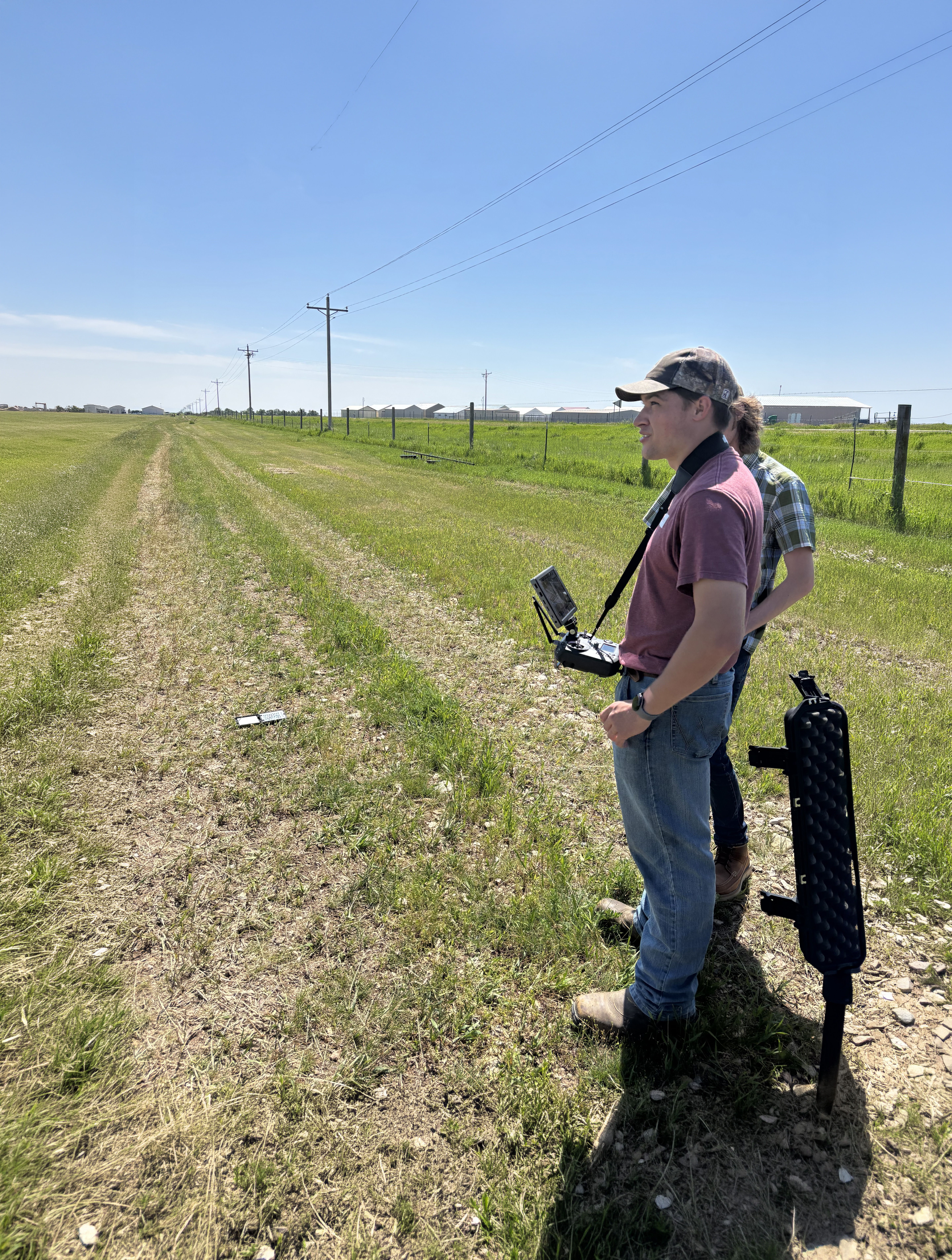
The students are developing advanced sensors and using drones and machine learning tools to help farmers determine exactly where nutrients are needed, reducing waste while maximizing crop health and profitability. The team also recently added a new layer to their research, cavity ring-down spectroscopy (CRDS), to detect and quantify trace gases in the soil. “We want to have a complete picture of the ecosystem – the plant health from the drone, the soil respiration as well as the ground truth detection, what is actually in the soil,” Karg said.
Their work supports the broader AMiTSA effort to develop microbial fertilizers that use naturally occurring bacteria to make nutrients more available to plants.
“My dad has been farming since he was 18,” Karg said. “Growing up on a farm in Colorado is what really drove my passion for this research. Fertilizer costs continue to rise while market prices don’t necessarily keep pace. We’re working on tools that can help producers apply nutrients more efficiently and get more value from what’s already in their soil.”
In addition to Karg, Daly, who grew up on a farm near Philip, S.D., also brings a unique perspective and agricultural background to the project, helping researchers connect with producers and understand the practical realities of farming operations. While the team can develop new technologies, they are only valuable if adopted by the users.
“We can do things in the lab, but unless we go out and talk to the farmers and see whether the technologies are useful, the research is insignificant,” Diwakar said. “Carson and Zach help bridge the gap because they understand both the technology and the farming community.”
Getting more of that feedback is one of the goals for the upcoming year.
“Having the three of us on the project is instrumental,” Karg said. “We can actually go out and talk with the farmers and ask them if they would adopt this technology and what changes we would need to make.”
The team’s technologies are designed to give farmers a clearer picture of field conditions.
Daly's custom-made drones equipped with multispectral cameras can identify nutrient
deficiencies, water stress and even early signs of disease before they become visible
to the human eye.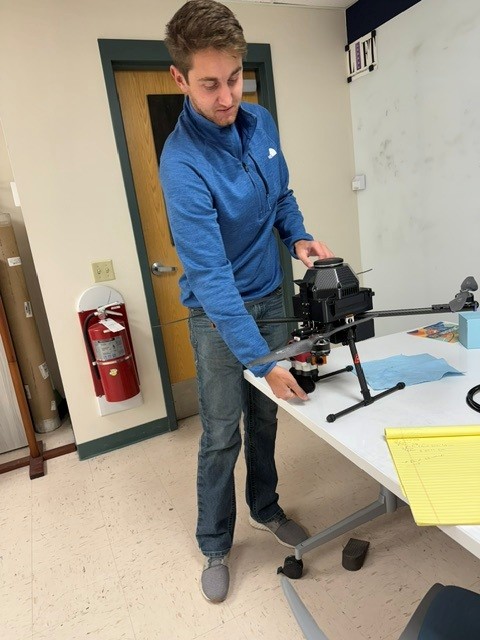
“We are doing all these things on different levels to paint a better picture and understand what it is that creates a healthy soil environment, what bacteria we can incorporate that will encourage plant growth,” Wallace said.
Along with talking with farmers, the team is spending the summer confirming that their models and sensors work and creating a baseline so next summer they will be able to introduce the microbes to the test fields.
As part of the collaboration, Rajesh Sani, Ph.D., and Tanvi Govil, Ph.D., professors in the Karen M. Swindler Department of Chemical and Biological Engineering at Mines, are working on creating the right microbial consortia.
The microbes will be used to convert the nutrients already in the soil into a soluble form that plants can use.
“We want to get to a point where we fly the drone over and look at certain pockets and determine which sections need attention and could use microbes, or areas we should dial it back on the crops we are growing,” Wallace said.
For Wallace, the experience has shown how engineering can directly support agriculture.
“We’re looking at soil health from multiple angles,” he said. “The goal is to understand what creates a healthy soil environment, and how we can help farmers make better decisions while using fewer resources.”