

South Dakota Mines Professor Awarded Prestigious NSF CAREER Grant
A South Dakota Mines professor has received one of the National Science Foundation's most prestigious honors for early-career faculty to advance research that could dramatically improve the ability of scientists and medical researchers to see what is currently invisible.
Roman Shchepin, Ph.D., associate professor of chemistry, biology, and health sciences,
has been awarded an NSF Faculty Early CAREER Development grant of more than $550,000
to continue developing new methods that could make MRI and nuclear magnetic resonance
(NMR) measurements millions of times more sensitive, opening new possibilities for
cancer detection and biomedical research.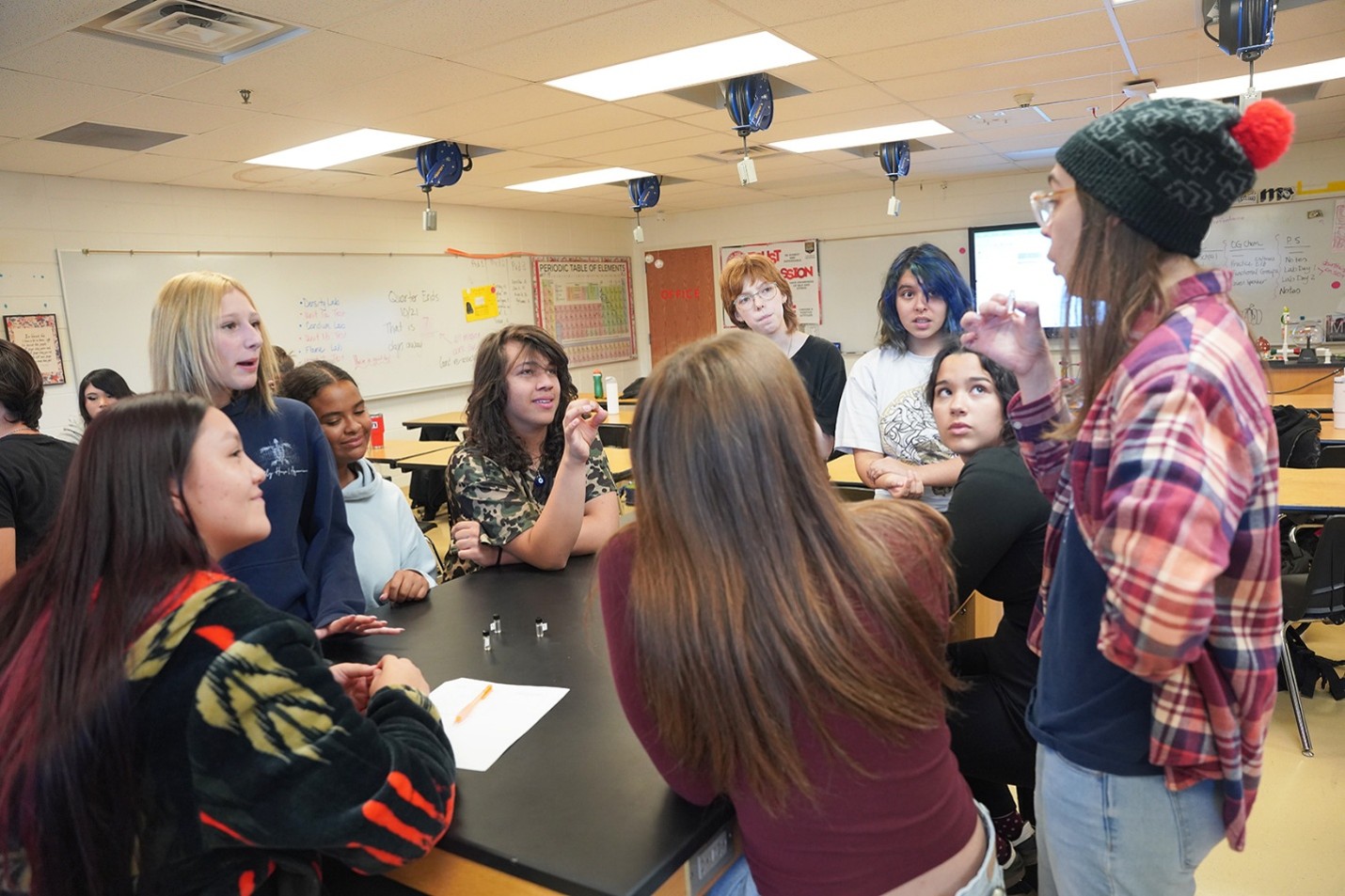
The Faculty Early Career Development (CAREER) Program is a foundation-wide activity that offers the NSF’s most prestigious awards to support early-career faculty with the potential to serve as academic role models in research and education and to lead advances in their department's or organization's mission. Activities pursued by early-career faculty should build a firm foundation for a lifetime of leadership in integrating both education and research.
The five-year award will support Shchepin’s research into a process known as hyperpolarization, which dramatically increases the strength of signals used in MRI and NMR technologies.
“Think about trying to see something in the darkness,” he said. “Our eyes are not really set up for darkness, but if you turn on a powerful flashlight, then things become more visible.”
Hyperpolarization works in a similar way – turning up the signals to detect things that would otherwise be too faint to see.
MRI and NMR work by detecting signals from atoms in a magnetic field. The challenge is that these signals can be extremely weak, making it difficult to detect molecules when they are present in small amounts. Shchepin and his research team are exploring a technique called parahydrogen-induced hyperpolarization (PHIP), which uses a special form of hydrogen to boost those signals.
By transferring the magnetic properties of parahydrogen to other molecules, researchers can make those molecules much easier to detect. The technique could allow scientists to track substances in the body that would otherwise be invisible due to their extremely low concentrations.
One of the potential applications is detecting low-oxygen conditions, known as hypoxia, which can occur in aggressive tumors.
“Cancer cells are like criminals,” Shchepin said. “They don’t care about the damage they cause. They just try to get big ticks, and they don’t bother growing vasculature to get blood there. They use the easiest way to obtain energy and so those tissues become hypoxic.”
Being able to detect and map hypoxia could give researchers a better way to study how tumors behave and potentially help advance new approaches to cancer diagnosis and treatment.
The project will also explore ways to apply the technique to other types of nitrogen-containing molecules, expanding the types of biological and chemical processes that could potentially be studied using hyperpolarized MRI and NMR.
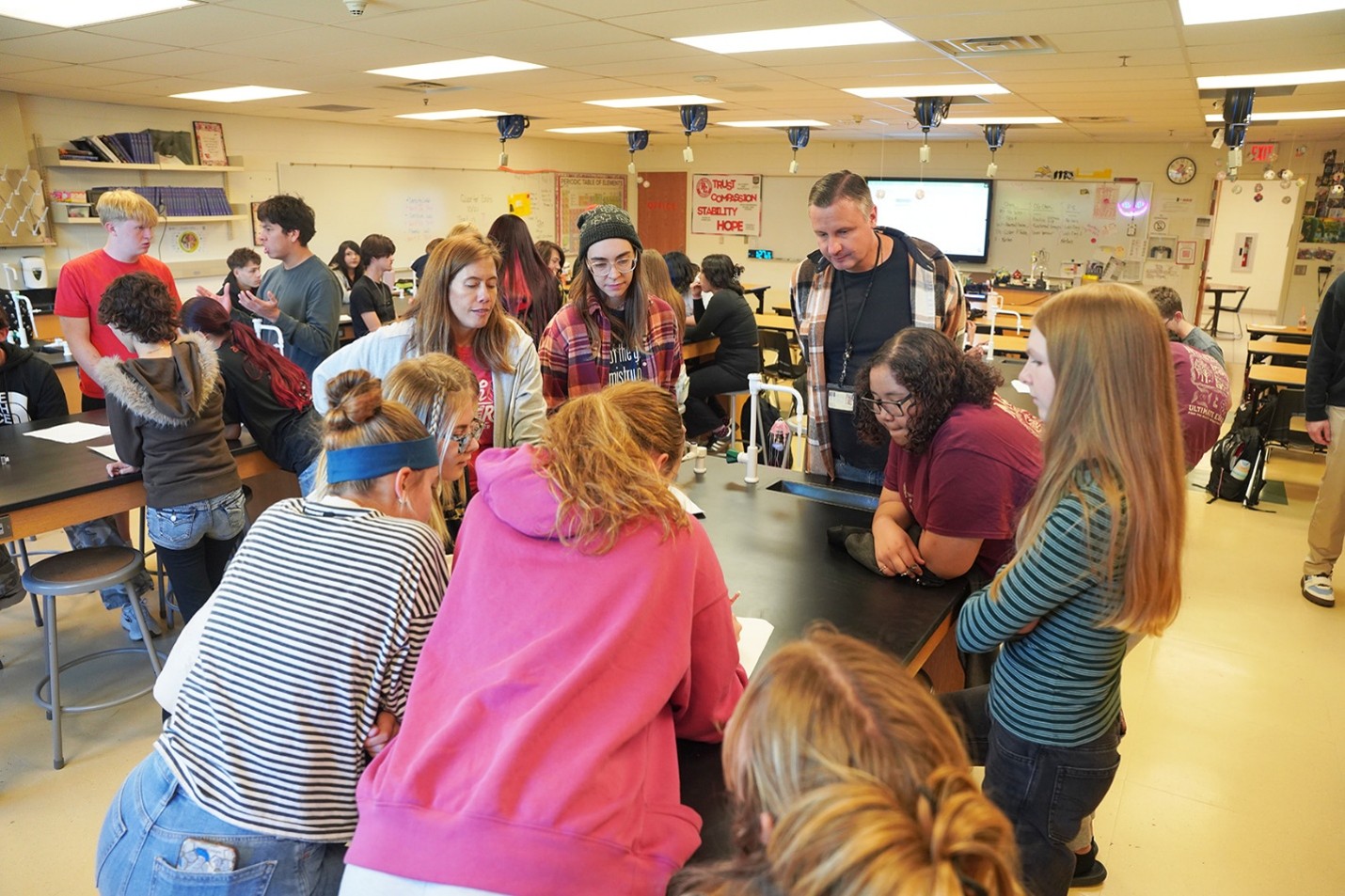
Beyond the research itself, the project includes an educational component designed to connect local high school students with opportunities at Mines. Through Shchepin's NSF CAREER funding, students will participate in hands-on chemistry activities, laboratory visits and workshops, giving them early exposure to college-level science and research while building a stronger pipeline of future STEM graduates in South Dakota.
This fall, the NSF CAREER grant supported outreach activities at Central High School in collaboration with the organic chemistry instructor, Nicole Renner. Shchepin and his graduate student, Shelby Solem, created experiments such as fragrant ester analysis and bromination of cooking oils, developed especially for senior high school students with an interest in organic chemistry.
“Exploration of the unknown is what drives us forward,” Shchepin said. “However, we should never forget about the community that makes it all possible.”