

South Dakota Mines’ Century-Old Metal Tester Makes Its Journey Back Home: From Rapid City to Tinius Olsen headquarters in Horsham, Pa
At the time, it was likely the Cadillac of metallurgical instruments. A top-of-the-line,
hand-operated hydraulic testing machine used by generations of South Dakota Mines
students to test the properties of various metals. After spending more than 100 years
on campus, the historic equipment has returned home to Tinius Olsen, its original
manufacturer, where it will be preserved as part of the company's history.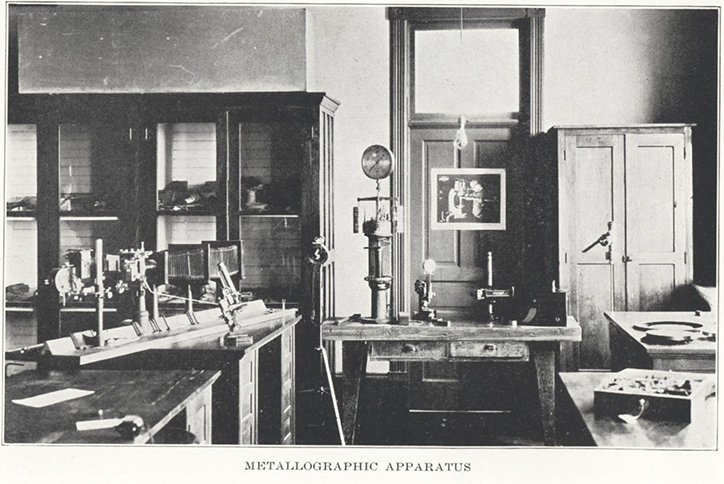
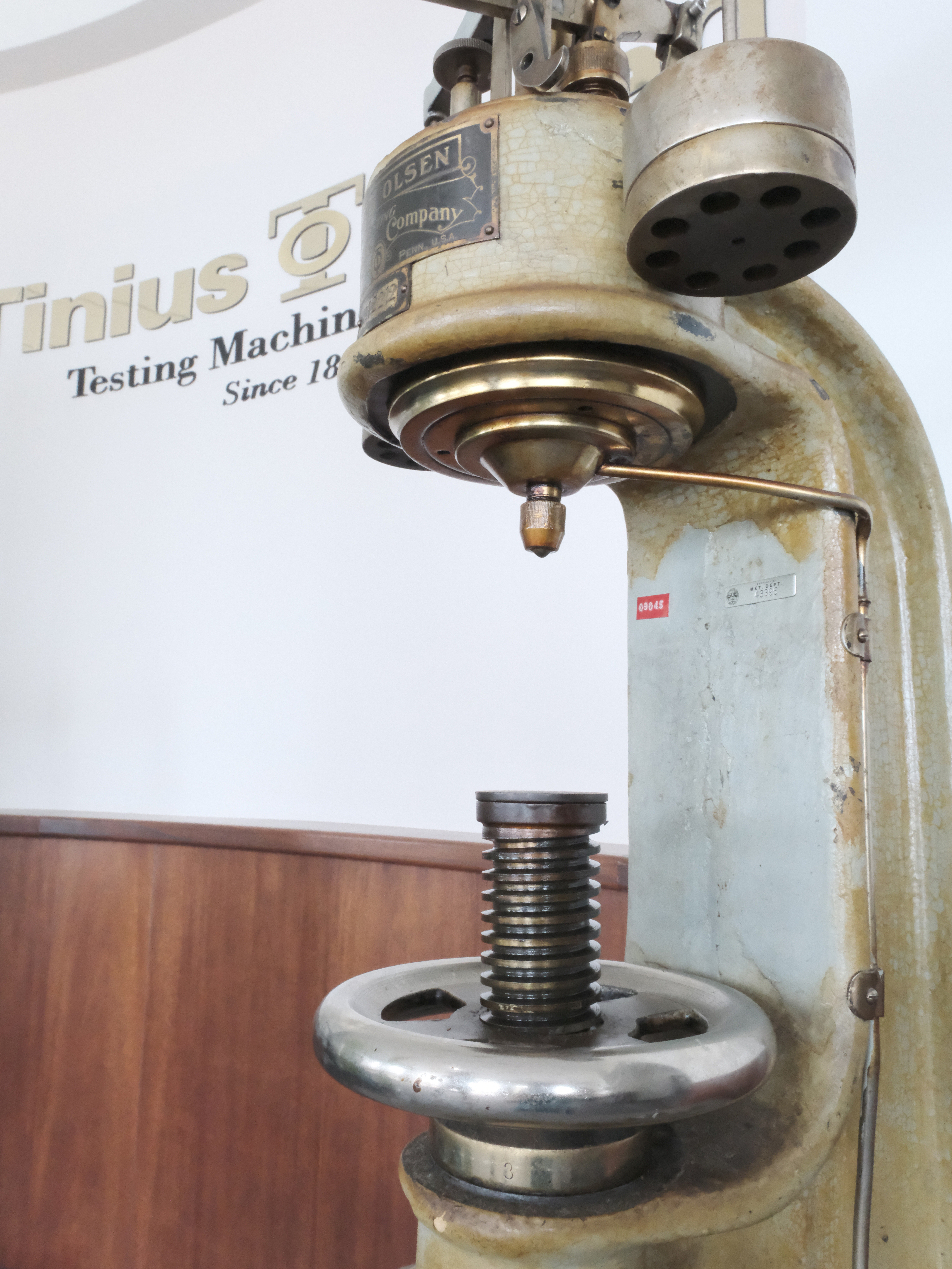
The vintage hydraulic Brinell hardness testing machine first arrived at Mines in 1924, filling what was then described as a critical need for the university’s metallurgical and civil engineering programs. After a century of educational research, the tester made its final journey this summer, traveling from Rapid City to the Tinius Olsen headquarters in Horsham, Pa.
The story of the machine’s journey home began nearly a decade ago when faculty and a graduate student in the university’s Department of Materials and Metallurgical Engineering set out to restore the manually operated machine to working condition.
 “The original Brinell is a manual machine, far different than the automated environments
we work with today,” said Michael West, Ph.D., head of the department. “We thought
the students could learn a lot, seeing where this type of testing had originated from
compared to the advanced technologies now used in our curriculum.”
“The original Brinell is a manual machine, far different than the automated environments
we work with today,” said Michael West, Ph.D., head of the department. “We thought
the students could learn a lot, seeing where this type of testing had originated from
compared to the advanced technologies now used in our curriculum.”
Unlike today’s modern computerized testers, the more than a century-old instrument relies on a hand pump to generate hydraulic pressure, while calibrated weights ensure accurate testing.
When restoration was no longer an option, because the worn hydraulic seals could not be replaced, faculty worked with Tinius Olsen on next steps.
The unit’s serial number indicated that the Mines’ machine was among the oldest known surviving in good condition.
Recognizing the historic significance, the university offered to return the instrument, timed with the faculty preparing to move equipment into the new Nucor Mineral Industries Building.
“In our discussions with Tinius Olsen, I said we are moving, and this is the time that it makes sense to package it up,” West said.
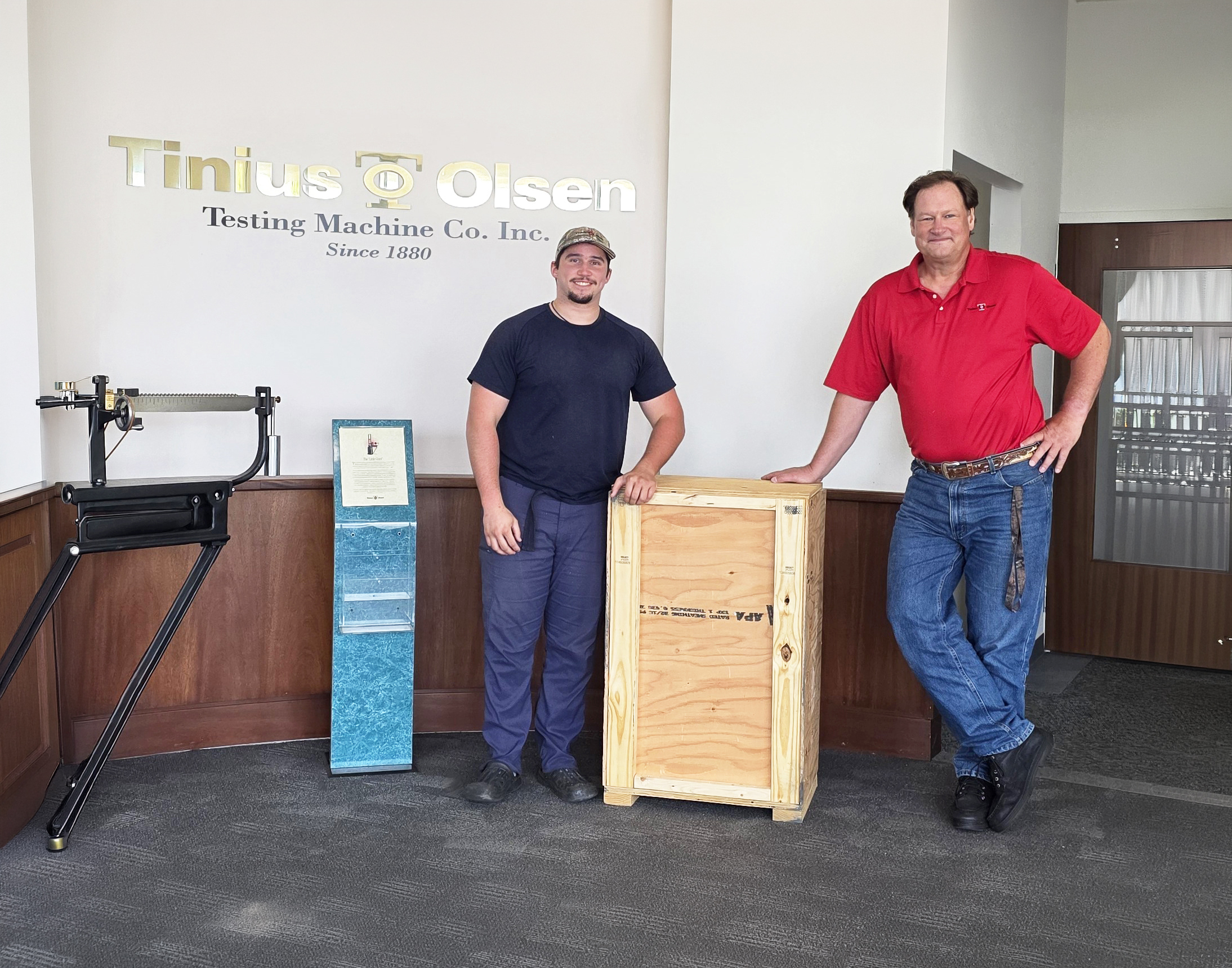
The equipment sat safely packed until recent Mines graduate Daniel Vitkovitsky, who got a position as a process engineer for a company in Ohio, offered to transport it east.
“Thinking about how many engineering students had learned on this machine over the past century, I knew it needed to reside in a place of significance,” said Vitkovitsky. “Bringing it back to Tinius Olsen and seeing where it all started first-hand was truly a meaningful experience, connecting the history of this industry to the career I’m now beginning.”
The personal delivery ensured the historic tester was safely delivered to Tinius Olsen, where Vitkovitsky met fifth-generation Tinius Olsen President, Robert Tait, who led him on a private tour of the facility.
“Daniel’s respect for the history of materials engineering is a great reminder of
what testing excellence means and the trust put into the process,” noted Tait. “For
Tinius Olsen, being a part of that legacy, while developing tomorrow’s technology
advancements, helps us stay connected with and support the whole materials testing
ecosystem.”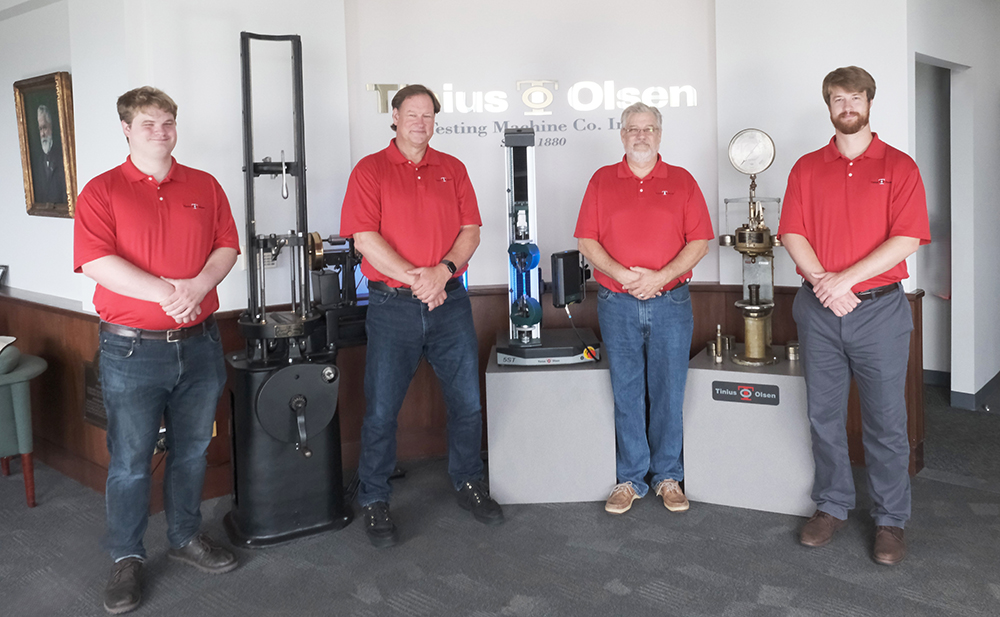
Tinius Olsen’s Brinell hardness tester spent the first part of its life in the original metallurgical building, one of the university’s earliest campus structures, opening in 1888 as the second building on campus. Located east of where the Arch now stands, it served generations of engineering students before the next mineral industries building was constructed. The tester spent the rest of its working career in that building, with modern technology ultimately making the 1920s equipment obsolete.
Although today’s testing equipment performs the process electronically, the underlying principles remain unchanged, and the Brinell hardness test remains one of the industry’s standard methods for evaluating metals. By measuring a material's resistance to permanent indentation, engineers can determine whether metals are suitable for structural, manufacturing and industrial applications.
Students at Mines still used hardness testing as part of laboratory courses involving aluminum, copper and other engineering alloys. They examine how rolling, heat treatment and other manufacturing processes affect the strength and grain structure of metals.
After a century of educating Mines students, the 1924 Brinell tester begins a new chapter as a piece of history, preserving the legacy of hands-on engineering education and the evolution of materials testing.